



Electronic waste disposal and recycling service
.svg)
Clear out the cord clutter with our full-service, eco-friendly electronics recycling and disposal from any room in your home.
.svg)



The simple solution for your e-waste
Inevitably, we all end up with broken electronics that we need to get rid of. However, getting rid of old technology is not as simple as throwing it in the garbage. Most electronics—including cell phones, televisions, and fax machines—contain hazardous materials that can damage the environment if disposed of improperly. We prioritize responsible recycling and donation to keep these materials out of landfills.

How our e-waste recycling service works
In just 4 easy steps, you can reclaim your space, ready for endless possibilities.
Schedule appointment
- Book online or call us
- No deposit required
- Same-day service available
Get in-person estimate
- Two-person team
- Two-hour arrival window
- No obligation to proceed with the service
Watch us get to work
- Zero preparation needed
- We do all the heavy lifting
- We sweep up after
Responsible disposal
- Donation drop-off to local charities
- Recycling taken to local facilities
- We take care of all collecting and sorting
Expert electronics recycling and pickup services
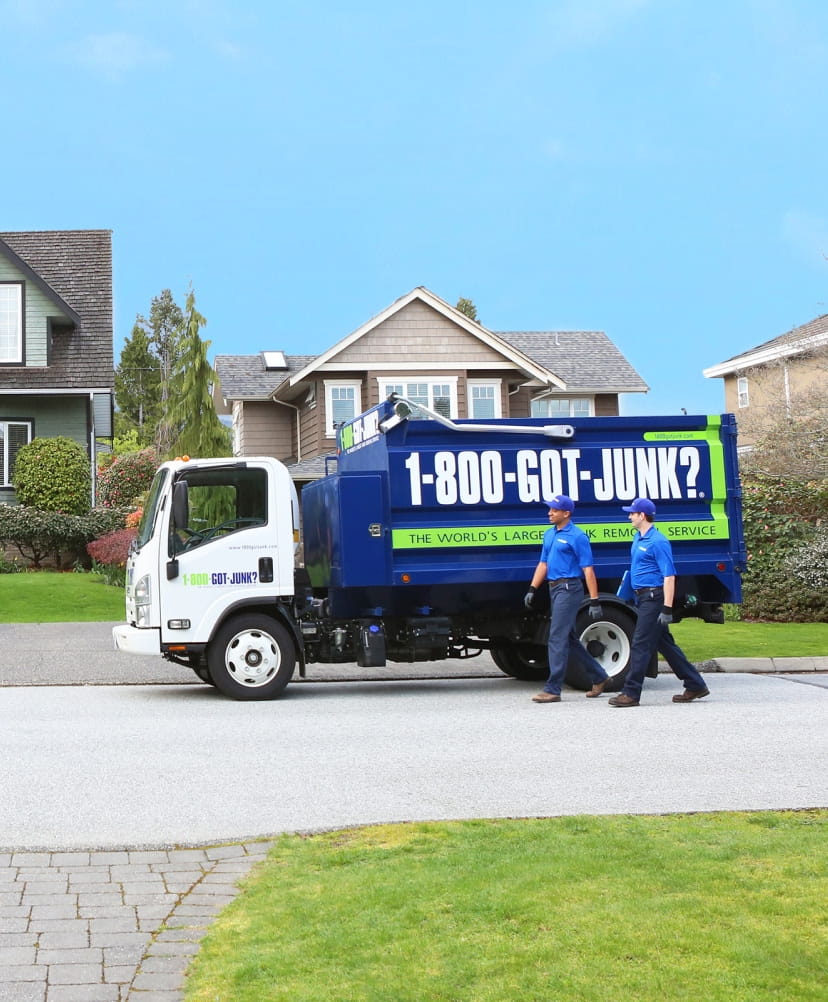
1-800-GOT-JUNK? provides expert e-waste recycling and pickup services, ensuring your old tech disappears—just point! Our friendly team of professionals is trained to handle your e-waste disposal properly, whether that involves recycling, refurbishing, or donating items to give them a new life. Our pricing covers all lifting, loading, and environmental fees, so you don't have to worry about a thing.
How pricing works for electronics removal
We charge by volume, which is how much space your items take up in the truck. We have a minimum charge for very small loads; from there, prices go from 1/8th of a truck up to a full truckload. We also have special pricing if you only have one single item. We can give you an exact price once we see the items in person.
Our prices include everything
- Junk removal from anywhere—no need to move items out
- Our friendly teams, who are fully licensed and insured
- All lifting, loading, and cleanup
- Disposal and environmental fees

Why choose us?
We provide fast, full-service junk removal to keep your home clutter-free.

Convenience
We offer same-day service and flexible scheduling to fit your busy lifestyle.

Two-person team
A professional, licensed, and insured two-person team will arrive at your home in uniform, ready to handle all your junk removal needs.

No heavy lifting
We’ll handle all the lifting and loading, and even sweep up when we’re done, leaving your space spotless.

Free, no-obligation estimates
To make sure you get the most accurate price possible, we provide in-person estimates at your convenience.

Peace of mind
We give old items a new life by recycling the recyclables and donating the donatables to keep as much as possible out of the landfill.

24/7 phone support
Our customer service team is available 24/7 to answer any questions.
Frequently asked questions
What is e-waste?
Electronic waste, or "e-waste," is a term used to describe discarded or broken electronic devices. This waste includes broken computers, televisions, stereos, VCRs, music players, DVD players, monitors, and cell phones. Many of these products may be salvaged, refurbished, reused, or recycled.
How do I get rid of electronics?
Getting rid of your old cell phones, computers, and televisions largely depends on the condition that they’re in.
Here are some responsible ways to handle your electronic disposal:
- Locate an electronics recycling facility in your town.
- Donate working electronics to local charities or nonprofits.
- Donate or sell your e-waste for parts.
- Check to see if your local retailers offer trade-in services or buy used goods.
- Find out if any local retailers offer e-waste recycling.
- Sell your old electronics online.
- Attend a hard-to-recycle or e-waste recycling event.
- Find out if your trash collection service accepts electronics.
Electronic devices should only be thrown in a landfill as a last resort.
How is electronic waste recycled?
Before e-waste is recycled, it is first inspected to determine if it can be refurbished or donated. Once it is ready to be recycled, the device is taken apart and the materials are organized into separate categories to determine what can be reused and what can be further processed.
Determining which parts can be reused or converted is important because many electronics contain toxic metals and chemicals that need to be disposed of in a careful manner. When an electronic device is dismantled, the toxic pieces are properly disposed of while the reusable pieces are used for other purposes.
Can I throw electronics in the trash?
Due to the presence of toxic materials and chemicals found in most electronic devices, many waste management companies do not accept old electronics in regular trash pickup or curbside recycling services. These same toxic materials also make it illegal to throw old electronics into the trash in many cities. To avoid being fined or damaging the environment, e-waste must be disposed of properly.
Where does my electronic waste go?
All e-waste thrown in the trash will end up in landfills. However, leaving old electronics in a landfill can have a harmful effect on the environment. Whenever possible, the most responsible way to handle e-waste is to recycle or refurbish it. Recycled electronics are processed at facilities and reused to make new products. Broken electronics that can be fixed or reused still have value and can be donated or sold.
How does e-waste affect humans and the environment?
When e-waste isn’t recycled, it ends up in the landfill where it is exposed to the elements. Over time these electronics – made from toxic materials such as lead, mercury, zinc, flame retardants, and chromium – can release toxins into the air and the soil, affecting the atmosphere and tainting groundwater supplies.
Taking the time to properly dispose of electronic waste can prevent these substances from making their way into soil, causing damage to plants and animals, and potentially harming our food and water supply.
When you use 1-800-GOT-JUNK? to get rid of your electronic waste, you don’t have to worry about where to take your electronics. We work with local charities and recycling facilities to ensure all the components are properly disposed of.
What should I do with my old cell phones?
With the rate of cell phone ownership increasing every day, replacing your old phone with the latest model has become a standard for many phone owners.
Like many electronic devices, cell phones contain materials that can cause harm to the environment if left in a landfill. These chemicals can be released from the phone and contaminate the atmosphere and surrounding soil.
Here are some ways you can dispose of or reuse your old cell phone:
- Trade your old phone in when buying a new one.
- Sell your working phone online, to a friend, or to a family member.
- Keep your old phone as a backup or experimental phone.
- Donate your old phone to a charity or nonprofit organization.
- Take your old phone to an electronics recycling facility.
- Ask your phone retailer if they offer phone recycling.
- Check to see if your waste management service accepts electronics.
How do I properly dispose of batteries?
How to safely dispose of old batteries all depends on the type of battery you have. Alkaline batteries, which are the most common household battery types, are safe to throw away with your regular trash. However, car batteries and lithium batteries – which are often used in phones and computers – are not safe to be left in landfills.
Here are some ways you can get rid of old batteries:
- Take your batteries to a local electronics recycling facility.
- Stop by a local electronics retailer and leave them in designated bins.
- Throw away all AAA, AA, 9V, and D-cell batteries in your trash can.
Don’t just take our word for it
Real customer reviews, typos and all ;)

Markel and Will came out and were amazing! They helped get rid of some hard stuff that we had trouble moving. They were super friendly and very professional and we would love for them to come back and help again when we need to get rid of some more junk in the future.


Antonio and Kevin were great to work with! They came out on a cold snowy evening and were so professional and kind! They were quick and hauled away items from our basement and other yard items. We were calling places to compare prices and they were the most responsive and fair company!
I needed some stuff picked up late on a Friday and 1-800-GOT-JUNK was able to make it happen in less than an hour. Holly showed up and loaded the truck up in no time at all. If you need something picked up with no hassle, give them a call.
Different electronics items we remove

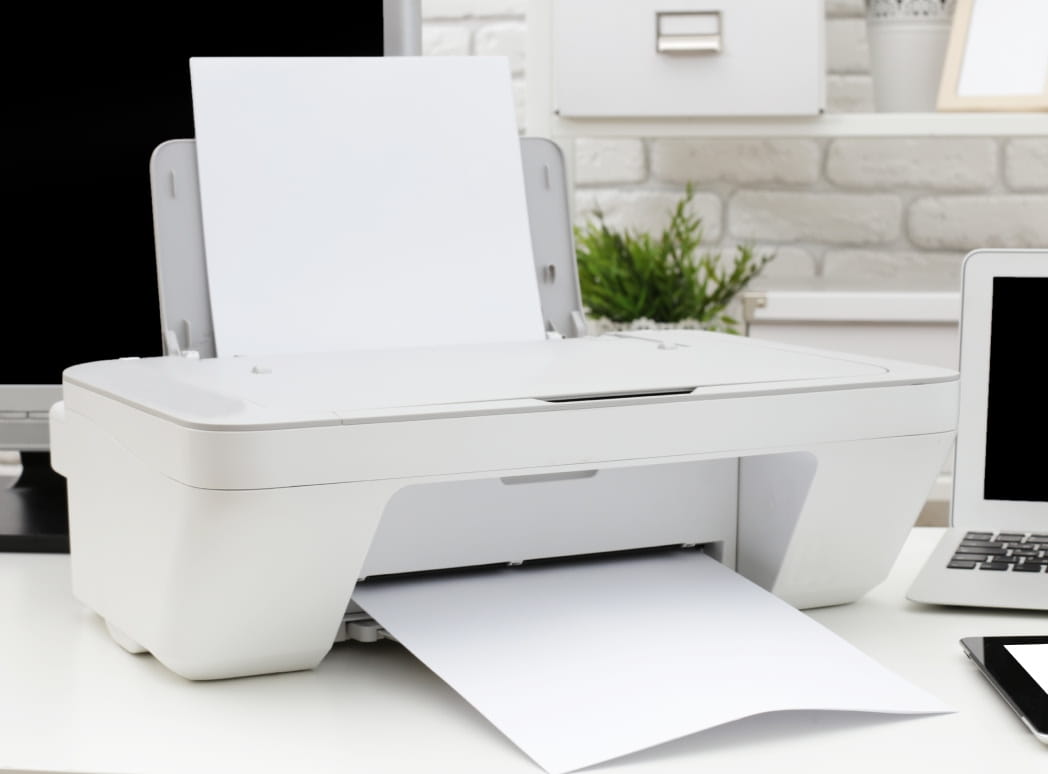
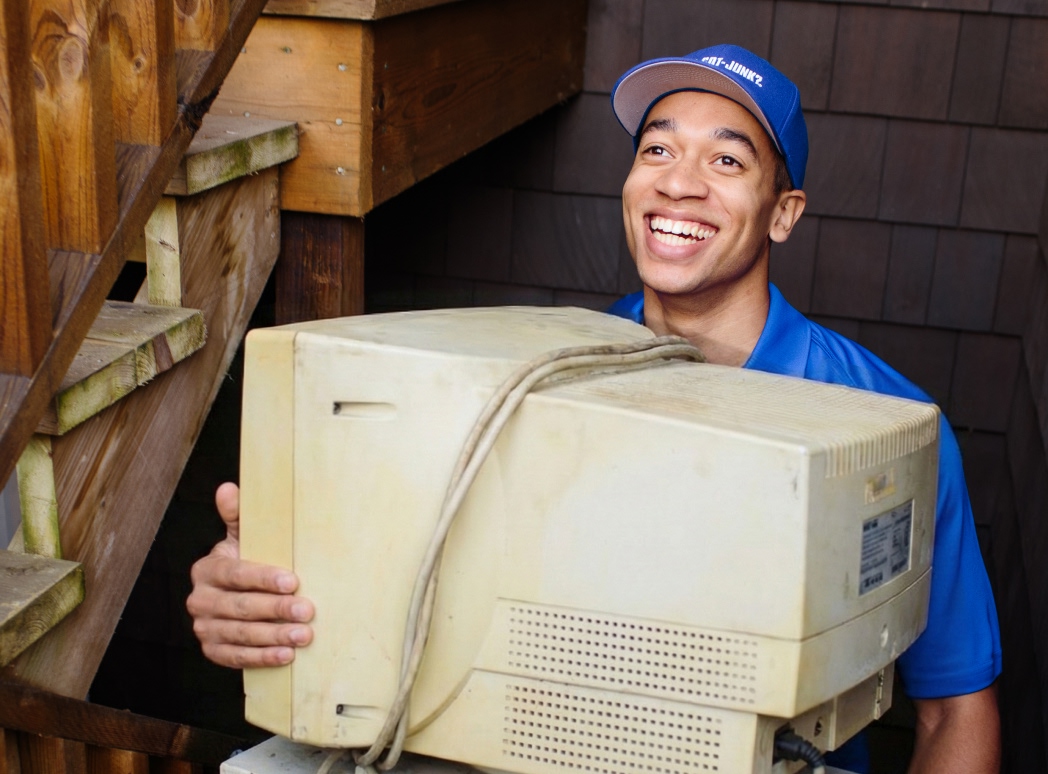
Electronic waste, or "e-waste," is a term used to describe discarded or broken electronic devices. This waste includes broken computers, televisions, stereos, VCRs, music players, DVD players, monitors, and cell phones. Many of these products may be salvaged, refurbished, reused, or recycled.
Getting rid of your old cell phones, computers, and televisions largely depends on the condition that they’re in.
Here are some responsible ways to handle your electronic disposal:
- Locate an electronics recycling facility in your town.
- Donate working electronics to local charities or nonprofits.
- Donate or sell your e-waste for parts.
- Check to see if your local retailers offer trade-in services or buy used goods.
- Find out if any local retailers offer e-waste recycling.
- Sell your old electronics online.
- Attend a hard-to-recycle or e-waste recycling event.
- Find out if your trash collection service accepts electronics.
Electronic devices should only be thrown in a landfill as a last resort.
Before e-waste is recycled, it is first inspected to determine if it can be refurbished or donated. Once it is ready to be recycled, the device is taken apart and the materials are organized into separate categories to determine what can be reused and what can be further processed.
Determining which parts can be reused or converted is important because many electronics contain toxic metals and chemicals that need to be disposed of in a careful manner. When an electronic device is dismantled, the toxic pieces are properly disposed of while the reusable pieces are used for other purposes.
Due to the presence of toxic materials and chemicals found in most electronic devices, many waste management companies do not accept old electronics in regular trash pickup or curbside recycling services. These same toxic materials also make it illegal to throw old electronics into the trash in many cities. To avoid being fined or damaging the environment, e-waste must be disposed of properly.
All e-waste thrown in the trash will end up in landfills. However, leaving old electronics in a landfill can have a harmful effect on the environment. Whenever possible, the most responsible way to handle e-waste is to recycle or refurbish it. Recycled electronics are processed at facilities and reused to make new products. Broken electronics that can be fixed or reused still have value and can be donated or sold.
When e-waste isn’t recycled, it ends up in the landfill where it is exposed to the elements. Over time these electronics – made from toxic materials such as lead, mercury, zinc, flame retardants, and chromium – can release toxins into the air and the soil, affecting the atmosphere and tainting groundwater supplies.
Taking the time to properly dispose of electronic waste can prevent these substances from making their way into soil, causing damage to plants and animals, and potentially harming our food and water supply.
When you use 1-800-GOT-JUNK? to get rid of your electronic waste, you don’t have to worry about where to take your electronics. We work with local charities and recycling facilities to ensure all the components are properly disposed of.
With the rate of cell phone ownership increasing every day, replacing your old phone with the latest model has become a standard for many phone owners.
Like many electronic devices, cell phones contain materials that can cause harm to the environment if left in a landfill. These chemicals can be released from the phone and contaminate the atmosphere and surrounding soil.
Here are some ways you can dispose of or reuse your old cell phone:
- Trade your old phone in when buying a new one.
- Sell your working phone online, to a friend, or to a family member.
- Keep your old phone as a backup or experimental phone.
- Donate your old phone to a charity or nonprofit organization.
- Take your old phone to an electronics recycling facility.
- Ask your phone retailer if they offer phone recycling.
- Check to see if your waste management service accepts electronics.
How to safely dispose of old batteries all depends on the type of battery you have. Alkaline batteries, which are the most common household battery types, are safe to throw away with your regular trash. However, car batteries and lithium batteries – which are often used in phones and computers – are not safe to be left in landfills.
Here are some ways you can get rid of old batteries:
- Take your batteries to a local electronics recycling facility.
- Stop by a local electronics retailer and leave them in designated bins.
- Throw away all AAA, AA, 9V, and D-cell batteries in your trash can.