


Trash pickup and removal services
.svg)
Say goodbye to the items your regular trash service leaves behind.
.svg)


The trash removal service that takes it all
If your trash removal company isn’t taking all of your trash, call 1-800-GOT-JUNK?. We offer full-service recurring and one-time trash pickup services for residential and commercial properties.
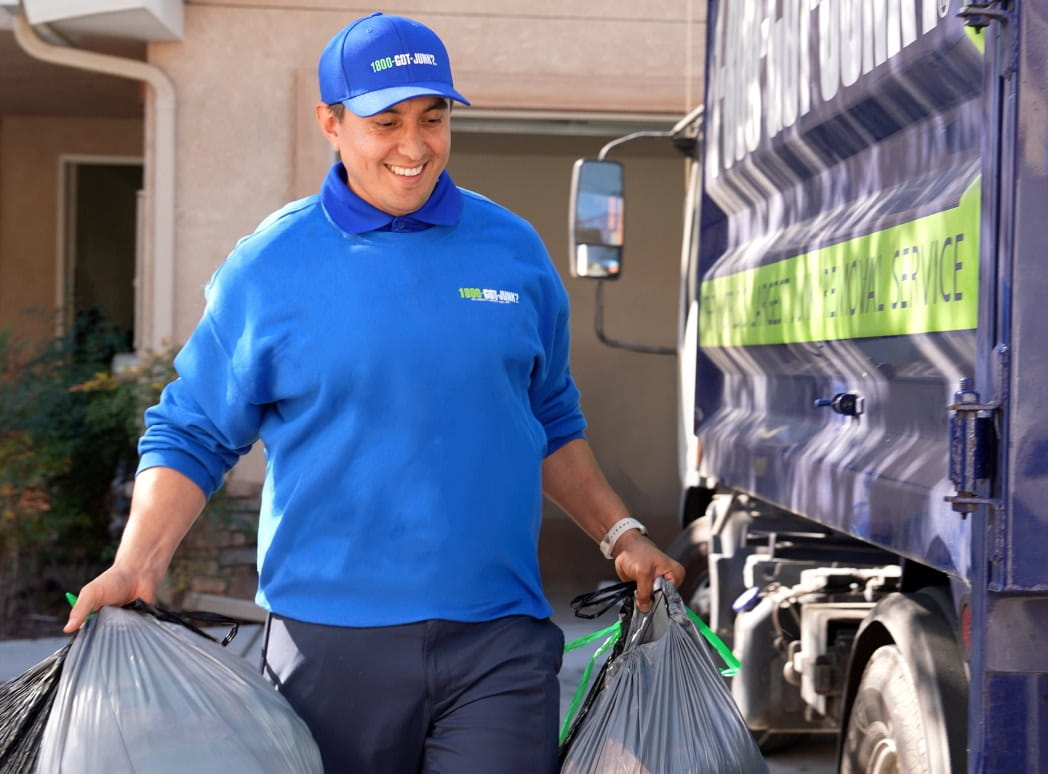
Unlike your local dump pickup company, we take everything, including electronics, furniture, and organic waste. Best of all, we do all the loading so you never have to lift a finger. All you have to do is point, and your junk disappears!
How our trash removal service works
In just 4 easy steps, you can reclaim your space, ready for endless possibilities.
Schedule appointment
- Book online or call us
- No deposit required
- Same-day service available
Get in-person estimate
- Two-person team
- Two-hour arrival window
- No obligation to proceed with the service
Watch us get to work
- Zero preparation needed
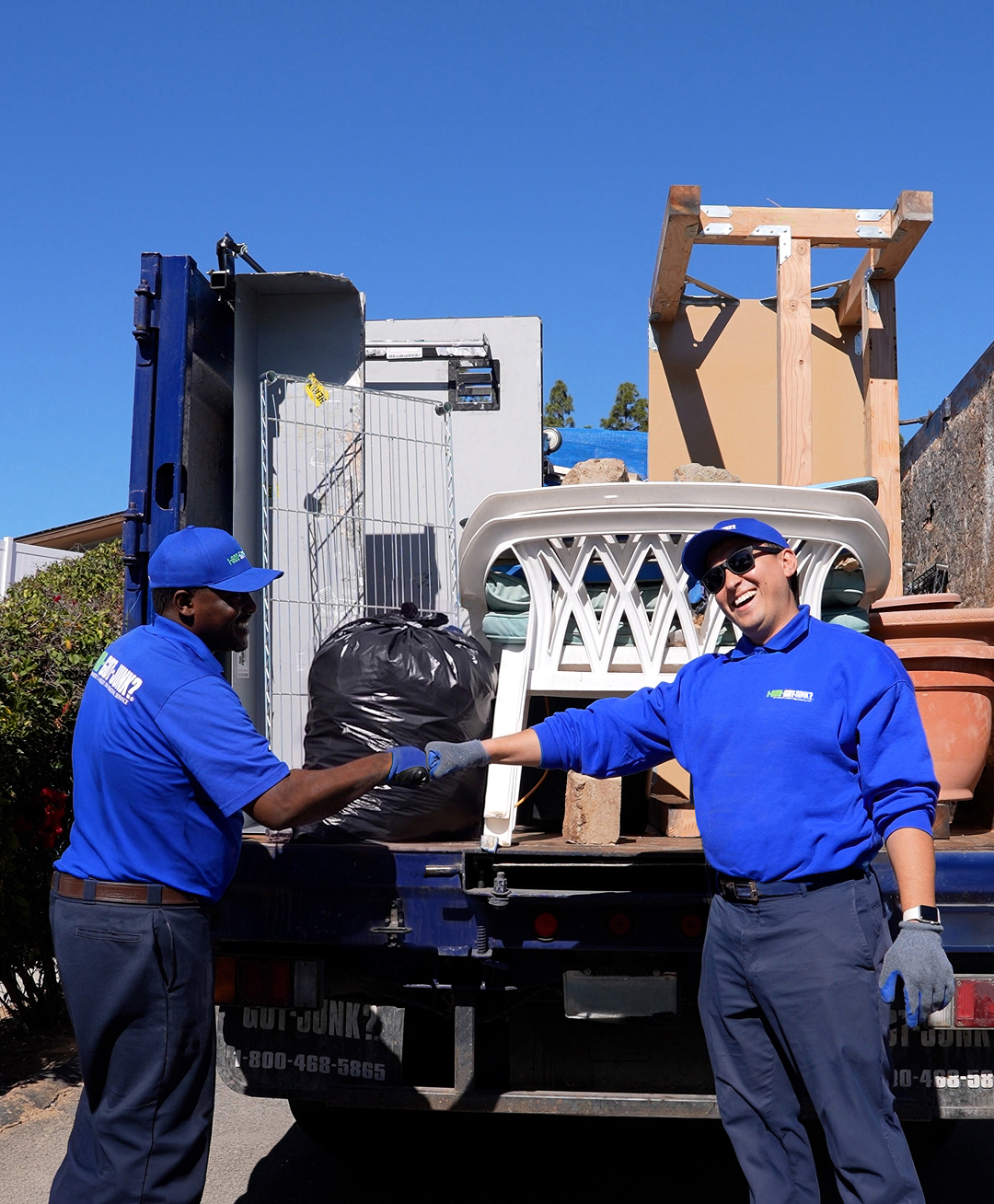
- We do all the heavy lifting
- We sweep up after
Responsible disposal
- Donation drop-off to local charities
- Recycling taken to local facilities
- We take care of all collecting and sorting
Trash we take
As long as no hazardous items are present, we remove most trash, including:
- Household Trash
- Organic Waste
- Garbage
- Bulk Trash
.png)
Why should you hire a professional trash pickup and removal service?
Local government services have strict rules on timing and weight, often leading to rejected items or missed pickups. If you missed your window, your bin was too heavy, or you have bulky furniture requiring a weeks-long wait for a special appointment, 1-800-GOT-JUNK? is your seamless alternative.
Unlike regular haulers, we provide full-service removal from start to finish. You won’t have to lift a finger; our professional team handles all the heavy lifting and loading without damaging your home. With same-day availability in many areas, we’ll clear everything the city wouldn't—often within 24 hours—so you can finally cross this off your to-do list. We’re in your neighborhood! a 1-800-GOT-JUNK? location near you.
All-inclusive pricing for trash removal
We charge by volume, which is how much space your items take up in the truck. We have a minimum charge for very small loads; from there, prices go from 1/8th of a truck up to a full truckload. We also have special pricing if you only have one single item. We can give you an exact price once we see the items in person.
Our prices include everything
- Junk removal from anywhere—no need to move items out
- Our friendly teams, who are fully licensed and insured
- All lifting, loading, and cleanup
- Disposal and environmental fees
Why choose us?
We provide fast, full-service junk removal to keep your home clutter-free.

Convenience
We offer same-day service and flexible scheduling to fit your busy lifestyle.

Two-person team
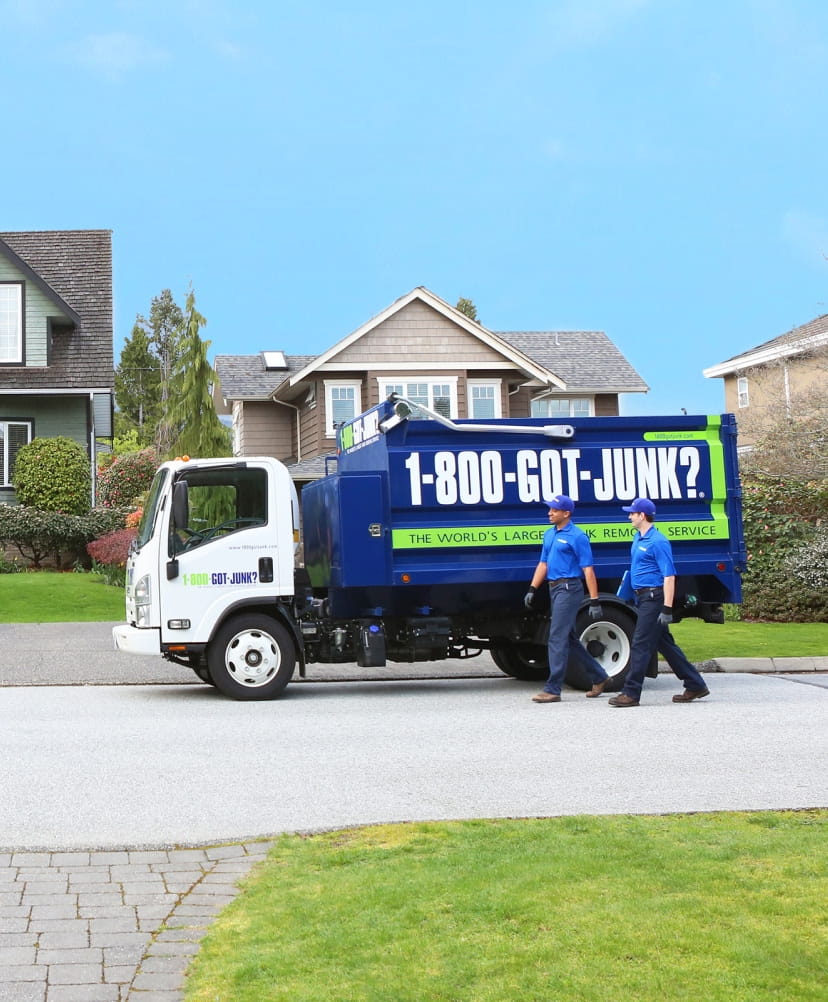
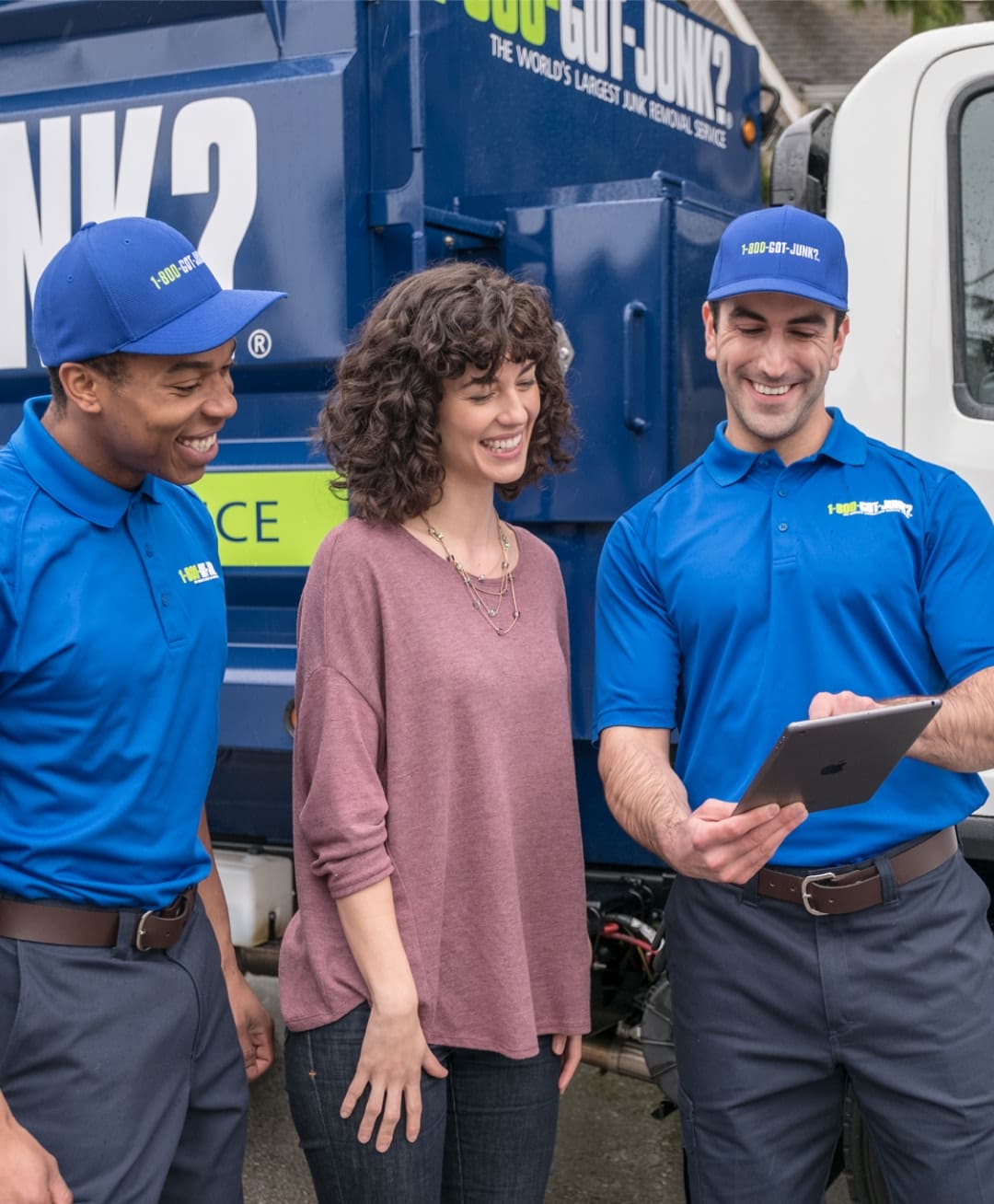
A professional, licensed, and insured two-person team will arrive at your home in uniform, ready to handle all your junk removal needs.

No heavy lifting
We’ll handle all the lifting and loading, and even sweep up when we’re done, leaving your space spotless.

Free, no-obligation estimates
To make sure you get the most accurate price possible, we provide in-person estimates at your convenience.

Peace of mind
We give old items a new life by recycling the recyclables and donating the donatables to keep as much as possible out of the landfill.

24/7 phone support
Our customer service team is available 24/7 to answer any questions.
Frequently asked questions
What should I do if the city didn't pick up my trash?
If your waste was rejected due to sorting errors, weight limits, or being non-compliant, you can typically file a complaint with your local sanitation department. However, this often requires waiting until your next scheduled day. For an immediate solution, 1-800-GOT-JUNK? can remove the rejected items right away, handling all the sorting and heavy lifting for you.
What items are usually not accepted by local government pickups?
Most city services have strict bans on hazardous materials and "hard-to-haul" items. This often includes:
- Automotive: Tires, gas tanks, and car batteries.
- Chemicals: Liquid paint, bleach, pesticides, and propane tanks.
- Bulk Items: Large appliances, furniture, and electronics often require a separate, pre-booked appointment.
Why was my trash bin left full?
Common reasons for skipped pickups include overfilled bins (lids must be securely closed), bins being too heavy for manual lifting, or improper sorting of organic and recyclable materials. If you’re over the limit, we can haul away the excess so you can start the week with an empty bin.
Can you throw batteries in the trash?
The simple answer is no, because it is illegal to throw batteries in the trash! Never throw batteries or items that contain batteries in the trash or recycling bins. Most batteries, regardless of type, contain toxic chemicals such as ion, cadmium, lead, lithium, or sulfuric acid. Batteries can cause fires in recycling facilities. If old batteries go into a landfill, the toxic pollutants can leak out and damage fragile ecosystems and contaminate groundwater. Batteries must be removed from devices, separated from regular household trash, and disposed of properly.
What do you do if you miss your garbage truck?
If you miss your garbage truck and have too much trash to wait until the next collection day, there are other trash pickup options in your area.
The first option is to take your trash to your local dump or recycling center. However, taking your trash there yourself means sorting it, loading and unloading it, and taking time out of your day.
Save yourself the stress and let 1-800-GOT-JUNK? take your trash for you. We are fully insured, do all the heavy lifting, and recycle whenever possible to save you time and put your mind at ease.
How can I reduce waste at home?
Reducing waste in your home is easier than you think. Here are some steps to help you get started:
- Recycle paper, metal, and plastics whenever possible.
- Buy reusable bags and repurpose your plastic bags.
- Prepare fresh meals at home rather than eating out and using disposable food containers.
- Buy bulk items and use reusable containers.
- Create a compost pile for organic waste.
- Learn how to patch and repair instead of buying new things when something breaks.
- Use reusable dishes instead of one-time-use disposable plates.
- Upcycle broken items into new ones.
- Always donate old items before throwing them in the trash.
How can I reduce food waste?
Reducing food waste at home requires discipline, but it doesn’t have to be difficult. Here’s a list of ways you can cut back on creating food waste at home:
- Shop for food with a plan in mind.
- Avoid over-portioning.
- When you have leftovers, eat them.
- Learn how to properly store your food for maximum shelf life.
- Organize your pantry and fridge so that it works for you.
- Only buy food you believe you will eat.
- Keep track of what and how much you are throwing away.
- Start meal prepping.
- Never shop hungry.
- Freeze and preserve extra fruits and vegetables.
- Buy fresh foods that will stay ripe until you eat them.
How do I reduce plastic waste?
Plastic makes up a large amount of solid waste in landfills and can take centuries to break down. Unfortunately, the more plastic is used, the more valuable space it takes up in landfills.
However, there are several ways you can help reduce plastic waste:
- Buy cardboard box products instead of plastic bottles.
- Use bulk bins and reusable bags instead of one-time purchases.
- Switch from plastic straws to paper or metal ones.
- Stop chewing gum - it’s made of plastic or synthetic rubber.
- Use reusable containers at home.
- Bring your own take-out bag instead of using the styrofoam containers most restaurants use.
- Switch from disposable lighters to matches or a refillable one.
- If you can manage, cloth diapers generally have a lesser impact on the environment than standard disposable diapers.
- Use metal silverware instead of plasticware at home.
- If you like juices, make them fresh instead of buying them in a plastic bottle.
- Create your own cleaning products with simple ingredients from home.
- Switch from disposable razor blades to a razor with replaceable blades.
- Instead of buying pre-packaged bread, make your own.
- If you’re buying meat, buy it from the deli and wrap it in paper.
- Switch from plastic bottle soap containers to bar soaps.
- Avoid deodorants or antiperspirants that come in plastic containers - there are many healthier alternatives.
- Instead of using an air freshener, light a candle.
What happens to garbage after it is collected?
After garbage is collected, it goes to a landfill to be sorted. The materials are separated by trash and recyclable items. The trash is dumped in the landfill to be plowed and separated into various deposits. There are systems in place to capture the leaking chemicals and air pollutants. There are also systems to convert these toxins into energy.
Don’t just take our word for it
Real customer reviews, typos and all ;)

Markel and Will came out and were amazing! They helped get rid of some hard stuff that we had trouble moving. They were super friendly and very professional and we would love for them to come back and help again when we need to get rid of some more junk in the future.


Antonio and Kevin were great to work with! They came out on a cold snowy evening and were so professional and kind! They were quick and hauled away items from our basement and other yard items. We were calling places to compare prices and they were the most responsive and fair company!
I needed some stuff picked up late on a Friday and 1-800-GOT-JUNK was able to make it happen in less than an hour. Holly showed up and loaded the truck up in no time at all. If you need something picked up with no hassle, give them a call.
If your waste was rejected due to sorting errors, weight limits, or being non-compliant, you can typically file a complaint with your local sanitation department. However, this often requires waiting until your next scheduled day. For an immediate solution, 1-800-GOT-JUNK? can remove the rejected items right away, handling all the sorting and heavy lifting for you.
Most city services have strict bans on hazardous materials and "hard-to-haul" items. This often includes:
- Automotive: Tires, gas tanks, and car batteries.
- Chemicals: Liquid paint, bleach, pesticides, and propane tanks.
- Bulk Items: Large appliances, furniture, and electronics often require a separate, pre-booked appointment.
Common reasons for skipped pickups include overfilled bins (lids must be securely closed), bins being too heavy for manual lifting, or improper sorting of organic and recyclable materials. If you’re over the limit, we can haul away the excess so you can start the week with an empty bin.
The simple answer is no, because it is illegal to throw batteries in the trash! Never throw batteries or items that contain batteries in the trash or recycling bins. Most batteries, regardless of type, contain toxic chemicals such as ion, cadmium, lead, lithium, or sulfuric acid. Batteries can cause fires in recycling facilities. If old batteries go into a landfill, the toxic pollutants can leak out and damage fragile ecosystems and contaminate groundwater. Batteries must be removed from devices, separated from regular household trash, and disposed of properly.
If you miss your garbage truck and have too much trash to wait until the next collection day, there are other trash pickup options in your area.
The first option is to take your trash to your local dump or recycling center. However, taking your trash there yourself means sorting it, loading and unloading it, and taking time out of your day.
Save yourself the stress and let 1-800-GOT-JUNK? take your trash for you. We are fully insured, do all the heavy lifting, and recycle whenever possible to save you time and put your mind at ease.
Reducing waste in your home is easier than you think. Here are some steps to help you get started:
- Recycle paper, metal, and plastics whenever possible.
- Buy reusable bags and repurpose your plastic bags.
- Prepare fresh meals at home rather than eating out and using disposable food containers.
- Buy bulk items and use reusable containers.
- Create a compost pile for organic waste.
- Learn how to patch and repair instead of buying new things when something breaks.
- Use reusable dishes instead of one-time-use disposable plates.
- Upcycle broken items into new ones.
- Always donate old items before throwing them in the trash.
Reducing food waste at home requires discipline, but it doesn’t have to be difficult. Here’s a list of ways you can cut back on creating food waste at home:
- Shop for food with a plan in mind.
- Avoid over-portioning.
- When you have leftovers, eat them.
- Learn how to properly store your food for maximum shelf life.
- Organize your pantry and fridge so that it works for you.
- Only buy food you believe you will eat.
- Keep track of what and how much you are throwing away.
- Start meal prepping.
- Never shop hungry.
- Freeze and preserve extra fruits and vegetables.
- Buy fresh foods that will stay ripe until you eat them.
Plastic makes up a large amount of solid waste in landfills and can take centuries to break down. Unfortunately, the more plastic is used, the more valuable space it takes up in landfills.
However, there are several ways you can help reduce plastic waste:
- Buy cardboard box products instead of plastic bottles.
- Use bulk bins and reusable bags instead of one-time purchases.
- Switch from plastic straws to paper or metal ones.
- Stop chewing gum - it’s made of plastic or synthetic rubber.
- Use reusable containers at home.
- Bring your own take-out bag instead of using the styrofoam containers most restaurants use.
- Switch from disposable lighters to matches or a refillable one.
- If you can manage, cloth diapers generally have a lesser impact on the environment than standard disposable diapers.
- Use metal silverware instead of plasticware at home.
- If you like juices, make them fresh instead of buying them in a plastic bottle.
- Create your own cleaning products with simple ingredients from home.
- Switch from disposable razor blades to a razor with replaceable blades.
- Instead of buying pre-packaged bread, make your own.
- If you’re buying meat, buy it from the deli and wrap it in paper.
- Switch from plastic bottle soap containers to bar soaps.
- Avoid deodorants or antiperspirants that come in plastic containers - there are many healthier alternatives.
- Instead of using an air freshener, light a candle.
After garbage is collected, it goes to a landfill to be sorted. The materials are separated by trash and recyclable items. The trash is dumped in the landfill to be plowed and separated into various deposits. There are systems in place to capture the leaking chemicals and air pollutants. There are also systems to convert these toxins into energy.