



How to clean out a storage unit: Costs, steps, and when to call for help



TL;DR
Cleaning out a storage unit is the perfect way to stop paying for unneeded space and enjoy a fresh start. While a DIY cleanout requires sorting, truck rentals, and heavy lifting, 1-800-GOT-JUNK? can step in to make the transition effortless.
- A standard 10x10 storage unit can take a full day to clear yourself, while a professional two-person team can often finish in 1–2 hours.
- DIY costs can include $50–$150 for truck rental and $50–$200+ in dump fees.
- Professional storage unit cleanout pricing typically ranges from $150–$600+ based on volume.
- Donate usable items first, then recycle or dispose of the rest responsibly.

If you feel like your monthly storage bill is getting a little out of hand, you aren’t alone. Recent industry data shows that the average American spends between $100 and $160 per month on self-storage. Over a year, that’s nearly $2,000 spent on items you likely haven't looked at in months. As prices for these units continue to climb, many people find themselves asking how to clean out a storage unit without losing their entire weekend (or their sanity).
Whether you’ve inherited a unit full of mystery boxes or you’re tired of paying "rent" for old furniture, the process can feel overwhelming. This guide walks you through the practical steps to empty a storage unit, the actual storage unit cleanout cost, and how to decide if hiring a professional storage unit cleanout service is the right move for you. We’re here to help you reclaim your space and your budget.
Is it worth keeping your storage unit?
Before you grab the packing tape, it’s worth asking: Is a storage unit worth it? For short-term transitions like moving or a home renovation, they’re incredibly helpful. However, for long-term storage, the cost of keeping items often exceeds their replacement value.
To decide if you should keep or get rid of a storage unit, try these two simple tests:
- The replacement calculation: Add up what you have paid in rent over the last year. If that total is higher than what it would cost to buy those items brand new today, it’s time to let go.
- The "out of sight" test: If you needed a specific item right now, would you even remember it was in the unit? If the answer is no, you probably don’t need it.
Common triggers like annual rent increases or downsizing your home are perfect opportunities to reconsider your needs. Often, a thorough decluttering of your current home can free up enough space to re-home the few items you actually want to keep, like seasonal decor or heirloom pieces. In most cases, the peace of mind that comes from being rid of that monthly bill is worth far more than the boxes inside.
How to clean out a storage unit: step by step
Knowing how to empty a storage unit efficiently requires a plan. If you try to do it without a strategy, you’ll likely end up moving the same box three times. Here’s our professional approach to a successful storage cleanout:
- Schedule enough time: Don't underestimate the job. A standard 10x10 unit typically takes a full day for an inexperienced person to sort and empty. Larger units or units packed to the ceiling may require an entire weekend.
- Bring the right supplies: Show up prepared with heavy-duty trash bags, packing tape, markers for labeling, and a dolly. If you’re doing a DIY run, ensure you have a vehicle large enough for multiple trips.
- Sort before you move anything: Create three distinct zones: keep, donate, and remove. Don't start loading your car until you have surveyed the entire unit. This prevents you from burying the items you actually wanted to keep under a pile of trash.
- Handle donations first: Getting "the donatables" out of the way early reduces the volume of items you have to manage. Look for local thrift stores or organizations like Habitat for Humanity ReStore.
- Call in help for heavy or bulky items: This is the most important safety tip. Attempting to move large appliances, sofas, or mattresses by yourself is physically risky.
- Do a final sweep: Check every corner and behind every pillar. Once the unit is empty, notify the facility manager immediately so they can stop your billing cycle.
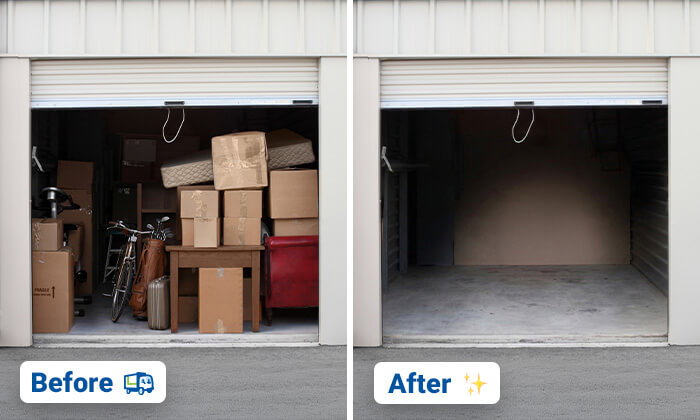
From our experience at 1-800-GOT-JUNK?, a professional two-person team can often clear a 10x10 unit in just an hour or two—tasks that might take a homeowner eight hours of heavy lifting. We focus on recycling the recyclables and donating the donatables, so you don't have to worry about where your items end up.
How much does it cost to clean out a storage unit?
When weighing how much it costs to clean out a storage unit, you have to look at both the price tag and the value of your time.
The DIY cost
If you choose to handle the storage cleanout yourself, expect these baseline expenses:
- Truck rental: Prices typically range from $50–$150 per day, depending on the size of the truck and your location. Companies like U-Haul or Budget are common benchmarks.
- Dump fees: Most municipalities charge by weight for junk disposal. Disposing of a unit's worth of furniture can cost anywhere from $50 to over $200 in local tipping fees.
- Labor: Unless you have very generous friends, you’ll be doing the heavy lifting yourself.
Professional junk removal cost
The cost of a professional storage unit cleanout is usually based on volume—how much space your items take up in the truck.
- Range: Prices typically range from $150 to $600+, depending on the amount of junk.
- Value: This price includes the labor, truck, fuel, and all disposal fees.
- The math: When you factor in a $150 truck rental, $100 in dump fees, and 10 hours of your own time, a professional junk removal service often ends up being the more cost-effective (and definitely the easier) choice.
When to get help from a professional storage unit cleanout service
Sometimes, the DIY route just isn't feasible. It makes sense to look for help cleaning out a storage unit when:
- The contents are a mystery: If the unit hasn't been opened in years, you may encounter mold, dust, or heavy items that require professional handling.
- You have heavy items: If you’re dealing with exercise equipment, solid wood furniture, or appliances, save your back and let the pros handle the heavy lifting.
- You’re dealing with an estate: Sorting through a loved one’s belongings in an estate cleanout is emotionally draining. A professional team can handle the physical removal so you can focus on what matters.
- Time is of the essence: If you need to stop the billing cycle by the end of the month and only have a few hours to spare, a professional team is the fastest way to get it done.
At 1-800-GOT-JUNK?, we provide professional storage cleanout services that take the stress out of the process. We’re in your neighborhood, we offer same-day availability, and we make junk disappear.
We can help with your storage unit cleanout
Closing out a storage unit is one of the fastest ways to put money back in your pocket every month. Even when you factor in the cost of professional help, you’ll likely break even in just a couple of months of saved rent.
Our mission is to create space and peace of mind for you. We handle everything—from the sorting to the heavy lifting—and we ensure that your items are disposed of responsibly through recycling and donations. All you have to do is point.
Ready to say goodbye to those monthly fees? Check out how our pricing works or see the full list of items we can take.
Schedule your junk pickup online, or call us 24/7 at 1-800-468-5865. We’re happy to help!
Frequently asked questions
What are the pros and cons of storage units?
The pros include extra space during a move and protection for seasonal items. The cons are the high monthly costs, the risk of items being damaged by temperature fluctuations, and the tendency to keep things you no longer need.
Why are storage units so expensive?
Storage units have become expensive due to high demand, rising real estate costs, and corporate consolidation in the industry. Many facilities also implement automatic annual rent increases.
What happens if you don’t pay for your storage unit?
If you don't pay, the facility will place a lien on your items. Eventually, the contents will be sold at auction to cover the debt, and the default could negatively impact your credit score.
How do I get rid of all my stuff in a storage unit?
The fastest way is to sort items into "keep," "donate," and "trash." For the items you don't want, you can host a unit sale, take them to a local donation center, or hire a junk removal service to haul everything away at once.
How do I get rid of a storage unit I no longer want?
To get rid of a storage unit, you must empty it, sweep it out, and remove your lock. Once the unit is vacant, notify the management to sign a move-out form and ensure your contract is officially terminated.
Similar articles
.jpg)
Holding on while letting go: Meghan Yuri Young’s fresh start
Navigating clutter after losing a loved one can feel overwhelming, but letting go is often the first step toward healing. Meghan Yuri Young shares how sorting through her late father’s belongings—with help from 1-800-GOT-JUNK?—helped her honor his memory, lighten her load, and transform her home into a place of fresh possibilities.

Top 5 reasons storage units aren’t worth it
Think storage units are a lifesaver? They might actually be an expensive trap. While they seem like a quick fix for clutter, these temporary spaces often turn into long-term financial sinkholes for items you’ll never use again. From hidden monthly costs to the lingering mental load, discover five eye-opening reasons why renting a storage unit isn’t worth it.