How to dispose of batteries safely



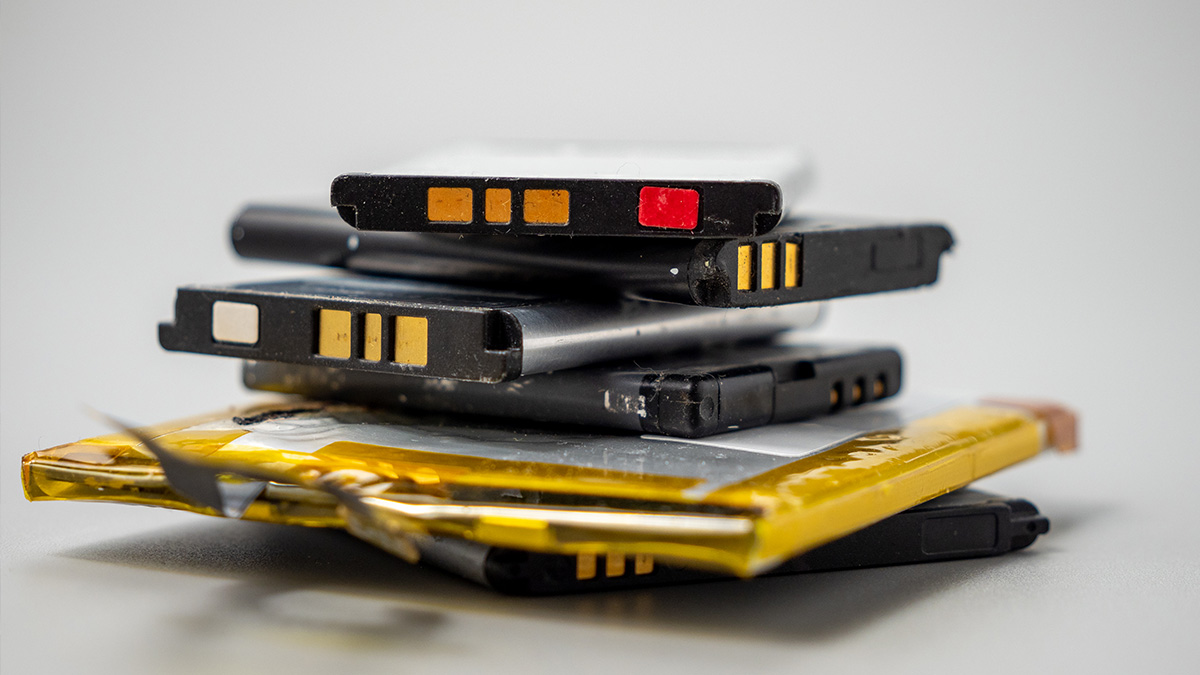
Batteries power nearly every aspect of our lives. From smartphones and laptops to cars and remote controls, batteries play a crucial role in keeping our devices and appliances running efficiently. However, when these batteries reach the end of their useful life, improper disposal can pose serious environmental and health risks.
We’ll walk you through the types of household batteries you’ll encounter, how to dispose of batteries safely, and who can help you get rid of old batteries.
Understanding battery types
It's essential to understand the different types of batteries and their composition, as each type requires specific handling.
Alkaline batteries
Alkaline batteries are one of the most common batteries in households and businesses. They are typically non-rechargeable and offer a stable and reliable source of power. These batteries are available in various sizes, including AA, AAA, C, D, and 9V.
These batteries consist of zinc, manganese dioxide, and potassium hydroxide. Alkaline batteries are suitable for low- to moderate-power devices like remote controls, flashlights, clocks, toys, and small electronic gadgets. While they provide decent energy storage, they are not cost-effective for high-drain devices or long-term use.
Button cell
These small, disc-shaped batteries are designed for compact devices that require a long-lasting and stable power supply. Some may contain mercury, silver oxide, or lithium.
These batteries are found in watches, hearing aids, medical devices, calculators, and other small electronic devices. They are favored for their compact size and the ability to provide consistent power over extended periods.
Lead-acid
Lead-acid batteries are among the oldest and most reliable rechargeable batteries. They are commonly used in automobiles and as backup power sources. They are known for delivering high bursts of energy and are cost-effective for high-current applications.
These batteries contain lead plates and sulfuric acid. A chemical reaction between the two components creates electricity.
Rechargeable batteries
Rechargeable batteries offer a more sustainable and economical alternative to disposable batteries. They can be recharged and reused multiple times, reducing waste and the need for frequent replacements.
These rechargeable batteries are found in electronics like laptops, smartphones, and power tools.
- Lithium-ion (Li-ion): These batteries are lightweight and have a high energy density. Li-ion batteries power a wide range of devices, including smartphones, laptops, tablets, digital cameras, power tools, and electric vehicles. They are favored for their long-lasting power and ability to handle high-drain applications.
- Nickel-metal hydride (NiMH): NiMH batteries are commonly used in cordless phones, digital cameras, portable gaming devices, and some power tools. They have a good energy density and are relatively environmentally friendly compared to other battery types.
- Nickel cadmium (NiCd): NiCd batteries were widely used in the past but have become less common due to environmental concerns related to cadmium. They are still found in older devices, emergency backup systems, and some power tools.
Hazards of improper battery disposal
Improper battery disposal can have severe consequences for the environment and human health.
Batteries should never be thrown in the trash because of the hazards they pose. When they end up in landfills, they can leach harmful chemicals. For example, alkaline batteries can corrode and release zinc and manganese dioxide into the soil. Rechargeable batteries can release lithium, nickel, cadmium, and cobalt. Batteries of any type can contaminate water sources and potentially harm wildlife.
Burning batteries is no solution. Smoke from these batteries releases toxic fumes into the air, further contributing to pollution and respiratory issues.
Health consequences of improper battery disposal
Batteries can harm human health if they aren’t cared for properly. Alkaline batteries can leak potassium hydroxide, a caustic alkaline, which can cause irritation and burns. Rechargeable batteries can contain nickel-cadmium, which can pose health risks. Cobalt and nickel in rechargeable batteries can cause skin irritation and respiratory issues. Leaking lead-acid batteries can cause neurological damage, developmental issues, and kidney damage.
This is why batteries must be recycled or disposed of safely and responsibly.
Regulations about battery disposal
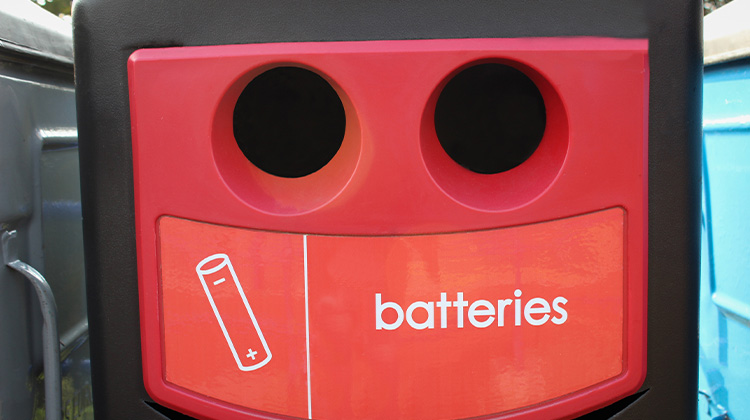
You should also check locally for recycling practices and regulations. For example, California considers batteries hazardous waste. The state requires residents to take batteries to an authorized recycling center, a waste handling service equipped for the task, or a household hazardous waste facility. Disposing of any battery in the trash is against the law in California.
Preparing batteries for disposal
First, sort your batteries by type, especially if you’re disposing of them in collection boxes or bags. To prevent fires or short-circuiting, cover the terminals of each battery with non-conductive tape, such as electrical tape. Secure the batteries in small, separate containers.
If possible, use the remaining charge in rechargeable batteries before disposal. Be sure to inspect rechargeable batteries for leakage or damage. If you find any, pack those batteries separately.
Safely disposing of batteries is a responsibility we all share to protect the environment and our communities. By understanding the different types of batteries and following proper disposal methods, you can help minimize environmental pollution and potential health hazards.
Safe battery disposal methods
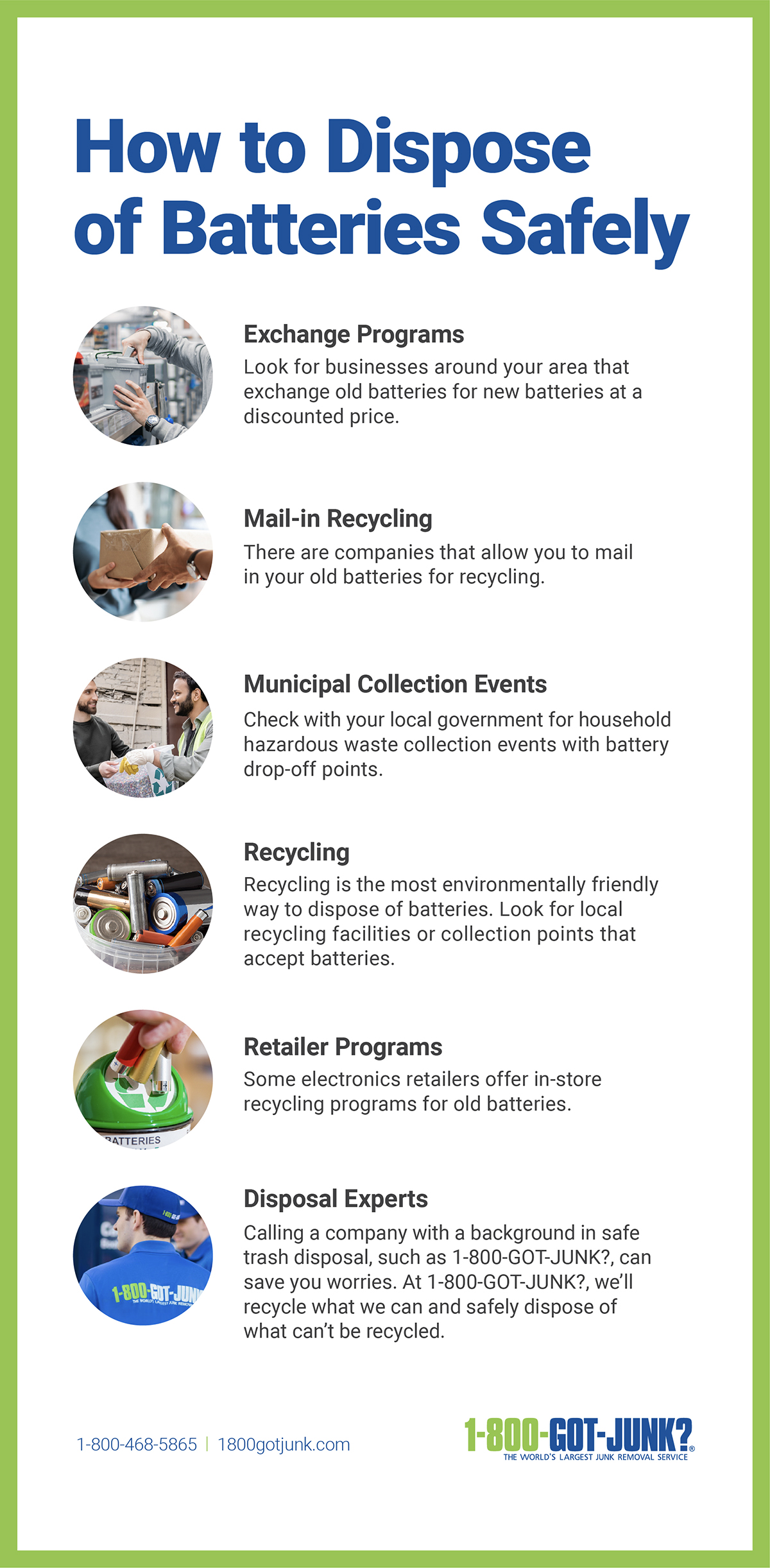
- Exchange programs: Used car batteries are often taken away by firms that can recycle or dispose of them when you purchase a new battery for installation. Check for this option for other specialized batteries, such as for laptops or rechargeable tools, which may also save you money.
- Mail-in recycling: There are companies that allow you to mail in your old batteries for recycling. Be sure to follow their packaging instructions carefully to prevent accidents during transit.
- Municipal collection events: Check with your local government for household hazardous waste collection events. These events often include battery drop-off points.
- Recycling: Recycling is the most environmentally friendly way to dispose of batteries. Look for local recycling facilities or collection points that accept batteries. Many electronic retailers and recycling centers offer battery recycling programs.
- Retailer programs: Some electronics retailers offer in-store recycling programs for old batteries. Call ahead or visit their website to see if they participate.
- Disposal experts: Calling a company with a background in safe trash disposal, such as 1-800-GOT-JUNK?, can save you worries. At 1-800-GOT-JUNK?, we’ll recycle what we can and safely dispose of what can’t be recycled. Find out more about the electronics we can recycle.
Get rid of your batteries with 1-800-GOT-JUNK?
Let 1-800-GOT-JUNK? take care of the responsible disposal of your batteries. From button batteries to laptop batteries and more, we’ll safely remove and either recycle or dispose of them responsibly and safely.
If you need help getting rid of old batteries or electronics, contact your local 1-800-GOT-JUNK? franchise for a free, no-obligation quote.
Need to get rid of old batteries?
Frequently asked questions
We price based on how much space your items take up in the back of our truck, broken down into ⅛, ¼, ½, ¾ of a truckload, all the way up to a full truckload. Our trucks hold the equivalent of seven pickup trucks.
Our prices vary based on location and there is a minimum charge for our teams to remove your items, which is different in each location, based on a number of factors, including local disposal and recycling fees.
We offer single item pricing for certain items such as mattresses or TVs, sometimes this will be less than our minimum charge.
For materials that have a heavy cubic weight like dirt, concrete, and gravel, pricing is based on the total volume that the material takes up in the truck, up to a maximum of one foot in height for a full truck.
Watch us load up a truck to see how our standard pricing works!
If you need service weekly, monthly, or quarterly, we offer bulk pricing discounts. This gives you better value compared to common alternatives, such as dumpsters or less professional junk removal services.
Interested? Call our business account team at 1-888-475-3461 to discuss your needs as well as pricing options.
On the day of your appointment with us, our friendly, uniformed truck team members will give you a call or text 15-30 mins before we arrive to let you know we’re on our way.
Whether your business has a single location or multiple locations, we can create a custom junk removal solution that works for you. We can coordinate pickups at multiple locations at a local, regional, and national level. Rather than work with dozens of regional or local companies, let 1-800-GOT-JUNK? handle the jobs across all your locations.
Absolutely! We take large items all the time. As long as it can be lifted and loaded into the truck by two people, we'll be happy to take it away for you!
We work with all types of businesses and can handle any type of job - cleanouts, bulk item removal, general junk removal and even specific items like cardboard or pallets. We can take pretty much anything as long as it's not toxic or hazardous. We can remove your items from wherever they’re located, whether it’s your office, store, site or anywhere else—all you have to do is point!
Yes, we're fully licensed, bonded and insured! We have insurance covering damages to both persons and property for every single booking.
While we don't quite service the entire map, we cover almost every greater metropolitan area across the US, Canada, and Australia. To see if we’re in your neighborhood, you can start a booking by entering your zip code here.
Our customer service center is open 24/7, so we’re here whenever you need us! While operating hours may vary in our franchise locations, we offer same-day and off-hours service, including weekends.
Similar articles
Top 5 reasons storage units aren’t worth it
Think storage units are a lifesaver? They might actually be an expensive trap. While they seem like a quick fix for clutter, these temporary spaces often turn into long-term financial sinkholes for items you’ll never use again. From hidden monthly costs to the lingering mental load, discover five eye-opening reasons why renting a storage unit isn’t worth it.