Becoming Self Made podcast (2025): How Brian Scudamore made $700 into $700M




TL;DR
Sitting down with host Mike Michalowicz at our Vancouver headquarters for the debut episode of Becoming Self Made, 1-800-GOT-JUNK? founder and CEO Brian Scudamore draws his life timeline, detailing key moments in his life and journey turning a $700 pickup truck into a $700 million international business.
- Brian details his early life as a San Francisco-born kid with ADHD who moved a lot, went to 14 schools, and eventually dropped out of university to invest full-time in his junk removal business.
- Key turning points in Brian’s journey include: firing his entire 11-person team 5 years in, drafting his five-year "Painted Picture" on a cottage dock, overcoming a near-bankruptcy in 2008, and partnering with Erik Church to scale across Canada, the United States, and Australia.
- Salmon in a freezer and $400,000 in the floorboards: Brian shares some of the weirdest junk he’s seen along the way.
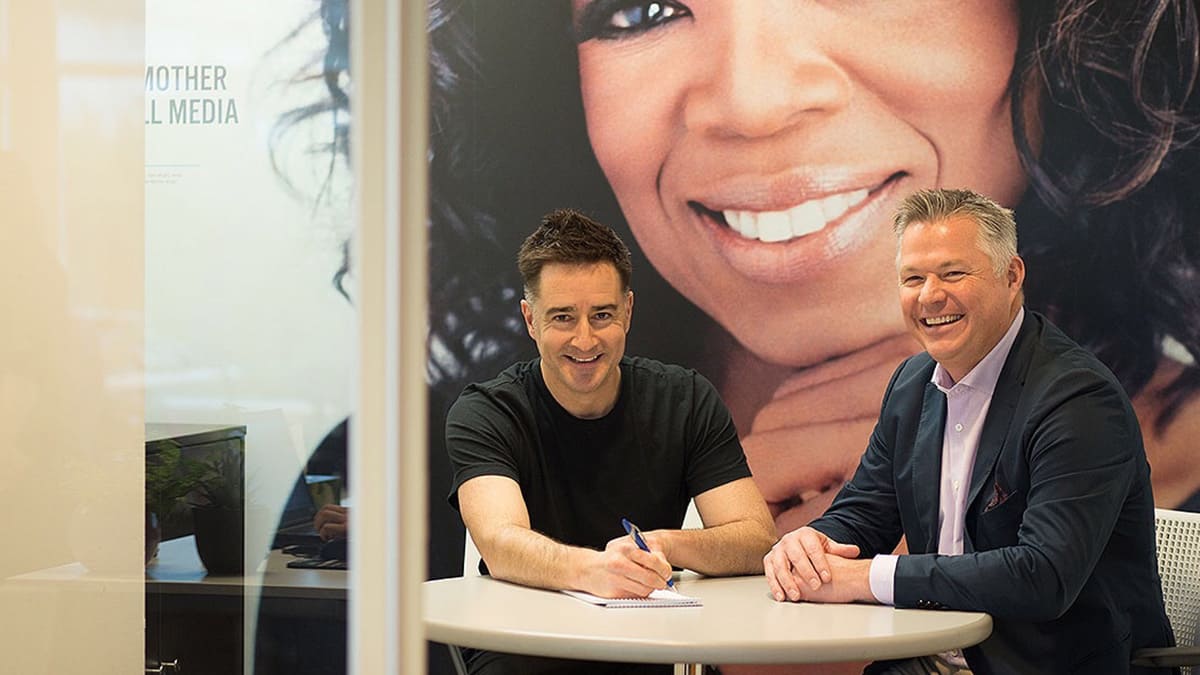
Published by: Relay Podcast
Host: Mike Michalowicz
Guest: Brian Scudamore, Founder and CEO of 1-800-GOT-JUNK?
Originally aired November 4, 2025.
Brian Scudamore reflects on his 1-800-GOT-JUNK? journey with Mike Michalowicz
When Mike Michalowicz sat down with me at our 1-800-GOT-JUNK? headquarters in Vancouver, Canada, for the very first episode of Becoming Self Made, he introduced a great exercise called the Lifeline. We pulled out a large chart to map the highs and lows of my life in five-year increments. Looking at that paper brought back memories of how this whole journey started, and what led me to the $700M junk removal empire that exists today.
Drawing the Lifeline: from school struggles to a $700 pickup truck
I was born in San Francisco, and moved around a lot as a kid. Growing up with severe, undiagnosed ADHD, school was a constant struggle. I ended up attending 14 different schools from kindergarten through university, and the only diploma I ever received was from kindergarten!
I dropped out of high school just one course short of graduating. Feeling “FOMO” as my friends headed off to top universities, I talked my way into college. Given my school track record, my parents weren't going to pay for it, and in 1989, the summer job market was tough.
Sitting in a McDonald's drive-thru in Vancouver, I saw a beat-up pickup truck ahead of me with plywood sideboards painted with "Mark's Hauling." That was my lightbulb moment. I bought a $700 truck, painted "The Rubbish Boys" on the side, and started hauling junk. Within two weeks, the business paid for the truck. Realizing I was learning far more on the streets than in a lecture hall, I made the scary but liberating choice to drop out of university and build my business full-time.
Why firing my entire company proved that culture comes first
By 1994, five years into running The Rubbish Boys, we had reached $500,000 in annual revenue with five trucks. On paper, things looked great. But inside the business, I was miserable. I was hiding out in a back office because I didn't enjoy my own team.
Nine of my eleven employees were negative "bad apples" who didn't share my vision. I realized that as the leader, I had allowed the wrong culture to take root. I decided to clean the slate. I called a team meeting with all 11 employees, owned my failure as a leader, and said two words from the heart: "I'm sorry." Then, I let all 11 people go in a single sitting.
I went from five trucks down to one. I was answering phone calls, scheduling appointments, dispatching, and hauling junk all by myself. It was chaotic, but that drastic reset taught me the single most important lesson of my career: 1-800-GOT-JUNK? is fundamentally a people business. From that day on, I vowed to hire only friendly and trustworthy individuals who loved helping others. That hard reset laid the foundation for the professional two-person teams we send to every job today.
Writing the Painted Picture and scaling through storm and success
In 1996, at age 26, I joined the Entrepreneurs' Organization (EO). Finding a tribe of fellow founders was life-changing, but I quickly fell into a trap: comparing myself to others. Other members had bigger businesses, formal educations, and fancy cars, while I was driving a junk truck on dates!
To break out of that negative doom loop, I went to my parents' summer cottage on Bowen Island, sat on the dock, and took out a clean sheet of paper. Instead of asking where the business was, I asked myself: What could this look like in five years if I imagined the possibilities?
I wrote a two-page document called the Painted Picture. I envisioned 1-800-GOT-JUNK? expanding into the top 30 metropolitan areas, becoming the FedEx of junk removal with clean, shiny trucks and uniformed drivers, and landing a feature on The Oprah Winfrey Show. When I shared it with my team, half thought I was on "hope dope," but the other half bought in completely. By 2006, that dockside vision helped us grow from $2 million to $106 million in system-wide revenue, and 35 million viewers watched our story on Oprah. The most meaningful thing was hearing my team say:
“I don't know how we're going to get there, but I want to go there with you. I want to be a part of this.”
Scaling rapidly brought new tests. Reaching $100 million required operational discipline that neither I nor my best friend and early leader, Cameron Herold, possessed, forcing me to make the painful decision to transition leadership. Later, during the 2007–2008 recession, an executive mis-hire almost bankrupted us as revenue plunged from $125 million to $85 million. I re-engaged, streamlined our operations, and interviewed 75 candidates before finding Erik Church. Over the past 14 years, Erik and I have worked as "two in the box," 7-folding our revenue to $700 million across 1-800-GOT-JUNK?.
Looking back on my Lifeline with Mike, I wouldn't change a single setback. Every mistake was a paving stone toward building a company culture that makes space for possibility.
Uncovering $5.3M under the floorboards and salmon in the freezer
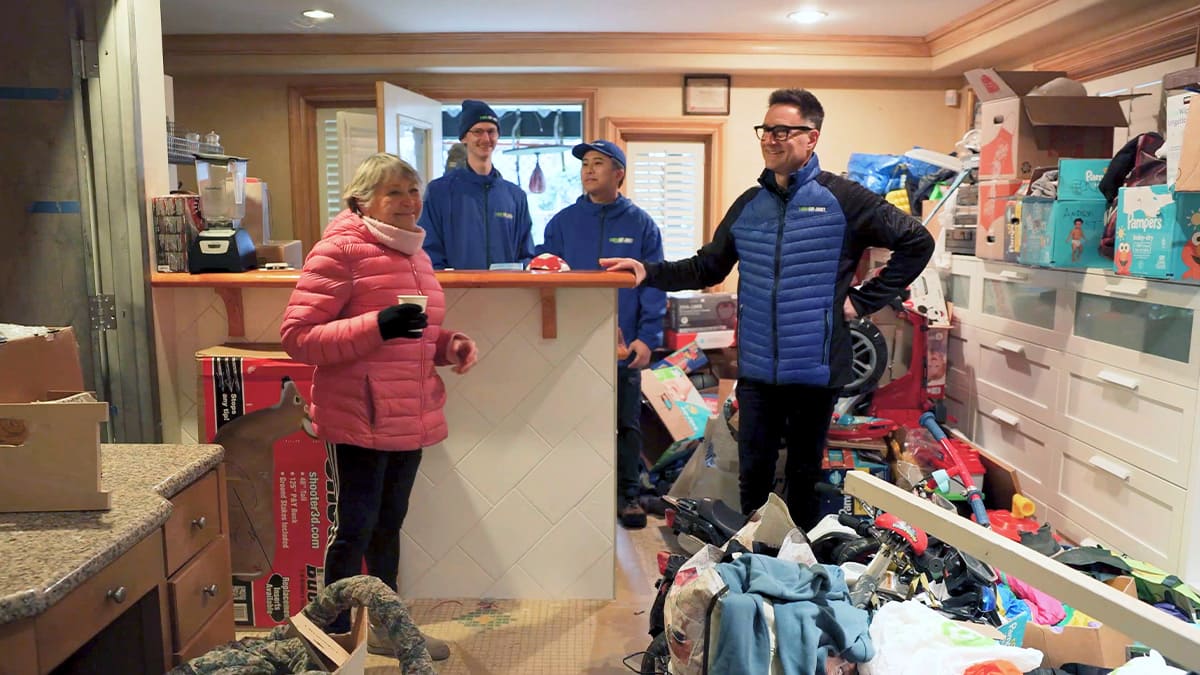
While we discussed my failures and successes while analyzing my Lifeline, Mike also made sure to ask about some of the wildest junk we've ever hauled away. When you operate 3,000 trucks across three countries, you see almost everything.
The filthiest job I remember was a freezer packed full of dead salmon. A customer had returned from a big fishing trip, loaded up his freezer, and accidentally left it unplugged before going away for a month. There was no way to get that freezer into our truck without cleaning out the rotten salmon first—it was definitely not a pretty sight!
On the flip side, we've had some truly magical finds. The greatest find in our company history happened right here in Vancouver, Canada. Our team arrived at a home undergoing renovations, and as they walked across the room, they noticed what looked like cash peeking through the gaps in the floorboards.
They immediately alerted the homeowner. Using a crowbar, they jacked up the floorboards and discovered $400,000 in cash in 1930s circulation bills hidden throughout the entire house. In today's currency, that equaled $5.3 million! The customer saved on their renovation and gave our team a very healthy tip. Moments like that remind us that 1-800-GOT-JUNK? is about delivering unexpected joy and trusted relief.
Read the full interview
It was great to create my Lifeline with Mike and take a journey through the ups and downs that led me to where 1-800-GOT-JUNK? is today. At the end of the day, I wouldn’t change a single thing, because of the wonderful impact our team has made in the lives of others. As I told Mike at the end of our conversation:
“Who said that companies can't make meaning? They can. They create better lives and workplaces. They develop people. They help you be better leaders, better people. And we contribute a service that makes space for possibilities in people's lives. Living the dream, man.”
Interested in reading the full interview? Expand below to read even more of my conversation with Mike Michalowicz on the Becoming Self Made podcast.
Read the full transcript below
Brian Scudamore: [00:00:00:00 - 00:00:16:10] If you want something, you have to go after it. But what really makes a difference is connecting with your why. If your why fits someone else's why, boom. Magic. If I can see a bright future, paint it, and share that picture with others, like come on. “I don't know how we're going to get there, but I want to go there with you. I want to be a part of this”
Mike Michalowicz: [00:00:16:12 - 00:00:38:22] The biggest names in business didn't start out that way. These are the unfiltered stories of entrepreneurs who turned small business into big successes and transformed themselves along the way. Because success isn't just about what you build. It's who you become. I'm Mike Michalowicz, and this is Becoming Self-Made, a podcast from Relay.
Mike Michalowicz: [00:00:38:27 - 00:01:02:25] And today's guest is Brian Scudamore, founder and CEO of 1-800-GOT-JUNK?. Brian Scudamore is the epitome of the saying, "One man's trash is another man's treasure." What started out as an effort to pay his college tuition has now turned into the world's largest junk hauling business, a stint on Dragon's Den, and a best-selling book. But it hasn't always been smooth hauling, so to speak.
Mike Michalowicz: [00:01:02:27 - 00:01:12:07] I sat down with Brian at 1-800-GOT-JUNK? headquarters in Vancouver, and he's going to give us a window into the parts of his story that don't often get told.
Brian Scudamore: [00:01:12:07 - 00:01:12:57] Nice to see you.
Mike Michalowicz: [00:01:13:07 - 00:01:16:00] Yeah, so good to see you. So, Brian, tell me, what is 1-800-GOT-JUNK?.
Brian Scudamore: [00:01:16:08 - 00:01:40:23] 1-800-GOT-JUNK? is the world's largest junk removal company. It started with $700 and a beat-up old pickup truck. Today we have over 3,000 trucks and $700 million in revenue. We haul away old furniture, appliances, yard debris, and renovation refuse across Canada, the United States, and Australia.
Mike Michalowicz: [00:01:36:08 - 00:01:40:23] Quiz me. What was the original name? I think I remember. It was The Rubbish Boys.
Brian Scudamore: [00:01:40:24 - 00:01:51:13] It was The Rubbish Boys. You got it. And it was just me. I had a vision for something bigger. The Rubbish Boys, like there was going to be this team.
Mike Michalowicz: [00:01:51:24 - 00:01:59:13] Oh, so it was Rubbish Boy, and you added an S? You painted it on. So what's the dirtiest, filthiest junk you've ever hauled away?
Brian Scudamore: [00:01:59:13 - 00:02:20:15] Yeah. We've taken away a freezer full of salmon. Someone went to a big fishing resort and caught so much salmon, and they went away and realized a month later that their power was unplugged. So you have to take that freezer. There's no way to get that freezer into the truck with all the dead salmon inside without cleaning out the salmon first. It was not a pretty sight.
Mike Michalowicz: [00:02:20:15 - 00:02:23:27] That smells horrific, I bet.
Brian Scudamore: [00:02:23:28 - 00:02:42:27] Yeah, but on the flip side of weird junk, we've had some cool things too. The greatest find of all time was actually found in Vancouver. We were doing a job. I wasn't there, but our Truck Team Members were, and they saw on the floorboards of some house what looked like money. They called the customer over and said, "That looks like money."
Brian Scudamore: [00:02:42:29 - 00:03:12:16] The customer was doing a renovation. So they took a crowbar and jacked up the floorboards, and it was laid throughout the whole floor, to the point that they literally pulled up the floor in the entire house and found $400,000 in cash. But it was 1930s circulation bills, which calculated into today's dollars was $5.3 million hidden away. So the Truck Team Members, of course, got a healthy tip, and the person renovating saved $400,000 on their renovation.
Mike Michalowicz: [00:03:12:18 - 00:03:31:06] Hey, real quick here. This is our very first episode, and there's something you have to know. I'm doing an exercise with every single guest called Lifeline. I want to explain it to you. The guests on the show will plot on a large poster board an X and Y axis. On the X axis is five-year increments of their life, and the Y axis is high and low points.
Mike Michalowicz: [00:03:31:11 - 00:03:50:16] Then we reflect on each five-year period, and they share what was happening. Sometimes it's a high. Sometimes it's a low. If you haven't done this for yourself, I highly encourage you to do it with your friends or family, or even do it by yourself. What you'll see is your past revealing your identity. Okay, here's Brian's Lifeline.
Mike Michalowicz: [00:03:50:18 - 00:03:54:16] So here's what I'd like you to do. You know how to do the Lifeline. Have you ever done one?
Brian Scudamore: [00:03:54:18 - 00:03:57:16] I haven't done one for a long time, and I certainly haven't done one on camera.
Mike Michalowicz: [00:03:57:18 - 00:04:07:16] Well, there you go. So, just draw the initial chart. I'll do that part for us, and then you're going to do it so it looks like this.
Mike Michalowicz: [00:04:07:19 - 00:04:32:25] This is the high, and then this is the low. What you do is, maybe in five or ten-year increments, just highlight some of the highs or lows that you've had. The big ones, perhaps before 1-800-GOT-JUNK? and then after.
Mike Michalowicz: [00:04:32:27 - 00:04:41:15] Okay. I'm going to put this up here so we can look at it together simultaneously. Tell me about your childhood. What's this about, Brian?
Brian Scudamore: [00:04:41:27 - 00:04:57:15] Born in San Francisco. My mother had me at 18 years old. She married too young and remarried at 27. Those first eight years of my life, I went from school to school.
Brian Scudamore: [00:04:57:15 - 00:05:19:17] I went from San Francisco. She remarried my dad, who is a liver transplant surgeon in Canada. We moved to Canada at about seven years old, which is about here. I was bullied. I had a bowl cut. I had buck teeth with a big gap between them. I had no self-confidence, and I was the loud-mouthed class clown to try and get attention.
Brian Scudamore: [00:05:19:18 - 00:05:40:29] That's all I ever did was try to get attention because I didn't feel loved or accepted. I didn't have any siblings. I didn't have a lot of friends. They came and went, and it was all a factor, really, of my ADHD, which nobody talked about then. Now we've all apparently got it because we swipe through all our devices, but I had it so bad that I couldn't focus in school.
Brian Scudamore: [00:05:41:00 - 00:06:03:21] When I look at all my childhood report cards, they said, "Brian's smart, if only he could apply himself. Brian's a disruptor." And not in the entrepreneurial way, right? Brian messes around, doesn't listen, and doesn't focus. I went to 14 schools from kindergarten through to the end of university, and the only diploma I received was kindergarten. I don't say that to be funny.
Brian Scudamore: [00:06:03:22 - 00:06:26:18] It's true. I didn't graduate from high school. I was one course short of graduating. I just felt like I couldn't do it, and I quit school. I talked my way into community college. All my friends were going to university, really good ones, and I felt FOMO. I was totally left out from the crowd. I thought, "I have to go to university, but I don't have a high school diploma."
Brian Scudamore: [00:06:26:20 - 00:06:49:03] So I had to talk my way in, and my parents weren't going to give me the money for it, so I had to come up with it myself. It was a tight summer job market. This is where I dropped out of school, and why it's sort of a mid versus a low is that it was somewhat freeing to me that I was making my own decisions now, even though it was a scary one.
Brian Scudamore: [00:06:49:05 - 00:07:05:24] I dropped out of school. I was going through a McDonald's drive-through, and I saw a beat-up old pickup truck in front of me with plywood sides built up. It said Mark's Hauling on the side. I thought, "I'm going to go buy a truck. That's how I'm going to pay for my business." I went out there and bought a truck for $700, spent a few hundred on flyers and business cards.
Brian Scudamore: [00:07:05:24 - 00:07:08:15] I started driving down alleys and laneways. I had a business.
Mike Michalowicz: [00:07:08:24 - 00:07:12:15] So you didn't have a formation like an LLC or something?
Brian Scudamore: [00:07:12:24 - 00:07:23:15] Nothing, it was just a sole proprietorship. It was just me. I hired a buddy from high school, Dave Snyderman, who was my first employee. This was where I started the business. Now it was like, I can do something.
Brian Scudamore: [00:07:23:19 - 00:07:27:09] I didn't have to worry about all the kids in the playground wanting to beat the crap out of me.
Mike Michalowicz: [00:07:27:09 - 00:07:30:03] And you were moving schools, Brian, constantly.
Brian Scudamore: [00:07:30:05 - 00:07:40:03] I was always thrown into a new school, a new environment, and I didn't understand what that was going to be like and how hard it would be. So, never fitting in.
Brian Scudamore: [00:07:40:06 - 00:08:00:02] This is interesting because I joined an organization that you and I both adore, the Entrepreneurs' Organization. They called it YEO, the Young Entrepreneurs' Organization. Now they removed the Y. So the EO, Entrepreneurs' Organization, I joined in 1996 when I was 26 years old. That was the first time I thought, "Oh my gosh, I found my tribe. I found my people."
Mike Michalowicz: [00:08:00:02 - 00:08:06:20] How does someone know they found their tribe? Or how do you go about finding your tribe?
Brian Scudamore: [00:08:06:21 - 00:08:24:20] I think it was by accident that I found my tribe, but it is that whole "birds of a feather flock together." I joined EO and instantly I thought, "These are my people." What's interesting, though, is it was only a year or so after I joined EO that I started comparing myself to others, which I don't recommend people do.
Brian Scudamore: [00:08:24:21 - 00:08:38:02] It's not a good thing. It's not healthy. They had bigger businesses than me, much more glamorous than junk removal and garbage. People had bigger visions. They had the money, and they had the education. So I immediately started to feel like crap here.
Mike Michalowicz: [00:08:38:04 - 00:08:43:01] Oh, okay. So this is just a comparative thing. Did something actually happen? Was there an event?
Brian Scudamore: [00:08:43:03 - 00:09:05:01] What happened is I built a $1 million business over eight years. I felt great about that. But I suddenly took a major drop off a cliff because I wasn't enjoying my business. I didn't have confidence in myself anymore. I was around my tribe, but I thought, "I don't know. I don't have the education, I don't have the money. I don't know if I can build this."
Brian Scudamore: [00:09:05:01 - 00:09:18:08] I didn't have my own personal car. My forum used to bug me. They'd ask, "How come you don't have a cell phone? And why don't you own a car other than a junk truck?" I was trying to manage costs, and I would go on a date driving my rubbish truck.
Mike Michalowicz: [00:09:18:09 - 00:09:21:28] That's amazing.
Brian Scudamore: [00:09:21:28 - 00:09:31:05] I know, but that's the way I had to roll. When I showed up to my first forum meeting to meet these guys, they were like, "I don't know about this. This guy's in this old beat-up garbage truck, really?”
Mike Michalowicz: [00:09:31:05 - 00:09:38:18] Yeah. Interesting. Because I think today you'd garner more respect from the entrepreneurs because you're doing that than anything.
Brian Scudamore: [00:09:38:19 - 00:09:53:18] I've learned to not care what people think about that sort of stuff, because I know money doesn't buy happiness. It doesn't for me. What buys happiness is growth, friendship, opportunities, making a difference, and how we treat our people. So the possessions don't matter.
Mike Michalowicz: [00:09:53:19 - 00:09:59:15] But there was a gutsy thing you did, and I don't remember where it was. You fired the entire company.
Brian Scudamore: [00:09:59:16 - 00:10:00:20] Yeah. So that happened here.
Mike Michalowicz: [00:10:00:20 - 00:10:01:14] Let's do it.
Brian Scudamore: [00:10:01:16 - 00:10:03:04] Like, this is growing.
Mike Michalowicz: [00:10:03:08 - 00:10:03:16] Yeah.
Brian Scudamore: [00:10:03:19 - 00:10:12:14] Zero to one million, right? But what happened here was definitely a challenge. Five years in, and then back up.
Mike Michalowicz: [00:10:12:14 - 00:10:21:22] I want to say this may be one of the greatest moments and decisions that got the company to where it is today, in my opinion. What happened? Give me the details.
Brian Scudamore: [00:10:21:22 - 00:10:42:21] Five years into my business, I fired my entire company. I didn't keep the person answering the phones. I didn't keep anybody. The reason being, we’re a company with no private offices. Back then, we had one private office that I would never use, but I started hiding out there because I didn't enjoy my team. I wasn't having fun in my business.
Brian Scudamore: [00:10:42:23 - 00:11:07:16] When I got introspective to find out why not, I realized I didn't have the right people for me. These weren't people I enjoyed. They were negative, glass half empty. They didn't see a bright future. It was just a job. Lots of complaints. So I took ownership, and on this day, I literally let them all go. I sat down and I said, "I'm sorry." Two words that I owned, and I felt it.
Brian Scudamore: [00:11:07:21 - 00:11:29:29] Team meeting, 11 people. One bad apple spoils the whole bunch. There were nine sort of bad apples. The other two maybe I could have saved, but I decided to clean the slate. So I went from five trucks down to just the one that I could drive, answering customer calls on the phone while I'm hauling junk, canceling customer appointments like crazy, rebuilding the business to then learn that day.
Brian Scudamore: [00:11:30:01 - 00:11:43:24] It's all about people. Finding the right people and treating them right. So I had to get out there and start to create an energy of finding the right people. People that I wanted to treat like friends and family and help with their future, and that they saw the world that I saw.
Mike Michalowicz: [00:11:43:28 - 00:11:51:05] You had a business approaching a million dollars in revenue. You had 11 people, and you said, "I'm going to start anew." What was their reaction? Were they pissed?
Brian Scudamore: [00:11:51:11 - 00:12:09:09] It's interesting. It's hard to go back that long and really remember what it was like, but I think I remember that there was a level of empathy, frustration that they were losing their jobs, but they appreciated that I owned it. I said, "Hey guys, I'm sorry. I have not given you the love and support you've needed."
Brian Scudamore: [00:12:09:09 - 00:12:26:02] "I have not treated you with the respect that you deserve. I have not created a vision for you to thrive in my company, and I need to start again. I don't know how else to do it." And so I did. I ripped off the band-aid and started again.
Mike Michalowicz: [00:12:26:04 - 00:12:29:22] Has this story been about building friendships?
Brian Scudamore: [00:12:29:23 - 00:12:46:07] Yeah, a lot of it's been having the right life partner, my wife, and having a family with three kids, and having friends and having community. It was hard out there. You know, when they say entrepreneurship is lonely, lonely at the top. I mean, a lot of loneliness here until I discovered EO.
Mike Michalowicz: [00:12:46:14 - 00:12:47:11] Oh yeah.
Brian Scudamore: [00:12:47:14 - 00:12:56:07] But then when I compared myself to others and thought, "Oh my gosh, what is going on here?" This was a big turning point here. I created the Painted Picture.
Mike Michalowicz: [00:12:56:10 - 00:12:58:05] I remember the story. Tell me about it.
Brian Scudamore: [00:12:58:07 - 00:13:18:07] I’m in EO and I learned that if you're trying to solve a problem, go to a creative place. My problem was I was comparing myself to others. I wasn't enjoying my business as much, and I was feeling like I didn't have what it takes, or I might not even have the right business idea. So I went to Bowen Island, about an hour away.
Brian Scudamore: [00:13:18:14 - 00:13:40:07] My parents have this summer cottage on the water. I went and sat on their dock and pulled out a sheet of paper, inspired to go to a creative place. My mental state was in this doom loop of "don't have the money, don't have the talent, don't have the idea, look at everybody else." I was feeling kind of depressed and down, but I thought, "Okay, Brian, shift the narrative here. Create a brighter future."
Brian Scudamore: [00:13:40:07 - 00:13:58:27] What could it look like? If only I could imagine. So I took this sheet, I wrote one page, flipped it over to the other page, and I swear to God, five years later that Painted Picture happened. I never changed a word. What I did was I went from a doom loop to asking not “Where do we want to go?"
Brian Scudamore: [00:13:59:00 - 00:14:15:14] But instead, "Where will I go? What can I see?" I got chills after I wrote it. I read this thing and I thought, "I don't need to compare myself to others. I need to compare myself to this vision that I'm trying to crystal ball." I said we'd be in the top 30 metropolitan centers by the end of 2003.
Brian Scudamore: [00:14:15:14 - 00:14:33:11] This was five years out, because Vancouver was ranked the 30th biggest city in North America. So every city bigger, we could make that happen. I said we'd be the FedEx of junk removal: clean, shiny trucks, friendly uniformed drivers, on-time service, upfront rates. And I said we'd be on The Oprah Winfrey Show.
Mike Michalowicz: [00:14:33:13 - 00:14:33:27] Which is right there!
Brian Scudamore: [00:14:33:27 - 00:15:01:06] There, which is right there. So EO, comparing myself, I felt like crap, right? A Painted Picture that imagines a bright future, including things like Oprah, and it happened. This highlight here, this high, was not really about Oprah. It was the symbolic nature of if I can see a bright future, paint it, and share that picture with others. I took the Painted Picture and shared it with my team, and about half the people said, "Brian, what are you smoking here?"
Brian Scudamore: [00:15:01:06 - 00:15:19:14] "Some hope dope. There's no way this is going to happen. 30 metros, Oprah. Come on." The other half said, "I don't know how we're going to get there, Brian, but I want to go there with you. I want to be a part of this." So we had this community, this company family that said, "We're going to get there."
Brian Scudamore: [00:15:19:17 - 00:15:40:17] And Oprah proved that we could. We had 35 million viewers watching our story. I was on stage with Oprah just thinking, "Oh my gosh, this is proof that if you imagine a bright future, you never know, it might just happen." 2006, we went from $2 million around after EO to $106 million for 1-800-GOT-JUNK?.
Brian Scudamore: [00:15:40:20 - 00:15:42:12] Under the leadership of Cameron Herold.
Mike Michalowicz: [00:15:42:20 - 00:15:49:25] Okay, I have to ask you about that. What does it feel like, though? A $1 million business is remarkable. A $100 million business is unbelievable.
Brian Scudamore: [00:15:49:27 - 00:16:19:16] I can imagine in retail the Christmas season where it's so chaotic, right? That's the busy time, you know, 50% of your revenue is combined into that one month. As the business went from $2 million to $106 million, it felt like every day was Christmas. It was just busy and chaotic. Cameron Herold, who was also an EO member in my forum group, had said he'd never work for me. I invited him into the business as a consultant because I had some challenges to fix in terms of understanding growth.
Brian Scudamore: [00:16:19:16 - 00:16:40:27] He fell in love with the business and with us working together. So we became this "two in the box," two heads are better than one. But we were both ADHD, ready-fire-aim types, or fire-ready-aim types. We started making mistakes. When we got to $100 million in revenue, things started to collapse a bit.
Brian Scudamore: [00:16:41:00 - 00:17:07:22] The culture was getting worn and stressed. People were looking at us with less confidence, thinking, "You guys don't know what you're doing. You're wasting money. You're spending money in areas that aren't paying off." We really didn't know how to lead a $100 million business, and they were right. So I had to take my best friend, at the time, I was the best man in Cameron's wedding, and I had to sit him down over breakfast and say, "Buddy, we're done."
Brian Scudamore: [00:17:07:25 - 00:17:30:00] "This isn't working." I blindsided him, which I regret looking back. I had a board that helped me see that, or helped drive me to the idea that we needed to protect the rest of the company by keeping this a secret from him until we had all the paperwork and were ready. But we had such a good friendship that I should have been able to say, "Hey, maybe this isn't working."
Brian Scudamore: [00:17:30:00 - 00:17:46:00] "Maybe we need to change things up a bit." So I fired Cameron. Fortunately, he and I are great buddies today. It took a couple of years to heal that, but he would agree he wasn't the right person to take it beyond $100 million, and nor was I.
Mike Michalowicz: [00:17:46:02 - 00:18:03:00] But that's so courageous. Today, $700 million in revenue. Is it because of that hard decision? Not alone, but did you need new leadership? And how do you know when someone who founded a business isn't the right person to lead the business, so to speak?
Brian Scudamore: [00:18:03:01 - 00:18:24:14] At $100 million in revenue, you need order. You need systems. You can't be scrambling with your head cut off like a chicken running around. It just doesn't work, and that's how we lived. So we had to take it down a notch and say, "Okay, hold on. Let me bring on the right person who can help us scale to that next level."
Brian Scudamore: [00:18:24:21 - 00:18:43:20] There are life cycles of companies that we all go through if we're lucky. A million is the hardest on the spectrum of getting to a billion because you're figuring it out. You don't know if you have a business, you don't know what kind of people to hire, and you can't necessarily afford these great people. At $10 million, you start to get a bit of momentum.
Brian Scudamore: [00:18:43:20 - 00:19:06:13] You start to get some confidence, and things start to grow a little bit. You start to realize you need systems and processes. So $10 million is hard, but not as hard as a million. It gets a bit easier at $100 million, but you're still just chaos. The easiest is a billion. As a $700 million business today, I focus, as the leader.
Brian Scudamore: [00:19:06:13 - 00:19:26:07] I would say it's the easiest. I'm in my areas of unique ability. I do things I love, I do things I'm great at, and I've got a team of people that are experts in their areas. We figured out the systems on how to stay tight, communicate, and work together. So it is easier. It took us eight years to get to a million in revenue.
Brian Scudamore: [00:19:26:09 - 00:19:45:07] We will do a million in revenue by 10 a.m. this morning for one day, right? So it's that momentum. But that wouldn't be possible if I didn't find and keep the right people and have them trust in me at the same time. So we go back to Cameron Herold. He wasn't the right guy. I had to make that courageous decision, and I had to go find the right person.
Brian Scudamore: [00:19:45:12 - 00:20:05:19] So who did I go find? An ex-Starbucks CEO who I thought, "What a great brand. Oh my gosh, this is going to be unbelievable." What happened was we almost bankrupted the company together in those 14 months. I took ownership because I brought this person on. The financial meltdown of 2007 and 2008 did not help.
Mike Michalowicz: [00:20:05:20 - 00:20:06:25] Terrible times. Yeah.
Brian Scudamore: [00:20:06:27 - 00:20:27:08] We went from $125 million to $85 million in a year. We were overspending, and I almost lost the business. This ex-Starbucks person was actually trying to raise private equity, and I wasn't completely in the loop on it all. It made it very difficult. I felt like I was losing control of my business.
Brian Scudamore: [00:20:27:16 - 00:20:34:05] There was a new leadership team that I wasn't really connected with, and I abdicated the growth of the business.
Mike Michalowicz: [00:20:34:07 - 00:20:47:19] That may be the key, abdication. So you have to reinsert yourself, I presume, when you abdicate. How do you do it? Is it another kind of meeting like you had with Cameron? A cup of coffee, "I've got bad news" type thing?
Brian Scudamore: [00:20:47:25 - 00:20:49:20] Yeah. So this is the big low here.
Mike Michalowicz: [00:20:49:26 - 00:20:52:06] So this isn't too long ago. This is 15 years ago.
Brian Scudamore: [00:20:52:08 - 00:21:09:05] Correct. The company just crashes. This big event happened. I lost a lot of employees after abdicating, and I stepped back in. I got rid of the COO, and I got rid of this person's entire team because I couldn't afford them. We were almost bankrupt. I had to hunker down.
Mike Michalowicz: [00:21:09:11 - 00:21:11:14] That person came in with how many other people?
Brian Scudamore: [00:21:11:16 - 00:21:13:01] This person brought in people.
Mike Michalowicz: [00:21:13:02 - 00:21:17:06] Okay, so you hired not a person, a tribe. And a culture, a different culture.
Brian Scudamore: [00:21:17:06 - 00:21:35:24] It was a different culture of professional management, which we needed. But I needed professional management with a leader who believed in me at the same time. I don't think this leader believed in me as an entrepreneur. My confidence was back to being a kid, where I thought, "How come I'm in my own company and I feel like an alien?"
Brian Scudamore: [00:21:35:26 - 00:21:58:00] So I got rid of this person, then the whole team. I elevated middle management up and I said, "I can't tell you why this has happened, but this has happened. This is the decision I made." People thought it was crazy because I couldn't really explain it. They didn't know that I saw what I saw in this person, that it wasn't working, and how bad the finances were.
Brian Scudamore: [00:21:58:03 - 00:22:19:08] I said, "I need you to be here with me and believe in me, and I'm going to give you all the reasons to believe, but let's go." I didn't lose a person for years. They stuck with me, thankfully, and they believed it was the right decision because we started to grow again. Just as we were starting to grow again, I went to find the right president/COO for me.
Brian Scudamore: [00:22:19:10 - 00:22:38:01] I learned this time around I had the wrong person for me in one mis-hire. Think of those 11 when I fired the whole company. This was one hire in the company, and it started to poison the rest of the business. So when I had to go find the right person, I asked, "What am I looking for this time around?"
Brian Scudamore: [00:22:38:01 - 00:22:57:29] First and foremost, someone who wants to be a partner, who will be a partner with a founder, even if not financially, just in spirit to say, "We are two in the box. We are going to make this happen together like a yin and yang." I took a sheet of paper and I wrote a list. All the things on one side that I was great at, that I loved to do.
Brian Scudamore: [00:23:01:12 - 00:23:15:27] Vision, sales and marketing ideas, creative juice into the business, spokesperson, storyteller. Things that I didn't like were reviewing the financials, managing the money, hiring, building a team, developing.
Mike Michalowicz: [00:23:15:28 - 00:23:17:08] Interviewing with Mike Michalowicz.
Brian Scudamore: [00:23:17:10 - 00:23:37:25] No, no. That's good. I'd put that on that other side. So I took that list and I said, "All the things I'm bad at that I don't like to do, what am I going to do to find someone who can do those?" I flew on planes. 75 different interviews of potential presidents across Canada and the US. I found one person that my network, three different people had said,
Brian Scudamore: [00:23:37:28 - 00:24:01:22] "The Painted Picture vision of who you're looking for is Erik Church." Erik was one of those 75 and became the guy. It's been 14 years. We've never had a fight. We debate, we have passionate discussions, but we work so well together in driving this business forward that since Erik came in, he's seven-folded the business in terms of revenue.
Brian Scudamore: [00:24:01:23 - 00:24:15:07] It's just amazing. I've been really lucky with Erik to find not only a great friend there, but a great partner who's helped us grow. When I can sit down and realize it's not lonely at the top, because Erik's there.
Mike Michalowicz: [00:24:15:08 - 00:24:24:27] That's phenomenal. If you could look back to this child and give some lessons or advice, anything you would say back to little Brian, buck-tooth Brian?
Brian Scudamore: [00:24:25:01 - 00:24:49:01] People often ask me in interviews, "What would you do differently?" I always say nothing. We are the lessons that we learned. I needed to get kicked out of so many schools for skipping and being a bad kid. I needed to fire my entire company to get to where we are now. We win awards for best workplaces in all sorts of different countries, right?
Brian Scudamore: [00:24:49:02 - 00:25:11:03] And the culture and all this stuff. I'm proud of that. But that came from the school of hard knocks, of us figuring this stuff out and making mistakes. So advice to buck-tooth, greasy-hair, bowl-cut Brian would probably just be patient. Trust you're going to make some mistakes and have some failures, and that's good because that's how we learn.
Mike Michalowicz: [00:25:11:04 - 00:25:34:02] I think you and I both read the same book, Blue Ocean Strategy. When you started 1-800-GOT-JUNK?, it was pretty much a blue ocean. It was a mom-and-pop business only. But people saw your success, and so the duplicates, the R&D is rip off and duplicate, folks, come in. Is it a red ocean now? How do you feel about folks that come in and copy what you're doing?
Mike Michalowicz: [00:25:34:06 - 00:25:35:04] How do you compete?
Brian Scudamore: [00:25:35:05 - 00:25:52:21] I think that we created an industry. We did. It was called rubbish removal. We changed it to junk removal, and we inspired other competitors. One was in here last week, the largest junk removal company in New Zealand. He flew out from New Zealand to spend 45 minutes with me, asking me questions.
Mike Michalowicz: [00:25:52:21 - 00:25:54:05] And you're willing to meet with someone like that?
Brian Scudamore: [00:25:54:05 - 00:26:19:24] He's an EO member, and he asked, "Are you sure you're willing to meet?" We openly exchanged information. He'll find it otherwise, right? Why not be open? Why not make some friends along the way in the industry? I think we inspired an industry, and it hasn't become a red ocean because we've just stayed on top by trying to do the best we possibly can for the customer, making it easy for our customers and our people.
Brian Scudamore: [00:26:20:01 - 00:26:28:18] The bar is high, so people haven't been able to compete in the same way. When we find people doing things better, we try and adopt that.
Mike Michalowicz: [00:26:28:19 - 00:26:42:18] But what if Mr. New Zealand opens 1-800-GOT-MORE-JUNK? I mean, he goes right after the jugular. I know some of your competitors have, because I know of them, of course. Do you still invite them into the space? How do you mentally cope with that?
Brian Scudamore: [00:26:42:19 - 00:26:53:08] I think it's the devil you know versus the devil you don't. Keep your enemies closer, right? I don't have a lot of enemies in the world, but I say to competitors, "Yeah, come on in. Check this place out."
Mike Michalowicz: [00:26:53:09 - 00:26:59:07] If someone said, "You wouldn't believe Brian is..." what would be the fill-in-the-blank?
Brian Scudamore: [00:26:59:10 - 00:27:03:14] Probably wouldn't believe how disfocused Brian can be.
Mike Michalowicz: [00:27:03:16 - 00:27:04:12] Yeah, I wouldn't believe that at all.
Brian Scudamore: [00:27:04:12 - 00:27:23:23] I can sit down in an interview for an hour and just be fully in this conversation, but it's hard for me. It's all the times that I'm in a meeting. What people wouldn't know about Brian, maybe my close employees and partners here would, but when I sit down in a meeting, 90% of that meeting, I'm not there.
Brian Scudamore: [00:27:23:27 - 00:27:35:07] It's hard for me. I'm thinking of other ideas. I'm thinking of other things and distracted. It is really hard for me to narrow and stay focused. So I don't do well in meetings.
Mike Michalowicz: [00:27:35:08 - 00:27:53:22] If someone asked me, I would say you wouldn't know that Brian is an introvert. You're so extroverted. You're out there. You have your television show, Dragons’ Den, which I want to hear about. But when we go to our annual meetup, there's the 60 or now 80 of us in that room. Is that a fair assessment?
Mike Michalowicz: [00:27:53:22 - 00:27:56:14] You're an introvert that's bringing about extroversion.
Brian Scudamore: [00:27:56:15 - 00:27:59:18] Yeah. Before I answer, you're an introvert too, right?
Mike Michalowicz: [00:27:59:25 - 00:28:00:28] Yeah.
Brian Scudamore: [00:28:00:35 - 00:28:09:28] It's interesting because people would think both you and I are all about getting attention, having fun, being the life of the party. I can be that and have fun, but then I get tired.
Mike Michalowicz: [00:28:10:02 - 00:28:10:09] Yeah.
Brian Scudamore: [00:28:10:10 - 00:28:34:13] Mentally. I understand that about you. I pull away and I think, "Oh, I can't do this anymore." That's where I'm an introvert. I need to pull back and recharge. I can't do it for too long. I don't like to be the center of attention. I get that my job puts me at the center of attention, but I don't want it. Dragons’ Den, I know, makes an impact.
Brian Scudamore: [00:28:34:18 - 00:28:49:24] Being on a platform to talk about entrepreneurship. But to sit there for 12 days in a row, filming the entire season, 100 pitches for ten hours a day, it is the hardest thing for someone who's ADHD.
Mike Michalowicz: [00:28:49:25 - 00:28:58:10] I do want to ask about Dragons’ Den. What's that experience like being on television? Who are the entrepreneurs you're serving? Tell me about that. How did you get invited in?
Brian Scudamore: [00:28:58:11 - 00:29:19:21] I got invited in the first season, and I didn't know what it was going to become. I didn't know what being a Dragon meant. I lost it to the person that ultimately got the role, and I thought, "Okay." But once the show ramped up and became a massive thing, I thought, "Oh, missed an opportunity."
Brian Scudamore: [00:29:19:24 - 00:29:37:07] So I was asked to audition again. They called back and said, "Nope, it's not for you." They picked someone else. I thought, "Oh man." Back then, it probably would have killed my business if I tried to do Dragon's Den and the business. I didn't even have any money to invest in other businesses, so thank goodness it didn't happen.
Brian Scudamore: [00:29:37:07 - 00:29:55:13] Then two years ago, they called me again. I flew out to Toronto. There were 19 other Dragons, and I thought, "I don't have a chance. I do not have a chance." I ended up going home that day and waited months, thinking, "It's just not going to happen." And it did. It happened. I was blown away.
Brian Scudamore: [00:29:55:13 - 00:30:01:02] They said I just filled the perfect hole they were looking to fill, and the timing was right.
Mike Michalowicz: [00:30:01:02 - 00:30:04:12] What was the hole? Like a nice, genuine guy?
Brian Scudamore: [00:30:04:16 - 00:30:22:16] So back to Robert Herjavec. I called him up closer to the time. I hadn't heard what was happening and whether or not I was getting it. Robert was one of the Dragons, and he knew all the team. I asked, "Is there anything you can do to help?" He asked, "Why do you want to do this?" I said, "I want to do it because it'll make an impact."
Brian Scudamore: [00:30:22:18 - 00:30:42:09] "I love Canadian entrepreneurship. I love entrepreneurship in general, and it is the biggest platform I can think of to spread the love and passion I have for this amazing career choice. I just want to do it. I want to help people. I want to learn next-level about how to invest." He said, "Brian, you have to follow up and tell them that."
Brian Scudamore: [00:30:42:15 - 00:30:49:23] "You have to tell them that this is why you really want this." And I did. I think somehow that translated.
Mike Michalowicz: [00:30:49:24 - 00:30:50:24] There's no question about it.
Brian Scudamore: [00:30:50:24 - 00:31:11:10] Yeah. I got chills because it was something that if I didn't make that call, it might not have happened. As entrepreneurs, trust your instincts. Follow up, follow up. Nothing happens on the first time. Dragon's Den took three times. Oprah took over a year for us to pitch and pitch and pitch and pitch.
Brian Scudamore: [00:31:11:13 - 00:31:28:09] Anything big that's happened in the world, we were on The Ellen DeGeneres Show, and I think she said no something like 19 times. It was crazy, right? If you want something, you have to go after it. But what really makes a difference is connecting with your why. If your why fits someone else's why, boom. Magic.
Mike Michalowicz: [00:31:28:10 - 00:31:41:27] Yeah. Know why you're doing it and connect with the right people. Well, let's talk about the final day. You're only 75, I hope for you to 150 or whatever number you choose. But when that number comes, what do you want people saying about Brian Scudamore?
Brian Scudamore: [00:31:42:01 - 00:32:07:08] I have often said, make meaning, not just money. Of course, you have to make money as a business to grow. If this business wasn't making money consistently, if we couldn't figure it out, we'd have to shut it down. That's life. Yes, you need to make money, but meaning, I think, is more important. When somebody has worked here and been inspired to go to another company or start their own company and do greatness, that's awesome.
Brian Scudamore: [00:32:07:13 - 00:32:22:26] This is a stop along the way of their journey, or while they're here for as long as they can be here, like an Erik. He's always said this will be the last job he ever has, and I believe it. When you find a place you can call home, that you know you're making a difference, making meaning.
Brian Scudamore: [00:32:22:28 - 00:32:42:21] That's what matters. Who said that companies can't make meaning? They can. They create better lives and workplaces. They develop people. They help you be better leaders, better people. And we contribute a service that makes space for possibilities in people's lives. Living the dream, man.
Mike Michalowicz: [00:32:42:23 - 00:32:44:07] My pleasure, brother. Thank you.
Brian Scudamore: [00:32:44:07 - 00:33:45:07] Thank you.
Mike Michalowicz: [00:32:45:13 - 00:33:02:07] Thanks for listening to Becoming Self-Made, a Relay podcast. Follow the show to make sure you don't miss a single episode. And if you like what you hear, rate and review while you're at it. Becoming Self-Made is produced by Relay in partnership with me, Mike Michalowicz, and Pod People.
Frequently asked questions
How was 1-800-GOT-JUNK? originally founded?
In 1989, 18-year-old Brian Scudamore bought a beat-up pickup truck for $700 after seeing a hauling truck in a McDonald's drive-thru. He initially named the business The Rubbish Boys to pay his way through college before committing to it full-time and growing the company into 1-800-GOT-JUNK?
How does 1-800-GOT-JUNK? deliver exceptional customer service?
1-800-GOT-JUNK? provides trusted relief by sending friendly, uniformed two-person teams in clean, shiny trucks. Our teams handle all the heavy lifting, offer upfront all-inclusive rates, and sweep up afterward to leave your space clean and spacious.
Why did Brian Scudamore fire his whole team early in the company's history?
Five years into running the business with five trucks and $500,000 in revenue, Brian Scudamore realized nine of his eleven team members lacked positivity and professionalism. He called a morning meeting, apologized for his leadership failure, fired all eleven employees at once, and reset the company back to a single truck. This hard reset taught him that 1-800-GOT-JUNK?. is fundamentally a people business, establishing his permanent rule to only hire clean-cut, friendly, and happy people.
What is Brian Scudamore’s “Painted Picture”?
On September 17, 1998, Brian Scudamore wrote a one-page vision document for 1-800-GOT-JUNK?, outlining specific goals including reaching North America’s top 30 markets, $100 million in revenue, and an appearance on The Oprah Winfrey Show. All three were later achieved. The concept directly inspired COO Cameron Herold’s book, Vivid Vision.