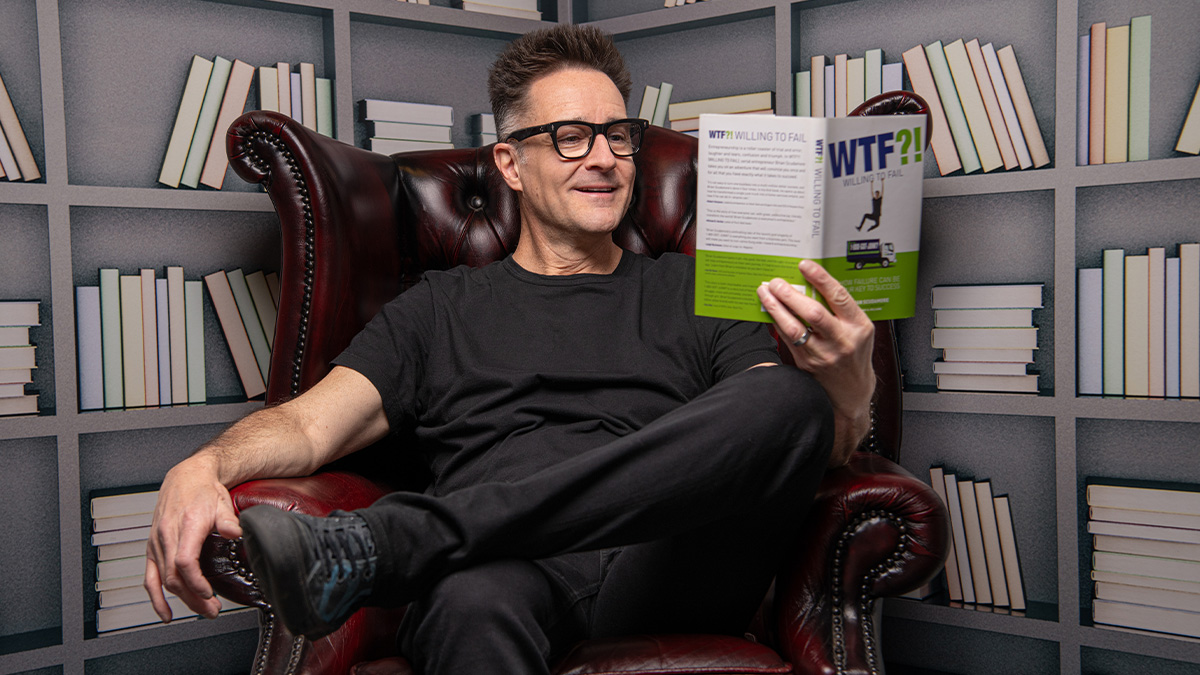
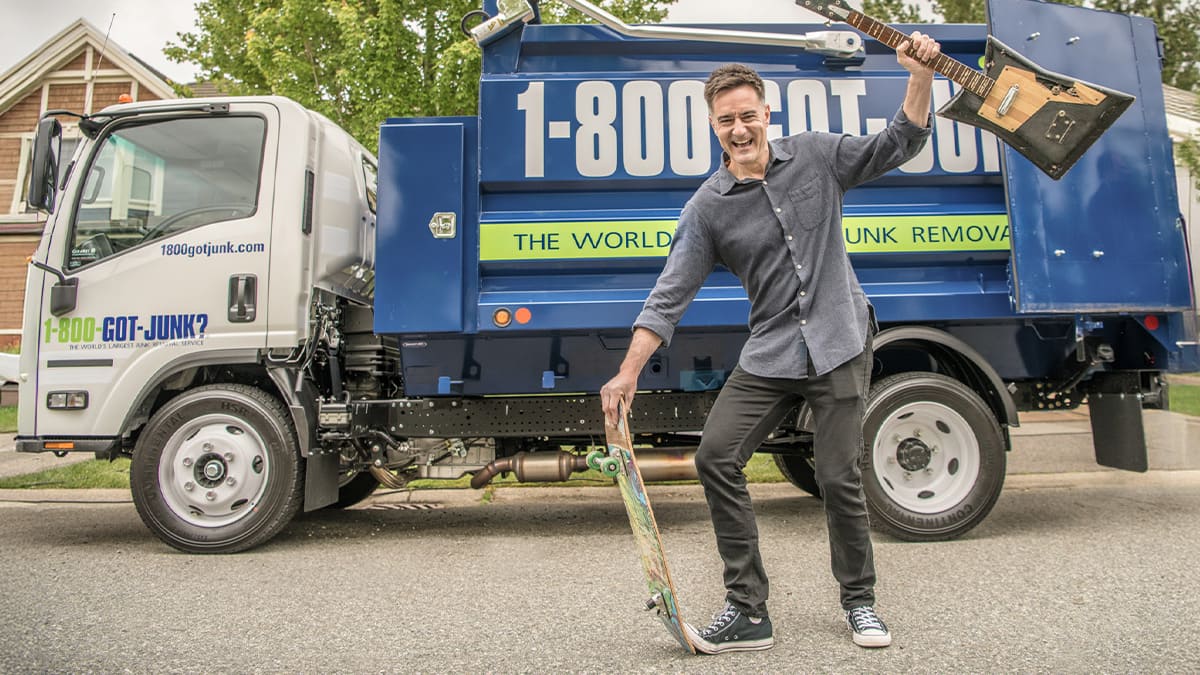
EO 360° podcast (2026): Brian Scudamore shares his learning journey with 1-800-GOT-JUNK?



TL;DR
In this episode of the EO 360° podcast, 1-800-GOT-JUNK? Founder and CEO Brian Scudamore sits down with host Dave Will to discuss his entrepreneurial journey.
- Brian reflects on attending 14 schools, dropping out of college to go all-in on his $700 truck, and how his third-grade teacher Mr. Dodds helped him see possibility in chaos.
- Brian credits the Entrepreneurs’ Organization with solving nearly every major business challenge he’s faced over three decades.
- When you build systems where great people thrive, step back, and trust your team to drive the vision forward, true growth happens.
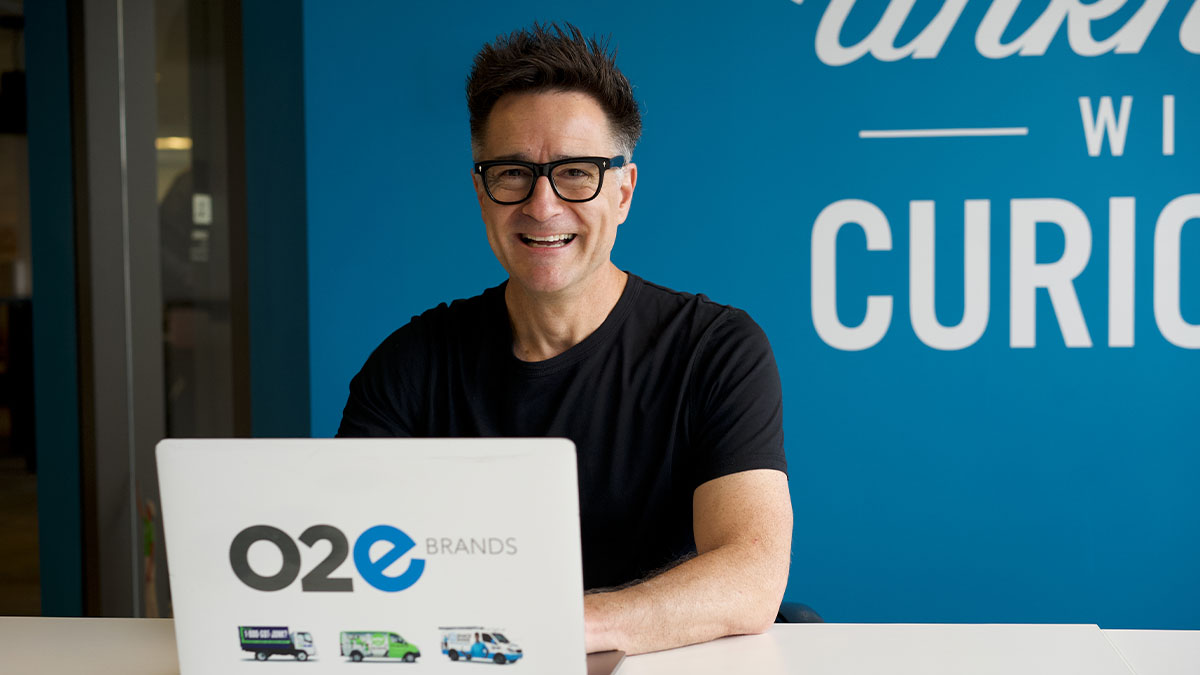
Published by: EO 360°
Host: Dave Will
Guest: Brian Scudamore, Founder and CEO of 1-800-GOT-JUNK?
Originally aired January 20, 2026.
Brian Scudamore reflects with Dave Will on his learning journey founding 1-800-GOT-JUNK?
When I sat down with Dave Will on the EO 360° podcast, I was connecting remotely from Paris, enjoying a family adventure. From starting 1-800-GOT-JUNK? with just me in a truck at 18 years old, it’s remarkable that the business has come so far that I could support from a whole continent away.
Looking back over 36 years of building 1-800-GOT-JUNK?, people often ask me about my path to entrepreneurship. The truth is, my journey was anything but traditional. It involved a lot of real-world education, utilizing a network of entrepreneurs for support, and learning when to let go.
Why dropping out of school opened the door to real-world learning
Growing up with undiagnosed ADHD in the 1980s, sitting still in a classroom felt almost impossible. I was the kid who couldn't stop making jokes or running around. By the time I reached my late teens, I had attended 14 different schools, graduating only from kindergarten. I didn’t graduate from high school, talked my way into college as a "mature student" at the admissions office, and ultimately dropped out of university with just one year left.
I didn't drop out of learning; I simply dropped out of a system that didn't work for my brain. Real-world experience became my classroom. Sitting across from entrepreneurs, knocking on doors, asking questions, and getting my hands dirty on the street taught me far more about marketing, cash flow, and customer care than any textbook ever could. I told Dave very clearly:
“I learned way more about business from running a business versus learning from a textbook or from a marketing professor who had never marketed a business in his entire life.”
Years later, I pulled out my old childhood report cards. Where others saw harsh comments like "disruptive," I saw an incredible reminder of how far I had come. Most importantly, I remembered my third-grade teacher, Mr. Dodds. He recognized my restless energy and told me I just needed to learn how to harness it. That lesson shaped my entire approach as a leader at 1-800-GOT-JUNK?. True leadership is about seeing potential in people that they might not yet see in themselves.
How EO helped solve nearly every major business challenge Brian has faced
When I joined the Entrepreneurs' Organization (EO) back in 1996, my business was generating just under $1 million in revenue. I squeezed into my first forum meeting eager to learn from founders running $10 million and $100 million companies. That network fundamentally changed my trajectory as an entrepreneur.
Dave and I talked about a phrase that resonates deeply within our community: "EO is a gym, not a spa." You don't show up to EO just to relax, consume value, or get pampered. You show up to sweat, put in the work, and support fellow founders through their toughest challenges. As one of EO’s founders Verne Harnish told me early on, “When you join this organization, you get what you give.”
That network of entrepreneurs provided instant connection and rapid problem-solving. Every major operational bottleneck or strategic challenge I've faced over three decades was solved faster because someone in my EO network had already walked that path and was willing to share their wisdom.
Storytelling, media momentum, and learning when to let go
During our conversation, Dave mentioned my appearances on podcasts like Guy Raz’s How I Built This and Advice Line, as well as national media features on The Oprah Winfrey Show and in Fortune magazine. Storytelling has always been one of our strongest growth engines. When you share an authentic story about vision, culture, and human connection, you attract incredible Franchise Partners, employees, and loyal customers who want to be part of the journey.
However, scaling a business from $1 million to $100 million—and ultimately toward a billion dollars—requires a fundamental shift in leadership.
- Cameron Herold: In the early days, Cameron helped us build rapid operational momentum.
- Erik Church: After reaching over $100 million in revenue, Erik brought the discipline, structure, and operational rigor needed to scale our multi-brand platform globally.
I was reminded of a conversation I had at a TED Conference with Reed Hastings, co-founder of Netflix. When I asked him for his single biggest lesson in building a multi-billion-dollar brand, he replied:
"Knowing when to let go, when to get out of your own way."
As a founder, true growth happens when you build systems where great people thrive, step back, and trust your team to drive the vision forward.
Read the full interview
It was an honor to get to speak with Dave Will on his podcast, EO 360°. It was a great opportunity to reflect on the Entrepreneurs’ Organization community, and how it’s supported my learning and growth over the last 30 years. While Dave was kind enough to say that he considered me to be someone that, “regardless of the resources they're given, [they] will find a way”, I do feel grateful for the support I’ve had along the way while growing 1-800-GOT-JUNK? to a $700M junk removal empire.
Interested in reading the full conversation? Expand below to hear even more of my conversation with Dave Will on the EO 360° podcast.
Dave Will: [00:00:00:00 - 00:00:05:28] Brian Scudamore, welcome to the EO 360 podcast. Thank you so much for joining me today.
Brian Scudamore: [00:00:06:00 - 00:00:07:00] Thrilled to be here.
Dave Will: [00:00:07:06 - 00:00:11:01] Now, are you in Paris? Where are you right now?
Brian Scudamore: [00:00:11:08 - 00:00:37:27] I am, I'm working a little bit remotely for an adventure with my family right now, so I'm in Paris. Quite a different time change from where you're at, but it makes it a little challenging with my team. But I'm enjoying life. After 36 years of building three businesses, it's nice to have a bit of an adventure as a family while I've still got one in high school, and now he's going to high school in Paris.
Dave Will: [00:00:37:29 - 00:00:42:16] But typically, it's Vancouver where you live, where your family is.
Brian Scudamore: [00:00:42:17 - 00:00:57:00] Yes, Vancouver is my home and office. We've got an office in Toronto as well. I was born in the United States, in San Francisco, and moved to Canada when I was eight years old. My mother remarried, and Canada has always been home ever since.
Dave Will: [00:00:57:02 - 00:01:16:12] All right, Brian, for those listening who do not know the name, well, they're probably not in EO, because anyone in EO knows who Brian Scudamore is. Brian’s the founder and CEO of 1-800-GOT-JUNK?, which Brian, I think, if I'm not mistaken, you started when you were 19, is that right?
Brian Scudamore: [00:01:16:14 - 00:01:20:28] Yes, technically 18, just before my 19th birthday.
Dave Will: [00:01:20:28 - 00:01:21:25] Eighteen then, man.
Brian Scudamore: [00:01:22:02 - 00:01:23:21] Right, why not?
Dave Will: [00:01:23:24 - 00:01:30:05] Eighteen years old? You've grown this to almost a billion. Are you over a billion in revenue now?
Brian Scudamore: [00:01:30:08 - 00:01:47:23] We are getting there. We're about 700 million with 1-800-GOT-JUNK?. Then we've got two other home service brands: WOW 1 DAY PAINTING, where we paint people's homes in a day, and we've also franchised Shack Shine, where we do windows, gutters, power washing, and Christmas lights. It's a house detailing business.
Dave Will: [00:01:47:25 - 00:01:56:20] And this is all part of O2E Brands, standing for Ordinary to Exceptional. Those are the three brands under O2E.
Brian Scudamore: [00:01:56:23 - 00:02:19:07] Yes, O2E Brands isn't necessarily a brand that people know as much, but it's a holding company. We gave it that name, Ordinary to Exceptional, because that's what we do. We've taken very ordinary home service businesses and made them exceptional through the quality of people and systems and vision that we bring to our businesses.
Dave Will: [00:02:19:10 - 00:02:25:24] Beautiful. You are the author of a couple of books. I say couple, but I mean two books, right? If I'm not mistaken.
Brian Scudamore: [00:02:25:24 - 00:02:26:06] Two books.
Dave Will: [00:02:26:06 - 00:02:29:12] Yes, one was called WTF.
Brian Scudamore: [00:02:29:14 - 00:02:31:02] Willing to Fail.
Dave Will: [00:02:31:04 - 00:02:44:06] Thank you, exactly. I had to look up what that stood for, because that's not what popped into my head. The other was BYOB. I like what you did there: it's just Build Your Own Business, Be Your Own Boss.
Brian Scudamore: [00:02:44:08 - 00:03:15:18] Be Your Own Boss, exactly. We love acronyms: it makes it simple. Both are very readable books that both call out the power of EO and networking, and how that’s been a network or tribe for me. Honestly, you and I talked pre-podcast for a couple of minutes, and I told you I wouldn't be even 10% of what I am today as a leader, an entrepreneur, at the size of business we've built, if it wasn't for EO. You said.
Dave Will: [00:03:15:21 - 00:03:42:16] Yes, I don't buy that. I think you believe that. I do not think you're just being a politician here. I do not believe that to be true. I think somebody like Brian Scudamore, and there are many other people like you, I'm not putting you in a class of one. I think there are a lot of people out there, many of whom I've interviewed on this podcast, that regardless of the resources they're given, will find a way.
Dave Will: [00:03:42:19 - 00:03:49:03] I do believe you're utterly grateful for EO: I buy that.
Brian Scudamore: [00:03:49:05 - 00:04:11:03] I am grateful, and here's why I might respectfully disagree with you. I don't just believe it: I think it's really true. It's a network that brings like-minded, ADD, very disfocused at times, entrepreneurs together. We share a passion to succeed and to help each other.
Brian Scudamore: [00:04:11:09 - 00:04:30:07] A bond forms instantly for me. When I moved to Paris for a year, five years ago, I decided to learn French. There I am, showing up, bumbling through my EO meetings in French. But everybody's there because they want to give: they want to help.
Brian Scudamore: [00:04:30:14 - 00:04:50:15] Verne Harnish, a mentor and friend, and of course, one of EO's founders, told me, 'When you join this organization, you get what you give.' EO isn't just something you show up and take from, but you give your heart and soul, your advice and wisdom, and share all your failures, whatever they may be.
Brian Scudamore: [00:04:50:16 - 00:05:12:02] I've always taken that to heart in the way I've shown up, and as a result, I get so much more than I could ever imagine from the organization. Not just friends, but solutions to problems. Every problem I've ever had in my business, someone in EO has helped me solve it much more quickly than if I fumbled around on my own to find answers.
Dave Will: [00:05:12:04 - 00:05:19:17] I've heard the phrase that EO is a gym, not a spa. Have you heard that, or is that a regional thing?
Brian Scudamore: [00:05:19:20 - 00:05:21:00] I have not heard that.
Dave Will: [00:05:21:04 - 00:05:21:22] Yeah.
Brian Scudamore: [00:05:21:24 - 00:05:43:27] You immediately heard me say, 'Yeah,' it resonates. That tracks. It's something you have to put time and energy into, not just say, 'I got my fill of EO, I got my spa.' It's a gym. You show up, and there’s forum meetings we show up to sometimes where you think, 'That was lame, someone complained the whole forum meeting.' But you had to be there for them, and they needed you.
Brian Scudamore: [00:05:43:27 - 00:05:47:25] Don't expect everything to always come back in spades.
Dave Will: [00:05:47:27 - 00:05:57:08] Now Verne Harnish, you mentioned a few minutes ago, did something very similar when he moved to, I think it was Barcelona, with his family. For a few years or something like that?
Brian Scudamore: [00:05:57:08 - 00:05:59:25] That was a bunch of years. I think his kids grew up there.
Dave Will: [00:05:59:26 - 00:06:04:20] Was that the inspiration for you moving? Or was it totally unrelated?
Brian Scudamore: [00:06:04:28 - 00:06:28:18] No, my family and I seemed to have grown up with a love for all things French: the wine, the people, the culture. My wife's in the fashion business, and we've spent a lot of time in France. We just decided, 'We've got two kids in university, let's take our youngest and go on an adventure.' When I was my son's age, I lived in England for a year.
Brian Scudamore: [00:06:28:18 - 00:06:39:09] My dad, a liver transplant surgeon, was studying in Cambridge when we moved away, and it had a big impact on me. I think it's great if my son can have that same experience.
Dave Will: [00:06:39:11 - 00:06:45:23] Any resistance from a high school kid leaving his friends and going to another country?
Brian Scudamore: [00:06:45:25 - 00:06:49:18] I think the only resistance will be in going back: he's having the time of his life.
Dave Will: [00:06:49:24 - 00:07:12:12] That's great, that's amazing. So you're a TV personality and a podcaster, of course. In fact, I know this is silly after being on Oprah Winfrey and 20 years on your own show, but I was super impressed you were on 'How I Built This' with Guy Raz. I thought that was really good.
Brian Scudamore: [00:07:12:18 - 00:07:35:20] That's the big time. Guy is a friend. I've gotten to know him since that interview years ago, and I was one of the early 'How I Built This' participants. He is, with all due respect to every podcaster in the world, really at the top. He knows how to sell stories and pull gems out of every single person.
Brian Scudamore: [00:07:35:20 - 00:07:42:27] I believe he believes everyone has a story worth telling, and he somehow finds it. He's brilliant.
Dave Will: [00:07:42:28 - 00:07:46:09] He's doing the 'Advice Line.' Have you seen that?
Brian Scudamore: [00:07:46:12 - 00:07:48:04] I've done that with him as well.
Dave Will: [00:07:48:05 - 00:08:03:05] You have? I haven't heard that one. I'm very proud to say my son is on the 'Advice Line.' He has this Hawaiian flannel shirt company called...
Brian Scudamore: [00:08:03:08 - 00:08:04:10] My gosh, I love it!
Dave Will: [00:08:04:15 - 00:08:23:00] Anyway, he's been doing great. He's full-time on this thing. He has a few hundred thousand in revenue at this point, and he's making a thing of it. He applied to be on the 'How I Built This: Advice Line' and got on, so I'm very proud of that.
Brian Scudamore: [00:08:23:00 - 00:08:39:26] It's very much like a Dragon's Den or Shark Tank type show where you’re getting real-time advice. I had three different entrepreneurs show up and ask for my opinion, which is just an opinion. But it was like, 'Wow, this is a really fun show.' So, Guy's taking it to the next level.
Dave Will: [00:08:39:28 - 00:09:14:27] Listen, I know you've gone through this a thousand times, and I appreciate it. I hope it's not getting old for you to keep telling your story, but I would love to hear your story from being this kid who struggled to learn back in the 80s. You and I were born the same year, and I think we had similar academic experiences. For me, it was difficult to pay attention in school.
Dave Will: [00:09:14:27 - 00:09:38:01] I don't know if I was ever diagnosed. Back in the 80s, ADD wasn't really diagnosed the way it is today. I remember the phrase being 'ADHD,' and only very extreme cases were diagnosed at that time. So if you don't mind, take me through the story, and don't hold back. Take me through the story.
Dave Will: [00:09:38:05 - 00:09:52:14] Whatever you want to share. I have some points I'll bring up if I don't hear them from you. For the time we have left, I have about a thousand questions I want to dig into. But let's start with your story. What was your childhood like?
Brian Scudamore: [00:09:52:15 - 00:10:06:10] I'll frame my story. I grew up in San Francisco for the first few years of my life, went to a couple of different schools, and was just not a good kid. I was getting kicked out at a young age, just for horsing around.
Dave Will: [00:10:06:13 - 00:10:10:13] Not a good kid? So you were getting kicked out? You were disruptive? What were you doing, breaking things?
Brian Scudamore: [00:10:10:19 - 00:10:35:09] I was disruptive, though not in a way that entrepreneurs are proud of. I was making jokes, running around the classroom, and trying to get attention. I couldn't sit still. It drove my teachers and parents nuts on days when I would get expelled. It was a challenge. I recently looked back at my report cards, and 'disruptive' was one of the words that stood out, describing me.
Brian Scudamore: [00:10:35:09 - 00:10:52:20] I don't think people thought I was a terrible person, but I wasn't conforming to the rules and standards in school, and I just couldn't sit still. We see that with people today. Like you said, it can often be over-diagnosed today. We've all got ADD after having an iPhone, right?
Dave Will: [00:10:52:20 - 00:10:55:01] Right.
Dave Will: [00:10:55:03 - 00:11:01:01] Why would you go back to your report cards? What inspired you to pull them out?
Dave Will: [00:11:01:27 - 00:11:22:28] Especially when they represent a challenging period of your life? I don't know: I think back to that time, and I'm not proud of my academic journey. I wouldn't want to pull out my report cards and look at the comments. Is that what inspired you to do that?
Brian Scudamore: [00:11:23:01 - 00:11:38:14] No, I have the comments on my phone. It's funny, I took photos of a lot of these comments. I realized, first of all, I'm a minimalist. I don't collect a bunch of stuff, especially as someone with ADD. I just don't like stuff.
Brian Scudamore: [00:11:38:14 - 00:11:55:25] I know I'm in the junk removal business, but it has nothing to do with that. I just don't like clutter, and a cluttered desk is a cluttered mind. But one thing I've kept throughout my life is all my report cards being a kid. And one day I decided to take photos of them. I was reading them to some friends who said, 'Wow, that's mean, that's hurtful.' I don't see it that way.
Brian Scudamore: [00:11:55:25 - 00:12:23:09] I saw it as an opportunity to look back and say, 'Look how far I've come,' because I found some teachers along the way, like Mr. Dodds, my third-grade teacher, who believed in me and saw something that others didn't. That reminded me of the importance, as a leader building my own businesses, to see things in other people that they might not be aware of: to see potential, to see possibility.
Brian Scudamore: [00:12:23:12 - 00:12:44:26] These report cards became an inspiration to me of, let’s not talk about all the failures that people make, let's talk about all the opportunities of learning that can come from the challenges people have and how they do things differently. Again, I go back to Mr. Dodds, who said, 'Brian’s got all this amazing energy.
Brian Scudamore: [00:12:44:27 - 00:13:11:02] He’s just gotta learn how to harness it, how to put it to good use.' I was inspired by him, and I did. I'm somebody now. You asked me to tell my story. I went to 14 schools from kindergarten through college. I didn't graduate from high school or college. I moved around a lot because of my parents: my dad was learning to do liver transplants.
Brian Scudamore: [00:13:11:04 - 00:13:33:24] But I also moved schools involuntarily because I didn't fit in. So, 14 schools, I only graduated kindergarten. I dropped out of high school, talked my way into college, to ultimately dropped out of college to build my business full-time. I didn't drop out of learning: I just dropped out of school, and a system that didn't work for me.
Brian Scudamore: [00:13:33:27 - 00:14:04:20] As someone with ADHD, I needed to find a way to learn on my own terms. That became asking people questions, meeting with other entrepreneurs, knocking on doors, picking up the phone, and asking for their advice and opinions on my ideas. The learning I got was worth so much more than a classroom education to me. The learning I got from sitting down and actually starting a business, The Rubbish Boys, which ultimately became 1-800-GOT-JUNK? after university,
Brian Scudamore: [00:14:04:22 - 00:14:29:28] I learned way more about business from running a business versus learning from a textbook or from a marketing professor who had never marketed a business in his entire life. I realized one day, when I was in university with a year left, not enjoying my life in school, that I sat down with my dad, a liver transplant surgeon, as I mentioned, and said, 'Dad, I can't do this.
Brian Scudamore: [00:14:29:28 - 00:14:35:05] I'm leaving school.' He said, 'Brian, you have a year left, just finish one more year.'
Dave Will: [00:14:35:09 - 00:14:35:24] I would have said the same.
Brian Scudamore: [00:14:35:24 - 00:14:58:14] Exactly. I think we all would as parents, but I saw the writing on the wall. School was always going to be there if I wanted to finish, but my business opportunity might not. I was excited about this potential future of building and growing a business, so I went all in and had something to prove to my dad.
Brian Scudamore: [00:14:58:14 - 00:15:25:04] The first day dropping out, I think I bought a second truck. Then I started to grow my fleet and my team. It probably took my dad 15 years before he literally said, 'Hey, Brian, I'm proud of what you've done.' That's okay. But I had to make some decisions to take my future into my own hands and say, 'I'm going to have more fun learning, doing it my way.'
Dave Will: [00:15:25:06 - 00:15:42:12] Before you go on, let's drill down into that for a minute. A little more detail. I'm going to fill in some of the blanks here. The story goes like this. Correct me if I'm wrong, but I think the story goes you were in a McDonald's drive-thru.
Dave Will: [00:15:42:12 - 00:15:44:11] You saw this truck? Mark's Hauling or something?
Brian Scudamore: [00:15:44:12 - 00:15:45:06] Mark's Hauling.
Dave Will: [00:15:45:07 - 00:16:03:04] Yes, and you were running out of money to pay for school. You thought, 'I have to do something that looks interesting, right?' So you bought a truck for 700 bucks and started The Rubbish Boys.
Brian Scudamore: [00:16:03:06 - 00:16:13:08] Yes. There I was, one course short of graduating high school. I managed to talk my way into college for the next year, but I had to find a way to pay for it.
Dave Will: [00:16:13:11 - 00:16:27:28] Who did you talk to? How do you do that? You didn't have a high school diploma. From raising three boys, I know it's hard to get into college. How do you get into college without a high school degree?
Brian Scudamore: [00:16:28:00 - 00:16:50:02] That's what entrepreneurs do. We know how to sell. I thought, 'Okay, who lets you into college? The admissions office.' I met several times with the admissions office, and my pitch was that I was smart enough. 'I can do this. I don't need a high school education to prove I'm smart enough.
Brian Scudamore: [00:16:50:02 - 00:17:06:09] Give me an assessment, test, whatever it is. I just want a chance here. I know I can do this.' They found some loophole to let me in. They called it a 'mature student' status. If you were over 18 and didn't have a high school diploma, you could apply as a mature student.
Dave Will: [00:17:06:09 - 00:17:11:08] Okay, I don't think I would have sounded mature at 18.
Brian Scudamore: [00:17:11:11 - 00:17:28:19] And they gave me a chance and let me in. I talked my way into college, all my friends were going, and I felt like I was missing out. Then I had to find the money to pay for it. My parents weren't going to give or lend me money because I didn't finish high school.
Brian Scudamore: [00:17:28:21 - 00:17:45:19] That’s the rules. So I started this business. I was in a McDonald's drive-thru, with a beat-up pickup truck in front of me while I waited for my cheeseburger. It said 'Mark's Hauling' on the side. It was filled with junk. I looked at the truck and thought, 'That's what I need to do: buy my own truck.'
Brian Scudamore: [00:17:45:22 - 00:18:04:14] I went into the classified ads, found a truck for 700 bucks, and a week later, I had a truck and a business: The Rubbish Boys. Then I started driving down alleys and laneways in that truck, hauling away junk for a fee. That basic business model is still what we do today. People call us because they call 1-800-GOT-JUNK?.
Brian Scudamore: [00:18:04:14 - 00:18:13:12] We don't have to drive down alleys and laneways, but the business model today is very similar to the day it started back in 1989.
Dave Will: [00:18:13:15 - 00:18:23:19] What did your surgeon dad say when you told him, 'Hey, I'm going to haul junk to pay for school'?
Brian Scudamore: [00:18:23:21 - 00:18:40:14] He thought it was brilliant. That was a great idea because school was still part of the equation. Now, when I took school out of the equation, I said, 'Dad, have a seat. I have some good news for you.' As an entrepreneur, I've also learned to deliver tough news in a positive way.
Brian Scudamore: [00:18:40:14 - 00:19:00:02] 'I have good news.' That intrigued him. He sat down and asked, 'What's the news?' I said, 'Well, I'm quitting school.' He said, 'What? How is that good news? My oldest son is quitting college to become a full-time junk man? I don't get it.'
Brian Scudamore: [00:19:00:04 - 00:19:21:01] That's where I had to sell him on the idea that school would always be there. 'I promise. If I want to go back to the University of British Columbia in Vancouver one day, I can. But I won't. Not today.' On that day, I just said, 'I'm done.' I wasn't enjoying it at all, and I wasn't learning. I learned on my own terms, and that's made all the difference.
Dave Will: [00:19:21:04 - 00:19:24:28] What role did your mom play in this?
Brian Scudamore: [00:19:25:00 - 00:19:33:19] That's a great question. My mom gets upset sometimes when she says, 'All you do is talk about your father and him getting mad at you.'
Dave Will: [00:19:33:21 - 00:19:36:24] Not today, Brian. Talk about your mom.
Brian Scudamore: [00:19:36:26 - 00:20:01:00] Thank you, Dave. Mom, you know, I love my mom. She played a role. She was a real estate agent. She understood what it was like to do sales, won a bunch of awards, and did great. I came from a family of entrepreneurs. Her parents, my grandparents, were from San Francisco, and they had a family army surplus store.
Brian Scudamore: [00:20:01:03 - 00:20:25:19] I worked there every Christmas and every summer holiday. I loved learning about business, playing the game, ringing the cash register, and making sales. My mom has always been an encourager of mine. While my dad thought I was making a mistake, my mom was patient and kind. She didn't take his perspective of, 'You have to go back.'
Brian Scudamore: [00:20:25:20 - 00:20:35:10] She said, 'Okay, let's see what happens.' I think she was open to the possibility, and that made a big impact on me. I needed the balance between Mom and Dad.
Dave Will: [00:20:36:15 - 00:20:45:19] And that’s why you have daddy issues and not mommy issues? He had a 'go-get-it' attitude. That's what makes Brian build a billion-dollar company.
Brian Scudamore: [00:20:45:22 - 00:20:46:17] There you go.
Dave Will: [00:20:46:20 - 00:21:07:22] So, you continued as The Rubbish Boys for about 7 or 8 years? How big did you grow The Rubbish Boys over those 7 or 8 years? If I'm not mistaken, that includes the 2 or 3 years you were in school before you dropped out.
Brian Scudamore: [00:21:07:25 - 00:21:08:25] Yes, about three years.
Dave Will: [00:21:08:26 - 00:21:24:26] Three years. Okay. So you ran this part-time as a student, then you dropped out, decided to go full-time, and ran it for another five years or so before rebranding as 1-800-GOT-JUNK?. Tell me about that window of time.
Brian Scudamore: [00:21:24:28 - 00:21:46:27] I built it to a $100,000 business while I was still in university. But once I went full-time and all-in, I grew it to an $800,000 business. That was close to the number where I was ready to join EO. At the time, you needed a million dollars in revenue. A million Canadian dollars, where I was based, was the number.
Brian Scudamore: [00:21:46:29 - 00:22:11:10] I remember showing up for a potential EO interview and a forum. A group of people interviewed me, and I said, 'Okay, guys, I love this. I'm all in.' But I told them, 'I'm only at $797,000 in revenue this year, not at the threshold.' Someone pulled me aside and said, 'We really love good people, and we think your number is close enough.
Brian Scudamore: [00:22:11:10 - 00:22:27:07] We'd be willing to make an exception.' I think this might have been before the days they audited and actually got letters from your accountant and so on. So I squeezed in, and I was so glad I was able to get in. It was a little bit early: it would have been 1996.
Dave Will: [00:22:27:11 - 00:22:36:05] 1996. So, if I'm not mistaken, Verne and the gang started that back in 1994. Is that right, or was it earlier?
Brian Scudamore: [00:22:36:08 - 00:22:38:04] I think it was the late 80s.
Dave Will: [00:22:38:07 - 00:22:39:05] Okay, all right.
Brian Scudamore: [00:22:39:07 - 00:22:57:20] I believe so. It was definitely the late 80s because I first met Verne in Toronto in 1994 when he spoke to ACE, the Association for Collegiate Entrepreneurs. I think they had started it in like '86 or something. It had been going fairly strong by that time, I've been told.
Dave Will: [00:22:57:25 - 00:23:10:26] So what happened? You were at 100 grand in college, but you had another five years or so after that. What happened in those five years?
Brian Scudamore: [00:23:10:28 - 00:23:31:23] I grew it to almost a million, joined EO, and then things started to accelerate. What was interesting was when I hit half a million in revenue, five years into the business in total, I realized I was a leader, but not truly a good one. Nobody had taught me how to be one. I didn't know what I was doing: I was figuring it out on the job.
Brian Scudamore: [00:23:31:25 - 00:23:48:29] I had 11 employees and five trucks, and one day it hit me: 'I can't do this anymore.' I wasn't having fun. I was hiding in my private office. We don't have private offices today, but we did back then. I was hiding from my team because I didn't like them.
Brian Scudamore: [00:23:48:29 - 00:24:07:22] They didn't like me. I hadn't found the right people. I just thought, 'Oh, this is a disaster.' So I brought everyone in for a morning meeting and started with two words. I said, 'I'm sorry. I'm sorry that I didn't give you the love and support you needed to be successful. I might not have found the right people. You certainly haven't found the right leader.
Brian Scudamore: [00:24:07:25 - 00:24:31:23] And we're going to part ways.' I learned that day that a company is all about people. Find the right people and treat them right. I had a lot of growing up and learning to do. This was on me, but once I figured that out, I started hiring people who saw this as more than just a job: they saw meaning behind it, wanted to ensure customers were happy, and put a smile on their face.
Brian Scudamore: [00:24:31:23 - 00:24:55:09] They saw some possibilities that I saw. When I changed my perspective and mentality towards who and how I hired people, I made a big difference in my life. Today, we win awards for Best Company in America and Canada. It's because we understand it's about connecting with how we treat our people and finding the right people.
Brian Scudamore: [00:24:55:12 - 00:25:05:27] I learned a tough lesson that day. That was a big failure. You mentioned my book, 'WTF (Willing to Fail).' That was the real first WTF moment. But we made it through.
Dave Will: [00:25:06:02 - 00:25:24:27] I think it was Newsweek's Top 100 Most Loved Workplaces that you most recently won, and the only Canadian company to do so. I'm sorry, just going back a second: you had 11 people and five trucks?
Brian Scudamore: [00:25:24:29 - 00:25:25:08] Five trucks.
Dave Will: [00:25:25:09 - 00:25:41:26] And half a million dollars in revenue. That's tight. That's a tight business. 100 grand per truck and 11 people. Who did you bring in? Did you get rid of all 11?
Brian Scudamore: [00:25:41:29 - 00:25:50:07] All 11. The expression 'one bad apple spoils the whole bunch' applied. I had probably nine bad apples, and I was unsure about two others.
Dave Will: [00:25:50:09 - 00:25:50:14] Oh.
Brian Scudamore: [00:25:50:15 - 00:25:51:27] My God. I thought, 'You know what?'
Dave Will: [00:25:52:02 - 00:25:53:07] You just said, 'We're done'?
Brian Scudamore: [00:25:53:08 - 00:26:18:24] Everyone started with one fell swoop. I fired every single person myself in a group setting, which, looking back, was so dangerous. I didn't know if I was going to make it out of my own office. But it's interesting: I think people appreciated my ownership and my apology to them, saying, 'I'm sorry that I made this mistake.' It was a long time ago.
Brian Scudamore: [00:26:18:24 - 00:26:45:17] So I probably have some selective memory of how hard it might have been. But I really did learn. I learned that we needed to build a culture here and have fun. I didn't know the word 'culture' back then. I didn't intentionally think, 'Okay, today's a new day, and we're going to get it right.' But I quickly learned what made a great business, a great vibe, and an impactful, profitable business: it related to the people you hire.
Brian Scudamore: [00:26:45:18 - 00:26:51:26] I made changes in how I recruited, led, and treated those people.
Dave Will: [00:26:51:29 - 00:27:14:23] It's funny you said you didn't know the word 'culture' back then. You're right. The word 'culture,' from my memory, became a thing around the Silicon Valley era. It was often represented by riding scooters around the office. Then, of course, people would say, 'Well, scooters don't equal culture.'
Dave Will: [00:27:14:23 - 00:27:37:24] Then it became a thing in the early to mid-2000s. That was a fun topic. Now it's kind of seen as a little squishy, and that's my interpretation of the evolution of culture. But it's obviously a big deal for a company like yours that's in the most loved workplaces. Culture obviously plays a big role there.
Brian Scudamore: [00:27:37:27 - 00:27:40:28] For me, with culture, you have to have performance.
Brian Scudamore: [00:27:41:00 - 00:28:03:04] In my opinion, you have to have performance along with that culture. You can't just have a ping pong table, a beer fridge, and free coffee. It requires a place where people work and think, 'Yes, I'm making a difference. I'm hitting results. I'm hitting targets that we're setting as a team,' whatever that might be.
Brian Scudamore: [00:28:03:04 - 00:28:21:14] So the performance has to be there. I think culture, thankfully, has shifted to be a bit more like what you and I would both describe, probably a bit more balanced versus just that 'fun,' beer-drinking culture. It's legit and real.
Dave Will: [00:28:21:17 - 00:28:43:08] That's a great point. I think about the 90s. Again, I know I could be making things up here. But I think the 90s were about process. Then you have the 2000s, which were about scooters, ping pong tables, and beer. Then, after that, I think culture evolved.
Dave Will: [00:28:43:10 - 00:28:56:26] It's not quite getting squishy. In fact, on the contrary, it was people like Verne and, who's the other one? Not OKRs, but Verne.
Brian Scudamore: [00:28:56:29 - 00:29:05:03] Like John Doerr's OKRs. Well, and that was a joint effort.
Dave Will: [00:29:05:05 - 00:29:29:08] You have models, right? These entrepreneurial systems. I think systems now also become a big part of culture. So it's swinging back towards process, but it incorporates the joy of work with the process of work. I think that's where we are today, which is cool. I agree, you're right.
Brian Scudamore: [00:29:29:09 - 00:29:33:00] It's balance: the pendulum has swung.
Dave Will: [00:29:33:02 - 00:29:49:06] So again, take me to that point. What led to the changing of the name, the branding? What was that thing, or was it a marketing thing? Obviously, 1-800-GOT-JUNK? is a pretty good marketing tactic.
Brian Scudamore: [00:29:49:09 - 00:30:15:19] We developed a great name out of the problem: the word 'rubbish' is very Canadian or British. Every time I mentioned to my family from the United States that my company was The Rubbish Boys, they'd often say 'Rubbage Boys,' get the name wrong, or didn't know how to spell it. I thought, 'This is a problem if I'm going to expand into the US,' which was on my mind. 'I better look at changing the name.'
Brian Scudamore: [00:30:15:21 - 00:30:37:10] We were The Rubbish Boys. Our phone number was 738-JUNK. It was a local phone number, and I knew we couldn't just get local phone numbers in every city that ended with the word 'junk.' That would be complicated. So the idea was, if we were to go to the US, if we were to get a phone number down there, what would it look like?
Brian Scudamore: [00:30:37:11 - 00:31:00:27] How about a toll-free number? Kind of like 1-800-FLOWERS or 1-800-GO-FEDEX. We came up with this concept based on the 'Got Milk?' campaign, the Dairy Board advertising campaign in the 90s. Let's take 'junk' and put that in a phone number. What would it be? 1-800-GOT-JUNK? Now, the easy part was coming up with the name: the hard part was getting the phone number.
Brian Scudamore: [00:31:00:27 - 00:31:30:04] Because once an 800 number is gone, it's gone. The Department of Transportation in Idaho had it. It took me 60 phone calls to track down who owned the phone number and how I was going to get it. It turned out that Michael, the guy running the phone room at the Department of Transportation, said, 'I don't know why you keep calling me and why you want this number so badly, but we don't use it that much.
Brian Scudamore: [00:31:30:07 - 00:31:50:02] It sounds more important to you.' He gave me the AT&T forms, I signed off, and boom, it was done. I called him up a couple of days later to thank him and asked, 'What can I do for you?' He was no longer with the company. I had no idea what happened to Michael. My God, I haven't been able to find him since we got the number.
Dave Will: [00:31:50:05 - 00:32:00:14] I wonder if Michael was an angel, right? Wasn't that what happened? Clarence was an angel. Maybe Michael was. You remember his name to this point. That's...
Brian Scudamore: [00:32:00:21 - 00:32:02:06] I sure do.
Dave Will: [00:32:02:09 - 00:32:20:02] At a certain point, you hitched up with Cameron Herold, who's also been on the podcast a couple of times. Who became your COO. Where in the process did he join the team?
Brian Scudamore: [00:32:20:05 - 00:32:40:02] Cameron and I were in the same forum together through EO for years. He was in a bartering business, just in the process of leaving it. I was explaining some of the problems I was having trying to grow and figure out the model. He said, 'Oh, I'd never work for you.' I said, 'Well, why don't you consult? You're in between gigs right now.'
Brian Scudamore: [00:32:40:05 - 00:33:06:23] He came up with a reasonable hourly wage and came in. That 30-day contract turned into seven years. He helped me get from 2 million in revenue to 106 million in revenue over seven years, I think. We had a blast together. Cameron and I are still friends, even though he always loves to tell everybody that I fired him.
Brian Scudamore: [00:33:06:23 - 00:33:30:11] But it was one of those situations where we had two leaders at the top, both with ADHD, the 'fire, ready, aim' types. It worked up to 50 million, maybe 75 million. Then we started to see cracks in the foundation and had to make a change. I'm so grateful for what Cameron did to get us to that first massive milestone of 100 million.
Brian Scudamore: [00:33:30:13 - 00:33:54:12] It was exactly what the business needed at that time because I found my next implementor, Erik Church. It's been 14 years, and he and Cameron knew each other from a previous life. Erik Church brought the rigor and discipline we needed at that next level to go from 100 million to 1 billion. He couldn't have done Cameron's job, and Cameron couldn't have done his job. As a leader, we sometimes have to recognize the different stages of growth and make sure we have the right people matched for the right seats on the bus, including ourselves as entrepreneurs.
Brian Scudamore: [00:33:54:15 - 00:34:14:04] How many entrepreneurs sell their business because they can't do it anymore? They don't know how. I didn't want to sell: I wanted to find someone to help me take it to the next level.
Dave Will: [00:34:14:05 - 00:34:20:29] So it's interesting you brought up you and Cameron, both being ADD leaders.
Dave Will: [00:34:21:02 - 00:35:00:28] When you described your upbringing, I equated it very much to how Cameron describes his. He's very vocal about his ADD, so I can understand that overlap in personalities. I think the best partners, especially when you're looking at the integrator and the visionary, are yin and yang, like spouses for that matter. Was he part of the decision to go to 1-800-GOT-JUNK?, or did he come in after that?
Dave Will: [00:35:01:00 - 00:35:08:21] When did he join?
Brian Scudamore: [00:35:08:23 - 00:35:32:25] He came in after. We had come up with the name 1-800-GOT-JUNK?. Then my operations manager, Paul Guy, who was from Toronto, took the first franchise by driving a truck from Vancouver to Toronto and opening the first business. I actually found Paul Guy because of Cameron Herold.
Brian Scudamore: [00:35:32:29 - 00:35:57:10] They were both a part of College Pro Painters, these big painting companies that existed back in the day where university students would get a business education. Cameron knew Paul and introduced me. Cameron was helping me before he actually ended up being employed with us. Cameron was a remarkable part of our story.
Brian Scudamore: [00:35:57:13 - 00:36:21:20] It's exciting when you find those right fits, even when a relationship has to end. Not a friendship, but a business relationship where you have to part ways. Cameron knows it was right. Cameron has written six books, maybe more now. He's on the speaking circuit like crazy, and he's doing all this coaching.
Brian Scudamore: [00:36:21:20 - 00:36:23:05] It probably worked out for the best for both of us moving forward.
Dave Will: [00:36:23:10 - 00:36:34:22] Now, the franchise model, it sounds like you kind of stumbled into it when one of your guys wanted to move somewhere else. Is that accurate, or was this by design?
Brian Scudamore: [00:36:34:29 - 00:36:58:12] No, it was by design. I really liked the franchise model, starting with Ray Kroc, who built McDonald's, of course. I just thought, 'I want someone to have skin in the game. I don't want to do this alone.' I love surrounding myself with great people who share a similar common passion towards building something special.
Brian Scudamore: [00:36:58:14 - 00:37:22:25] While I've never been the biggest McDonald's fan in terms of food, their business format franchise model led the way and really popularized what business ownership could look like. When people talk about the American Dream, it isn't just starting your own business from scratch. There's also the model of buying an existing model and being the local entrepreneur behind that success story.
Brian Scudamore: [00:37:22:27 - 00:37:41:08] So I wanted to be like McDonald's. We got out there and started to create a program. But where I ran into blocks was in the very beginning, just before Cameron came on board. People said, 'Why would anyone go out and buy a junk truck? Why wouldn't they just do it themselves? What are you bringing to the table?'
Brian Scudamore: [00:37:41:10 - 00:38:02:08] They were right to have that concern. But we solved that with 1-800-GOT-JUNK?: a central phone number, and marketing and branding under one umbrella where we would do all the booking and dispatch from our call center. We've been able to parlay that into a model that has worked incredibly well, as you and I have been talking about.
Dave Will: [00:38:02:10 - 00:38:23:05] You know Cameron Herold wrote a book called 'The Painted Picture.' (Editor’s note: The book is titled Vivid Vision: A Remarkable Tool for Aligning Your Business Around a Shared Vision of the Future.)Tell me if this is related. At one point, you set three goals for yourself, and I'm a little lost on the timeline. I don't know when this was, but you said you wanted to be in North America's top 30 markets.
Dave Will: [00:38:23:05 - 00:38:32:08] You wanted to hit 100 million, and you wanted to be on Oprah Winfrey. When did you set those goals?
Brian Scudamore: [00:38:32:10 - 00:38:36:27] September 17, 1998.
Dave Will: [00:38:36:29 - 00:38:42:05] That was around the period you transitioned to 1-800-GOT-JUNK?, correct?
Brian Scudamore: [00:38:42:07 - 00:39:03:27] It was just before that. We were still The Rubbish Boys. Cameron actually wrote a book called 'Vivid Vision'. I came up with a concept, the 'Painted Picture,' which I taught Cameron when he came in. It's an interesting story, but first, I'll share with you. What the 'Painted Picture' was for me was this: I joined EO in '96.
Brian Scudamore: [00:39:03:29 - 00:39:30:08] By '97 or '98, I was thinking, 'Gee, I've only built a $1 million business, and I'm surrounded by people who have $10 million and $100 million businesses. What am I doing here in junk removal?' I went to a little retreat location. My parents had a summer cottage on the water. I took out a sheet of paper, and EO inspired me to just go to a quiet place and think. I wrote out what the future possibilities could look like for 1-800-GOT-JUNK?.
Brian Scudamore: [00:39:30:08 - 00:39:49:06] I said we'd be in the top 30 metros in North America. We'd be the FedEx of junk removal. We'd be on The Oprah Winfrey Show. All these crazy ideas. I set it at a time five years into the future, something I could see in my brain: what it would look like, feel like, and how we'd act at that point in the future.
Brian Scudamore: [00:39:49:14 - 00:40:10:14] When I read this one-page, double-sided document, I thought, 'Wow, I can see this!' I started sharing it with everybody around me, including when Cameron Herold joined. I said, 'This is where we're going.' He said, 'I want to be a part of that.' Years later, in 2003, we were in the top 30 metros. We were on The Oprah Winfrey Show.
Brian Scudamore: [00:40:10:17 - 00:40:30:28] We were the FedEx of junk removal with clean, shiny trucks and friendly, uniformed drivers. Cameron was a big part of that story, of course. But partway in between there, Cameron said, 'Yeah, Brian's the vision guy. I can't think in visions.' He used to say that all the time. He said, 'I'm the executor. I'm the guy reverse-engineering what Brian sees.'
Brian Scudamore: [00:40:31:00 - 00:40:51:15] I said, 'Don't sell yourself short. You can see the picture too.' He replied, 'No, no, no, I can't do that.' So I said, 'If you were to go anywhere on vacation tomorrow, where would you go? Money's not an object. Who are you with? What does it sound like? Feel like? Look like? What drink is in your hand?' He gave me the entire detail of this tropical dream paradise vacation.
Brian Scudamore: [00:40:51:18 - 00:41:14:07] He knew where he'd go: he knew what it would look and feel like. I said, 'All you do is use that same imagination towards a business and imagine what you see for your future.' Something clicked. I had always said I'd write a book, but I didn't have time. He did. He wrote the book 'Vivid Vision,' which is a great book.
Brian Scudamore: [00:41:14:10 - 00:41:35:07] Creating a 'Painted Picture,' if you believe in that future, that you have a destination you're going towards, isn't necessarily about how to get there: it's about believing you're going to get there. Then you start figuring out all the 'hows,' and you bring in the right people to help fill those gaps.
Dave Will: [00:41:35:09 - 00:41:52:20] You skimmed over something rather quickly, which is amazing. Like 30 markets, 100 million. As an entrepreneur, I can imagine those things. But the one thing you skimmed over pretty quickly, I can't really imagine. How the heck did you get on Oprah Winfrey?
Brian Scudamore: [00:41:52:23 - 00:42:14:12] It was a mini-vision of ours. Cameron was a part of something we did: we had this big empty wall in our office. We called it 'The Junktion,' and with this big empty wall, we thought, 'What do we do with that wall?' I said, 'Let's make it the "Can You Imagine" wall? Let's inspire people to dream big and come up with incredible visions.'
Brian Scudamore: [00:42:14:17 - 00:42:36:19] I put up a big vinyl decal on the wall: 'Can You Imagine?' Below it was 'Being featured on The Oprah Winfrey Show,' because that was a goal in the 'Painted Picture' that I knew I wanted to see happen. Cameron put up, 'Can you imagine us being featured in a Harvard Business School case study?' And that one also happened.
Brian Scudamore: [00:42:36:22 - 00:43:04:20] We started imagining these big things and engaged our people with visions bigger than any individual. For The Oprah Winfrey Show goal, we hired Tyler Wright. He had zero experience in PR, but he had a personality and knew how to tell stories. We paid him to come in, learn our story, and tell it to others. One day, he was in our open office environment.
Brian Scudamore: [00:43:04:23 - 00:43:29:08] He was wearing a blue wig, which he used to do when he pitched, and he stood up and yelled, 'We did it!' After pitching for over a year, he landed the mother of all media hits: Oprah Winfrey. They said, 'Yes, let's get you guys out here. Let's get you to L.A.' They were doing a story about a hoarder who had all this junk, and it was interfering with their life. They wanted us to come clean it up.
Brian Scudamore: [00:43:29:08 - 00:43:49:11] We didn't have any trucks in Los Angeles. I said, 'Tyler, you said yes to this!' He said, 'Of course we did. We're going to figure it out. When do they want us there? Tomorrow!' 'What are we going to do?' So we put our heads together and called our San Francisco franchise. We told them, 'You guys need to get two trucks to Los Angeles tomorrow.'
Brian Scudamore: [00:43:49:11 - 00:44:01:12] They asked, 'For what?' 'Oprah Winfrey!' Don dropped the phone and hung up. They hopped in the trucks, and off everyone went. We worked together to create some magic we'll never forget.
Dave Will: [00:44:01:14 - 00:44:17:12] Brian, you're a great storyteller: you really are. I know these are stories you've told many times, which also makes a great storyteller. But you truly have a gift for telling a story, all the way down to knowing when to end it.
Brian Scudamore: [00:44:17:14 - 00:44:23:09] Thank you. That means a lot. I get better, for sure. It didn't start that way.
Dave Will: [00:44:23:11 - 00:44:35:28] Was that the beginning? So you were on the show 'Hoarders,' or was 1-800-GOT-JUNK? on 'Hoarders' for many years? Was that the beginning of 1-800-GOT-JUNK?'s relationship with the show?
Brian Scudamore: [00:44:36:00 - 00:44:53:17] That had nothing to do with it. This was years later. Our PR team reached out to 'Hoarders' and said, 'I've seen this show, and we need to get on it.' She picked up the phone, followed the same formula, and pestered them until they said yes. Then we ended up on the show. But the best part, Dave...
Brian Scudamore: [00:44:53:20 - 00:45:11:15] We were on for seven seasons, and we were actually written into the script. This wasn't us paying them to be on the show. Our truck was written into a script: 'Where is 1-800-GOT-JUNK? When are they going to show up?' They paid us to haul away all that junk over the years.
Brian Scudamore: [00:45:11:18 - 00:45:40:04] It was an absolute dream business partnership for us. If you imagine it, you just never know: these big things might actually come true. That's where all the great people I've gotten to work with, whether it's Cameron Herold, Eric Church, or Simon Sinek. We find people who believe in something you see and want to be a part of it, and then you just find a way to somehow make it happen.
Dave Will: [00:45:40:06 - 00:45:44:26] I didn't know you worked with Simon Sinek. What was your work with him?
Brian Scudamore: [00:45:44:29 - 00:46:03:04] Simon Sinek read an article about Cameron and me in Fortune magazine and thought, 'I don't know what you guys are building or what you're smoking, but I want to be a part of it.' Before Simon was famous, he had a small ad agency. He flew out on his own dime to see us and figure out how he could help.
Brian Scudamore: [00:46:03:04 - 00:46:21:26] He became part of our marketing. He was on our board and did some fantastic things that, again, made such a difference and impact for us. We got lucky. We connected with great people who saw the magic we saw, and it was a pretty special time.
Dave Will: [00:46:21:28 - 00:46:48:12] That's amazing. I've been struggling with something. I've had a couple of software companies, and a lot of software companies get up to 100 million, even a billion. Of course, we all know about the 'Magnificent Seven,' or maybe it's the 'Magnificent Ten' on the Nasdaq now, but these many, almost trillion-dollar companies.
Dave Will: [00:46:48:14 - 00:47:14:04] But my vision always goes to about 10 million. I think, 'Yeah, but at that point, everything is so fuzzy.' Did you see 1-800-GOT-JUNK?, or even before that, The Rubbish Boys, as being a billion-dollar company? What point did you think, 'God, maybe we are a billion-dollar company here'?
Brian Scudamore: [00:47:14:06 - 00:47:33:16] I'd liken it to an analogy. If you can imagine, most people at some point in their life have done some hiking. You're climbing a hill, and you can't really see above the peak. But when you get over one side and see another peak in the distance, you climb that one and then think, 'Oh, there's another mountain behind it!'
Brian Scudamore: [00:47:33:19 - 00:48:01:01] Vision has been the same thing for me. The vision was to pay for college. Done. Now, the vision is to build a household brand in Vancouver under The Rubbish Boys. Okay, done. Now, the vision is to build something across Canada and the US. Boom. The vision grows. Most entrepreneurs I've studied didn't set out to change the world.
Brian Scudamore: [00:48:01:01 - 00:48:11:22] In the biggest way possible from day one. They needed to earn some confidence. They needed to get a track record. They needed to figure out what the potential and possibilities really were.
Dave Will: [00:48:11:24 - 00:48:30:26] So it's an iterative process, is what I'm hearing you say? To ask the question again, very specifically, when do you think it first crossed your mind, if there was a time, where you thought, 'I think we might have a billion-dollar company here'?
Brian Scudamore: [00:48:30:28 - 00:48:58:02] It crossed my mind in the early 2000s, around the point when we were getting to 100 million or getting close, maybe 2004 or 2005. But I don't know if I really understood what a company ten times the size of a $100 million company really looks like. It matures. You need a level of team and discipline in place to run at that level.
Brian Scudamore: [00:48:58:05 - 00:49:24:18] There are so many people in my company that I don't even know what they do or that they work for us. I'll never visit every single franchise we started: I couldn't possibly. It gets to a size and scale where I think, 'I play a tiny, tiny role in this big business.' I'm so disconnected from so many things because that's what happens.
Brian Scudamore: [00:49:24:22 - 00:49:43:19] Reed Hastings, one of the co-founders of Netflix, I was at a TED Conference and I bumped into him. I said, 'Man, you're Reed Hastings! Can I ask you a question?' We were on a coffee break. He said, 'Of course.' I said, 'What's the number one thing you've learned in building a billion-dollar plus business?'
Brian Scudamore: [00:49:43:21 - 00:50:04:14] He said, 'Knowing when to let go, when to get out of your own way.' I said, 'That's interesting. What's an example?' He said, 'I didn't know we had expanded to China until I heard in the press that we were in China.' I said, 'But you're the CEO! How's that possible?' He replied, 'I can't keep my hands on everything.'
Brian Scudamore: [00:50:04:17 - 00:50:11:27] He said, 'If you do, you're not going to get to that 'we expanded to China' level.' That's always stuck with me.
Dave Will: [00:50:12:00 - 00:50:33:12] We have just a couple more minutes. I know you have a hard stop, and I want to be respectful. I have a pop quiz for you. What is the weirdest thing you ever hauled away or found as part of 1-800-GOT-JUNK? I warn you, I know the answer. That's why I'm calling it a pop quiz.
Brian Scudamore: [00:50:33:14 - 00:50:56:00] There are a lot of crazy things, but I'd say the craziest find is cash. We found $400,000 cash under the floorboards at someone's home. There you go. When it was evaluated, it was $5.3 million in circa 1932 circulation bills. We didn't get to keep it, of course, but we got a nice tip.
Dave Will: [00:50:56:02 - 00:50:59:13] It's a mystery still to this day. But...
Brian Scudamore: [00:50:59:19 - 00:51:09:06] Nobody knows. Nobody knows why that money was hidden. Something to do with some money laundering scheme back in the early 1920s, probably.
Dave Will: [00:51:09:06 - 00:51:20:25] I have two more rapid-fire questions here. One is about Mr. Dodds. Did you ever tell him, as an adult, what he did for you?
Brian Scudamore: [00:51:20:27 - 00:51:42:29] I did. I wrote about him in my book, 'WTF: Willing to Fail.' I wrote a chapter on him and the difference his belief in me made. Then I sent him a copy of the book, and I wasn't even sure I had the right Mr. Dodds. There were a few of them, I think. I even sent out a few books to other Mr. Dodds. He wrote me a beautiful handwritten letter back, saying, 'I always knew.'
Brian Scudamore: [00:51:43:02 - 00:51:58:05] He said, 'You don't remember every student, but I remembered you and always knew you'd become something because I really did believe.' I thought, 'Your words...' He was in his 80s. When he wrote the letter back, he said, 'My memory is a little slow these days, and I can't piece it all together.'
Brian Scudamore: [00:51:58:05 - 00:52:08:17] But he said, 'I remember there was something special about you.' I said, 'Teachers need to tell people that more.' He was a great man. He still is a great man.
Dave Will: [00:52:08:21 - 00:52:21:08] All right. Now, personally, let's make it about me, Brian. Unlike you, I have so much junk in my house. What do you suggest? What do I do?
Brian Scudamore: [00:52:21:11 - 00:52:38:26] Well, you probably pick up the phone and call 1-800-GOT-JUNK?. Or you send me an email when we're done, and we'll help you figure it out. I think the whole world has way too much stuff. We are in a collective mode where more stuff is better, especially North Americans, with buy, buy, buy.
Brian Scudamore: [00:52:38:28 - 00:52:52:19] Exactly. And Amazon makes it so easy to one-click, boom, boom, boom, buy all this stuff you'll never use. So, I can help.
Brian Scudamore: [00:52:52:21 - 00:53:00:22] You made it a ton of fun. I've done hundreds of podcasts, and so often you get asked the same questions. Not from you, Dave. It was amazing.
Dave Will: [00:53:00:24 - 00:53:02:10] No, thank you. I appreciate it.
Frequently asked questions
How was 1-800-GOT-JUNK? originally founded?
In 1989, 18-year-old Brian Scudamore bought a beat-up pickup truck for $700 after seeing a hauling truck in a McDonald's drive-thru. He initially named the business The Rubbish Boys to pay his way through college before committing to it full-time and growing the company into 1-800-GOT-JUNK?
How did Brian Scudamore acquire the 1-800-GOT-JUNK? phone number?
After identifying 1-800-GOT-JUNK? as the ideal brand name, Brian Scudamore made 59 phone calls until discovering the number was owned by the Idaho Department of Transportation. After persistent outreach, the state telecommunications manager transferred the number to Brian for free.
How long did it take 1-800-GOT-JUNK? to reach $1 million in revenue?
It took 1-800-GOT-JUNK? eight years to reach $1 million in annual revenue. By focusing on organic growth, systemization, and franchising, the company expanded across Canada, the United States, and Australia, and now generates $1 million before 11:00 AM on a typical day.
What is Brian Scudamore’s “Painted Picture”?
On September 17, 1998, Brian Scudamore wrote a one-page vision document for 1-800-GOT-JUNK?, outlining specific goals including reaching North America’s top 30 markets, $100 million in revenue, and an appearance on The Oprah Winfrey Show. All three were later achieved. The concept directly inspired COO Cameron Herold’s book, Vivid Vision.