Shelley Irwin podcast (2026): The Great Junk Transfer with Brian Scudamore



TL;DR
Joining host Shelley Irwin on The Shelley Irwin Show, 1-800-GOT-JUNK? founder and CEO Brian Scudamore breaks down groundbreaking research from our 2026 Talker Research study on the Great Junk Transfer.
- While financial outlets focus on wealth inheritance, millions of families face the emotional and physical weight of inheriting accumulated belongings.
- Brian shares key findings, including why 48% of people globally would rather inherit a clean slate than personal belongings, and why focusing on just 1–5 meaningful items matters most.
- 1-800-GOT-JUNK?’s friendly two-person teams can help families navigate cleanouts with trusted relief.

Published by: The Shelley Irwin Show
Host: Shelley Irwin
Guest: Brian Scudamore, Founder and CEO of 1-800-GOT-JUNK?
Originally aired September 28, 2026.
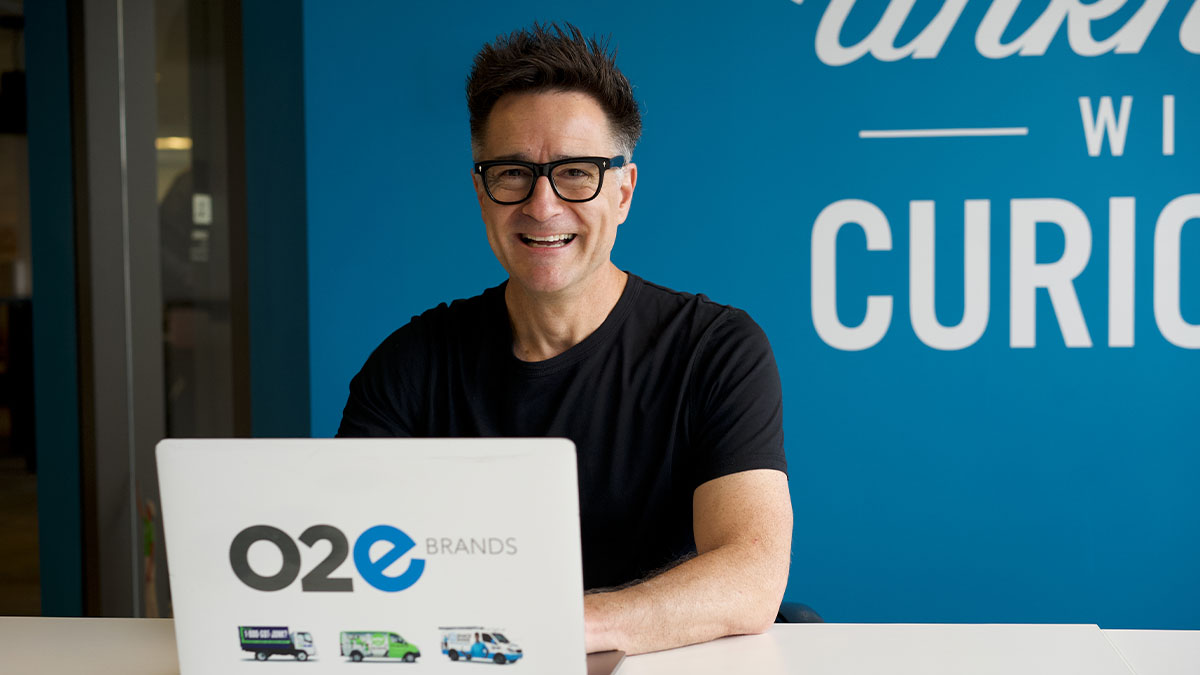
Brian Scudamore speaks to Shelley Irwin about the Great Junk Transfer
When I sat down with Shelley Irwin on The Shelley Irwin Show, she asked me to share the origin of 1-800-GOT-JUNK? in a nutshell. I love reflecting on where this journey started. Back in 1989, I was an 18-year-old trying to figure out how to pay for college. Sitting in a McDonald's drive-thru, I saw a beat-up pickup truck ahead of me. That single moment sparked an epiphany. I bought my own pickup truck for $700, painted a phone number on the sideboards, and began hauling junk.
Today, that single truck has grown into a global brand operating across Canada, the United States, and Australia. With over 30 years in the junk removal industry, we began to notice something that led to this discovery.
From a McDonald's drive-thru to tackling the Great Junk Transfer
During our conversation, Shelley and I turned to a growing phenomenon that hits close to home for millions of families: the Great Junk Transfer. Everyone talks about the Great Wealth Transfer, but until we commissioned our international survey, nobody was addressing the massive volume of physical possessions moving between generations.
“Between 2021 and 2025, nearly a quarter of junk removal bookings in North America were directly tied to a loss, inheritance, or estate cleanout. The Globe and Mail gave this phenomenon a name in 2022. Four years later, we went looking for the data.” (The Great Junk Transfer)
Why nearly half of people would rather inherit nothing
Our 2026 study conducted with Talker Research surveyed 2,200 people across the United States, Canada, and Australia, uncovering a striking generational disconnect. Across all 3 countries, 48% of respondents— 49% in the United States alone—admitted they would prefer to inherit nothing at all rather than sort through a loved one's accumulated belongings.
For over 37 years, our truck team members have entered homes filled with everything from massive clown collections to basements packed with Beanie Babies. What parents view as cherished treasures often becomes an overwhelming burden for grieving children. In fact, our research revealed that emotional weight (22%) outranks physical labor (20%) as the single biggest anxiety when clearing out an estate.
When Shelley asked what people actually want to keep, the data was clear: the most common response was just 1 to 5 meaningful items. People want that one special memory, like a handwritten love letter, a vintage photo album, or a family heirloom. Harvard psychiatrist Dr. Blaise Aguirre reminded us that the human brain files memories in emotions and experiences, not in physical objects. The memories survive even when the clutter is gone.
Three simple questions to guide compassionate cleanouts
To help families navigate the emotional friction of decluttering, I shared three practical questions every family should ask when sorting through belongings:
- Is it usable? Determine if the item still serves a functional purpose in everyday life.
- Do you need it? Evaluate whether keeping the object adds genuine value or creates unnecessary clutter.
- Do you love it? Hold onto pieces that spark true joy, personal connection, and cherished memories.
Shelley and I discussed how social media creators like Jose Ruiz have brought this conversation into the spotlight. When Jose helped his immigrant parents clear out their apartment, millions of viewers related to the tension between honoring a parent's life and letting go of decades of accumulated items. Having these conversations earlier with parents, grandparents, and children allows families to protect what truly matters while freeing themselves from guilt.
At 1-800-GOT-JUNK?, we know that removing physical clutter provides profound emotional relief. Whether a family is navigating an estate cleanout, preparing for a move, or simply reclaiming a garage, our friendly two-person teams handle all the heavy lifting, sweeping up afterward, and making space for possibility.
Read the full interview
It was great to speak with Shelley about this growing phenomenon, and how 1-800-GOT-JUNK? can help support. At the end of the day, I think I phrased it best when I said:
“This isn't about trucks. This isn't about our business. This is about knowing that there's an emotionally trying time that our customers or people in general are going through.”
Interested in reading the full interview? Expand below to hear even more of my conversation with Shelley Irwin on the Shelley Irwin Show.
Shelley Irwin: [00:00:00:00 - 00:00:22:19] Well, this will be an interesting conversation. He's a big deal: Founder and CEO of 1-800-GOT-JUNK? — don't forget the question mark, of course — investor, and star of CBC's Dragons' Den, Brian Scudamore, on the line to talk about the answer to the question of this new survey that finds nearly half of people would rather inherit nothing than deal with a loved one's belongings.
Shelley Irwin: [00:00:22:20 - 00:00:25:16] Good morning to you, Brian.
Brian Scudamore: [00:00:25:19 - 00:00:26:26] Shelley, thanks for having me.
Shelley Irwin: [00:00:26:27 - 00:00:34:12] You're welcome. Good things on your resume. How did 1-800-GOT-JUNK? get started in a nutshell?
Brian Scudamore: [00:00:34:15 - 00:00:55:09] I was in a McDonald's drive-thru trying to think, how was I going to pay for college? A truck in front of me inspired me to go buy my own junk truck and start hauling junk, driving down laneways and alleys, and created 1-800-GOT-JUNK? to fund college. I learned so much more about business running one versus studying that I made a bold decision to drop out.
Brian Scudamore: [00:00:55:10 - 00:00:57:09] And here we are today.
Shelley Irwin: [00:00:57:12 - 00:01:13:18] Thank you for that. This growing phenomenon known as the Great Junk Transfer, is where we're leading. What's been happening when it comes to research of the next big inheritance story—not about money?
Brian Scudamore: [00:01:13:20 - 00:01:46:24] We did an international study and found something shocking. We found that almost 50% — 49% of people — would rather inherit nothing than what they do actually get from their families and loved ones. Everybody's talking right now about the Great Wealth Transfer, the largest transfer of money and wealth in history. But nobody, until we started talking about it, was really talking about the transfer of junk, the transfer of stuff when someone passes away.
Brian Scudamore: [00:01:46:29 - 00:02:01:26] Sadly, most people inherit a household full of belongings that they're unsure what to do with, and there's guilt that's experienced on top of the grieving, which is very normal.
Shelley Irwin: [00:02:01:28 - 00:02:13:11] Hence, you come to the rescue. There has been this Talker Research survey. Any findings that actually surprised you more than not?
Brian Scudamore: [00:02:13:13 - 00:02:40:23] Well, people said that they want one to five meaningful things. Our truck teams have been going into homes for over 37 years all over America, and we've seen it all: from collections of clowns, to a basement full of Beanie Babies, to a giant giraffe statue. What people want is that special treasure that you just couldn't live without. They're overwhelmed by the amount of stuff.
Brian Scudamore: [00:02:40:23 - 00:03:06:08] And as technology continues to increase in our world, I think we're ending up with fewer things. Everything's condensed onto our phones. So the surprising part was just how little people actually wanted. You don't have to attach memories to things; the memories live in our brain and in our heart. So when we come in with our truck team members, it's helping walk people through that process...
Brian Scudamore: [00:03:06:10 - 00:03:12:11] ...that is so difficult, and giving them a helping hand along the way.
Shelley Irwin: [00:03:12:14 - 00:03:21:15] And let's stay on that roll on what families can do to make this process easier on each other.
Brian Scudamore: [00:03:21:17 - 00:03:42:09] I think you can, as a family member, talk about it sooner. What are the things you love? Find out from Grandma or Grandpa, Mom and Dad: what are those things that they have treasured all their life that they wouldn't want to separate with, that the kids have to hold on to? It usually isn't all the stuff they bought at Costco.
Brian Scudamore: [00:03:42:09 - 00:04:12:20] It isn't the hundreds and thousands of records and photos. What are the special ones? You can imagine: somebody passes and the grandkids come in and try to make sense of what was important, box after box after box. I saw it last week: we had a woman, Lorien, who spent two weeks unpacking this home and dealing with three generations of accumulation.
Brian Scudamore: [00:04:12:27 - 00:04:22:15] And she didn't know what photos mattered. So have the conversation sooner with those you love, and really protect those special items.
Shelley Irwin: [00:04:22:17 - 00:04:41:03] Yes. Talking all things what to do with—well, the junk. As they say, it's called the Great Junk Transfer. Of course, on behalf of 1-800-GOT-JUNK? involved in this, you, of course, founder Brian Scudamore. How do you then come into play here?
Brian Scudamore: [00:04:41:06 - 00:05:07:00] Well, we want people to have the conversation sooner. This isn't about trucks. This isn't about our business. This is about knowing that there's an emotionally trying time that our customers or people in general are going through. We had a young fellow named Jose Ruiz, who comes from an immigrant family, and he had truckloads and truckloads of junk that his parents just didn't know what to do with.
Brian Scudamore: [00:05:07:00 - 00:05:29:29] While still alive, they held on to everything because that was their immigrant mentality, and they just didn't want to lose the stuff. They even had a truck parked in front of their house where they stored half the things that they wanted to keep. So Jose actually opened this up to the world through social media. Millions saw, connected to, and related to how challenging these situations can be.
Brian Scudamore: [00:05:30:05 - 00:06:05:02] So I think just knowing that people can have the conversation, we're there to say, "Hey, three questions that are helpful: Is it usable? Do you need it? And do you love it?" — and sort through those things ahead of time. I know that Jose will tell people how liberating it was to help his parents free themselves from all their stuff. The emotional support that he received along the way from a new fan base really brought that conversation to the forefront and said that it's okay to talk about this before someone passes.
Shelley Irwin: [00:06:05:05 - 00:06:10:15] All right. What's a good resource website for us to do our study, please?
Brian Scudamore: [00:06:10:18 - 00:06:29:04] Well, we think the results of the study are pretty fascinating. Someone can find that at thegreatwealthtransfer.com — sorry, greatjunktransfer.com — with lots of information there that's quite interesting. And of course, 1800gotjunk.com. We're here to help in any way we possibly can.
Shelley Irwin: [00:06:29:06 - 00:06:40:12] All right, appreciate you. Keep up your good work with this and the many hats you wear, including investor and star of CBC's Dragons' Den. Take care to you, Brian Scudamore.
Frequently asked questions
What is the Great Junk Transfer?
The Great Junk Transfer refers to the physical side of the generational handover of physical possessions, where younger generations are inheriting an overwhelming influx of unwanted physical clutter. According to a 2026 study by Talker Research on behalf of 1-800-GOT-JUNK?, nearly half of Americans (49%) would rather inherit nothing at all than carry the burden of clearing a relative's house, with 56% stating that managing a loved one's volume of possessions actually hindered their ability to grieve. Because 45% of heirs report already running out of room in their own homes, the long-standing assumption that passing down every item expresses love is shifting toward a preference for keeping just a few meaningful, story-driven keepsakes over full houses of furniture and collections.
How does 1-800-GOT-JUNK? help families navigate emotional cleanouts and inherited clutter?
Clearing out a loved one’s home or dealing with generational clutter can be emotionally draining. 1-800-GOT-JUNK? provides full-service junk removal designed to take the physical stress off your shoulders. Friendly, uniformed team members handle all the sorting, heavy lifting, and loading from anywhere on the property—whether it’s a packed garage, attic, or basement. All you have to do is point to the items you want removed, allowing you to focus on your emotional well-being and memory-keeping.
What did Brian Scudamore discuss on The Shelley Irwin Show?
On The Shelley Irwin Show, 1-800-GOT-JUNK? founder Brian Scudamore discussed the Great Junk Transfer study, explaining why 48% of heirs prefer inheriting nothing, how emotional weight impacts estate cleanouts, and how families can navigate decluttering with compassion.
What three questions should families ask when deciding what to keep?
Brian Scudamore recommends asking: Is it usable? Do you need it? Do you love it? These questions help families cut through emotional attachment and focus on what truly matters when clearing out a loved one’s belongings.
Who is Jose Ruiz, and why does his story matter to the Great Junk Transfer conversation?
Jose Ruiz is a social media creator who documented helping his immigrant parents clear out decades of accumulated belongings. His story resonated with millions online, highlighting the tension between honoring a parent’s life and the practical need to let go — a conversation Brian Scudamore says is becoming more public and more necessary.