My First Million podcast (2019): The 1-800-GOT-JUNK? Story



TL;DR
Sitting down with Shaan Puri and Sam Parr on My First Million, Brian reflects on how 1-800-GOT-JUNK? grew from a single beat-up truck into an industry-leading brand across Canada, the United States, and Australia.
- In 1989, Brian bought a beat-up pickup truck for $700 after seeing a hauling truck in a McDonald’s drive-thru — growing into a half-billion-dollar business across his home service brands by 2019, and continuing to climb since.
- From landing PR hits like the Vancouver Province and the Oprah Winfrey show, to sharing Brian’s founder story, stories build trust, inspire teams, and transform ordinary services into household names.
- Growing where you’re planted and staying disciplined about culture, rather than chasing quick exits, turned an ordinary service into an extraordinary global business.
Published by: My First Million
Host: Shaan Puri and Sam Parr
Guest: Brian Scudamore, Founder and CEO of 1-800-GOT-JUNK?
Originally aired September 11, 2019.
Brian Scudamore joins Shaan Puri and Sam Parr on the My First Million podcast
When I joined Shaan Puri and Sam Parr on My First Million, I was happy to hear that not only had they heard of 1-800-GOT-JUNK? and my story before, but as Shaan put it, “It's one of the catchiest businesses I've seen”.
Since they were already familiar with how I started 1-800-GOT-JUNK? as I’ve been known to share that story a lot, Shaan asked me right away about PR and why I love telling my story. My answer was simple: a brand is the story it tells. Whether you are Starbucks, Airbnb, or 1-800-GOT-JUNK?, you have to live up to that story every single day.
Why a brand is ultimately the story it tells
Early in my career, my girlfriend at the time encouraged me to reach out to the local newspaper and tell my story for the first time. I wasn’t sure at first, but realized I had a great story to tell, and pitched it that way. The very next day, our truck and phone number were featured on the front page of the Vancouver Province. The phone rang off the hook!
That single article taught me the power of free press. But I’ve also learned over the years that press is about more than customer acquisition, it’s also about changing lives. By sharing our story openly, we attract exceptional Franchise Partners who want to build their own successful businesses using our proven recipe. Stories build trust, inspire teams, and transform ordinary services into household names.
How a McDonald's drive-thru inspired a $700 startup
On the topic of stories, Shaan asked me if my origin story was 100% real or just polished marketing history. I can tell you with absolute certainty that it is completely true. In 1989, as an 18-year-old trying to figure out how to pay for college, I pulled into a McDonald's drive-thru. Ahead of me was an old, beat-up pickup truck filled with trash, with the words "Mark's Hauling” on the side.
Having worked at my grandparents' army surplus store in San Francisco as a kid, I already loved the game of business. Looking at that truck, an "ah-ha!" moment hit me: junk removal was a simple, necessary service that anyone could understand.
I checked the classified ads and bought a truck for $700. I built plywood sideboards, painted 738-JUNK on the sides, and launched The Rubbish Boys. Within two weeks, the business already paid for the truck. It wasn’t too long until I realized I was learning far more on the streets than in lecture halls, and I sat down with my father and told him I was dropping out of university to become a full-time junk man. It did not make sense to anyone at the time, but I believed in what lay ahead.
Building flywheel momentum by playing the long game
In an entrepreneurial world obsessed with overnight success and quick exits, I have always believed in growing where you are planted. During the podcast, Shaan pointed out how rare it is, especially where he is in Silicon Valley, to meet a founder who has stayed passionate about one business for over 30 years. My passion growing 1-800-GOT-JUNK? has held strong, and it’s led to amazing results after all this time.
When I started, it took me eight full years to reach $1 million in annual revenue. Today, we generate $1 million on any given day before noon. That kind of growth does not happen overnight. It is the cumulative result of sticking with a business, building a culture, and letting the flywheel gain momentum.
- Business Momentum Tip: I shared that building a long-term brand is like diet and exercise. You can work hard for a single week and see very little change. But if you stay disciplined for 12 weeks, 12 months, or 30 years in our case, the compound results are staggering.
Rebuilding around culture and finding the right partners
Success is never a straight line. On the podcast, I was transparent about the major setbacks that shaped our company. Five years into the business, with five trucks and $500,000 in revenue, I realized nine of my eleven employees were "bad apples”, and I wasn’t having fun at work anymore.
I brought the entire team into a morning meeting, apologized for my failure as a leader, and fired all eleven employees at once. I went back to one truck, driving, dispatching, and hauling junk by myself. It was painful, but it taught me a permanent lesson: 1-800-GOT-JUNK? is a people business. Customers are not just paying for hauling. They are paying for emotional relief, trust, and ease. From that day on, I vowed never to compromise on hiring clean-cut, friendly, and happy people.
Years later, during the 2007–2008 financial crisis, revenue dropped by $40 million when leadership alignment broke down. Rather than giving up, I stayed determined, stayed open with our Franchise Partners, and brought in Erik Church as COO (now President). Together in a "two in the box" leadership model, we quadrupled revenue and put the brand on a clear trajectory toward $1 billion.
Read the full interview
I enjoyed speaking with Shaan Puri and Sam Parr about my growth to my first million and beyond. It’s always a pleasure to reflect on my story, starting from a $700 truck and growing into a $700M junk removal. As Shaan even told a friend before our interview, he was “talking to the pioneer of the junk space.” It wasn’t an easy journey and I learned a lot of lessons along the way, but it will always be worth it to provide relief and ease to every single one of our customers.
Interested in reading the full conversation? Expand below to hear even more of my story on My First Million.
Brian Scudamore: [00:00:02:01 - 00:00:27:15] Together, this president and I had almost bankrupted 1-800-GOT-JUNK?. We were down $40 million in revenue in one year. The financial meltdown of 2007 and 2008 didn't help. There was no one in my business who thought I was sane, who thought I made a good decision. They didn't get it because people didn't really understand or see what I saw.
Brian Scudamore: [00:00:27:17 - 00:00:38:10] Somehow I stuck with it. While it took eight years to get to $1 million, we do $1 million on any given day, like today.
Sam Parr: [00:00:38:12 - 00:00:45:12] My next guest found a basic service that wasn't being met, and now he is making hundreds of millions of dollars. That's right, hundreds of millions of dollars.
Brian Scudamore: [00:00:45:14 - 00:00:59:24] There I was, out on a boat with two very senior executives. They offered $75 to $100 million, is what they were talking. I said I wouldn't sell it for a billion.
Shaan Puri: [00:00:59:26 - 00:01:16:19] Alright. We are talking to Brian Scudamore, the founder of 1-800-GOT-JUNK?. If you’re like me, you've seen the billboards for 1-800-GOT-JUNK?. It's one of the catchiest businesses I've seen, and it's also a very simple business. Brian's a guy who, when he was 18 years old, saw somebody else had a truck and said, "You know, haul away your junk."
Shaan Puri: [00:01:16:20 - 00:01:33:21] He was like, "That's a business I could do." He went and rented a truck and started this business and has grown it from him in one $700 truck all the way to basically doing about half a billion dollars in revenue this year. He has been doing this business for 30 years, and he's a pretty inspirational dude.
Shaan Puri: [00:01:33:21 - 00:01:52:00] You will hear that in the episode today. I am excited to talk to Brian. We talk a little bit about how he got the business off the ground, his knack for PR, how he ended up on Hoarders, Dr. Phil, and Oprah, and all these other different outlets, and how he has used that to grow the business, as well as his philosophies around hiring and some of the mistakes he made.
Shaan Puri: [00:01:52:00 - 00:02:06:08] It has been a long road over these 30 years, and so it’s a very cool story. Here comes Brian Scudamore, the founder of 1-800-GOT-JUNK?, ready to go.
Shaan Puri: [00:02:06:11 - 00:02:22:27] For those who are listening, Brian is the founder of 1-800-GOT-JUNK?, as well as a couple of other businesses that we are going to be talking about. It's kind of an amazing story honestly. For a lot of the guests who have come on, their stories are usually ones people have never heard of. But I would say you have actually done a good job of getting your story out there.
Shaan Puri: [00:02:22:28 - 00:02:33:03] Is that something intentional? Do you like talking about your story, or is PR part of your strategy? Talk to me a little bit about that before we even jump into talking about how 1-800-GOT-JUNK? got started.
Brian Scudamore: [00:02:33:04 - 00:02:57:05] That is a great question. I realized only when building a business that a brand is the story it tells. Now, as a brand, whether you’re Starbucks or Airbnb or 1-800-GOT-JUNK?, you have to live up to the story. That’s the difficult part. But I saw an early potential opportunity a couple of years into my business.
Brian Scudamore: [00:02:57:07 - 00:03:13:20] Actually, my girlfriend at the time said, "You had trouble finding a job: you created your own. Get out there and tell the press that story, because I think they are going to eat this thing up." The next day we were on the front page of the Vancouver Province, the largest newspaper in the city. Our truck, our phone number.
Brian Scudamore: [00:03:13:20 - 00:03:37:00] It was unbelievable, and the phone rang off the hook. So I learned the value in free press, and we got out there to tell our story. But I think it’s even bigger than that. We are about changing lives. If I look at our franchise partners and the lives they are creating for themselves with our recipe, with our formula, why not recruit more great people by telling that story over and over?
Brian Scudamore: [00:03:37:01 - 00:03:46:17] Why not change people's lives as customers, whether it’s hauling away their junk or painting their house in a day with WOW 1 Day Painting? We believe that stories help change lives.
Shaan Puri: [00:03:46:18 - 00:03:57:14] When you started, that article that came out, that story was more about, "Hey, I am having trouble finding a job, so I created my own." So it was really an entrepreneurial story. It didn't matter what the service was at that time. Is that right?
Brian Scudamore: [00:03:57:16 - 00:04:17:17] That’s correct. I think there was a little bit of, "So you couldn't find your own job, and you went and bought a truck and started hauling junk" type feeling. This wasn't a glamorous business. It wasn't a sexy business by any means. When we understood the power of story, we started to look for the next story.
Brian Scudamore: [00:04:17:18 - 00:04:43:03] So while I created something to fund my way through college and couldn't find a better job and started 1-800-GOT-JUNK?, I also, with a year left in my degree, dropped out of university. That is where I again went to the press, where they were like, "You dropped out of university. You sat down and talked to your dad, who is a liver transplant surgeon, and told him you were leaving university to become a full-time junk man."
Brian Scudamore: [00:04:43:09 - 00:04:46:04] It just didn't add up in people's minds.
Shaan Puri: [00:04:46:05 - 00:05:03:12] I like that. So we are going to go back to the beginning, and we are going to talk about how you originally got the idea and where you got started. But the thing I will point out, I read a bunch coming into this because I wanted to get familiar. We hadn't met before, and I wanted to understand.
Shaan Puri: [00:05:03:17 - 00:05:18:29] The question I had, I read the story that I think you have probably told a thousand times now, or maybe more, which is, you are 17, 18 years old. You want to figure out a way to pay your way through college. I think it was like you are sitting at a McDonald's and you saw somebody else's truck, right?
Shaan Puri: [00:05:19:05 - 00:05:40:21] You saw a hauling truck of somebody else's, and you had the idea. Now, the thing I am going to ask you is probably something you don't get asked very much, but I have learned the dirty secret in entrepreneurship is that sometimes the origin story comes a little bit later. You sort of go back and you sort of polish up the origin story and you sort of stretch and skew it a little bit to be worth telling.
Shaan Puri: [00:05:40:23 - 00:05:53:28] Guests have come on this podcast, and I kind of ask them the same thing, which is, to what extent is this 100% exactly how it went down, where you really just had the epiphany and you were struck by the idea, or were you already thinking about a business idea at the time?
Shaan Puri: [00:05:53:28 - 00:06:00:06] Did this really accelerate it? I guess give us the backstory. Was this really how it went down?
Brian Scudamore: [00:06:00:10 - 00:06:17:27] First of all, kudos to you because it is so rare that I get asked a question I have not been asked. So bingo, that’s a new one. It’s a great question, and I have certainly met enough founders to know that that’s the truth, where many of these things progress, and they rewrite history, and so on.
Brian Scudamore: [00:06:18:00 - 00:06:36:19] My story is 100% true. I can think back in my mind when I… Here’s the story, and I will give you a little more detail on it, but I was in a McDonald's drive-through. There was a beat-up old pickup truck. While I was in the drive-through, I saw this truck, and I looked over at it and I was like, "Wow, that would be a great idea."
Brian Scudamore: [00:06:36:20 - 00:06:56:23] It was filled with junk. Maybe because I was having a hard time finding a job, why don't I just buy my own truck? For 700 bucks, it was actually $753, to be precise. I bought that truck, saw a classified ad, went out and checked it out, and off I went to build a business. I remember back to that moment, and I can see that truck.
Brian Scudamore: [00:06:56:27 - 00:07:16:06] It was a black cab with a red box. It said "Mark’s Hauling" on the side. It had a little yellow lightning bolt on it. It was filled with junk, and the truck itself was junk. It was one of those things where I didn't realize what the business would become in the future. It was really just a vision to pay for college.
Brian Scudamore: [00:07:16:06 - 00:07:24:22] It was something simple. While there wasn't a vision there of what I was starting, the origin story, if you will, was absolutely legitimate.
Shaan Puri: [00:07:24:23 - 00:07:39:08] Love it. Most people, when they see a hauling truck or a junk truck, they don't think, "Oh, I want to go do that." In fact, when I was on my way over here, I texted a friend. I said, "I am talking to the pioneer of the junk space or the waste management space."
Shaan Puri: [00:07:39:13 - 00:07:55:05] He thought I was talking about the Mafia. He thought waste management was code for being in the Mafia. But for some reason, you were drawn to it. I like that. It seems like one reason is because it was simple. It was like, "Hey, I could actually do that."
Shaan Puri: [00:07:55:08 - 00:07:59:12] Was there anything more to it, or are you just wired in a different way than most people?
Brian Scudamore: [00:07:59:14 - 00:08:18:05] I don't know. The moment was real. The moment happened, and why it happened, was it serendipity? Do I have an eye for spotting ideas? I always remember as a kid I would look at companies and think, "Oh, I could do that better." I think this was one of those moments where I looked and went.
Brian Scudamore: [00:08:18:07 - 00:08:37:01] I have always been interested in business. My grandparents ran an army surplus store in San Francisco, Lorber Surplus, and I worked there and experienced the game and excitement of building a business with them. Even though I was a little kid, I felt a part of it. I think when I saw that truck, it was just, "Wow, I can do that."
Brian Scudamore: [00:08:37:01 - 00:08:59:02] Something simple. In today's world, people often think, "Oh, I have got to be the next Instagram." They’re figuring out how to catch lightning in a bottle. But people often don't understand about a lot of these founder stories, whether you’re Instagram or Airbnb, is how it started isn't where it ended up. I think that’s no different with my 1-800-GOT-JUNK? story.
Brian Scudamore: [00:08:59:02 - 00:09:07:00] It was a way to pay for college, and it ended up becoming a franchise opportunity that has now grown into four other home service brands.
Shaan Puri: [00:09:07:06 - 00:09:25:08] Airbnb is a good example of that. Today, Airbnb is an amazing brand. They booked more nights than Hilton Hotels around the world every night. When it started, it was two guys living in San Francisco. Rent was super expensive, and there was a conference in town, and people didn't have a place to stay.
Shaan Puri: [00:09:25:08 - 00:09:38:21] All the hotels were booked up, so they just said, "Hey, we have air mattresses. We can let somebody sleep in our condo. We make a little extra cash, and they get to go to this design conference." That was the origin story of that, which was also very simple, born out of necessity. I really liked that.
Shaan Puri: [00:09:38:21 - 00:09:50:01] So you saw this truck, and you were like, "I’m going to do this." You go get the truck. You actually had a different brand name at the time. It wasn't 1-800-GOT-JUNK? at the time, right? What was the brand you started with?
Brian Scudamore: [00:09:50:03 - 00:10:08:02] It was a smaller brand, so it was more regional, and the phone number was 738-JUNK. I remember meeting a guy once who told me, "Your name has to be your phone number." I remembered that. I came up with this phone number that I called the telephone company and tried to get something, three numbers and junk.
Brian Scudamore: [00:10:08:03 - 00:10:29:29] I emblazoned the side of my truck with this phone number, which proved to be, while it might sound really smart, I think it was just something I had heard and went out and did. But it became genius in the sense that whenever we got press, people would see the phone number on the front page of the newspaper or on CNN or Oprah, whatever show we would get on.
Brian Scudamore: [00:10:30:00 - 00:10:37:14] They would see 1-800-GOT-JUNK?, they would remember the number. It was very visual, and it was hugely impactful for us.
Shaan Puri: [00:10:37:15 - 00:10:52:21] I think there is a billboard right above my parents' house. I have seen 1-800-GOT-JUNK? a hundred times this year. It is so catchy. It is memorable. I read something that was like, "The Rubbish Boys." Was that something? Is that one of the names you had at the time?
Brian Scudamore: [00:10:52:22 - 00:11:11:29] It was so, here is the brand confusion that happened in the early days. Such a confusion that I even gave you a different brand than we had initially called ourselves. Here’s how it worked. I called the company The Rubbish Boys. It was really just me. But I had a vision for something bigger, and the phone number was 738-JUNK.
Brian Scudamore: [00:11:11:29 - 00:11:36:14] But the side of the truck really had that phone number emblazoned on the side that people chose to call my company 738-JUNK versus The Rubbish Boys that I had originally named it, because that is what they saw. That is what led me partially to, "Okay, if we want to build a brand outside of Vancouver and grow into other markets that are bigger than Vancouver in size, we can't be getting local phone numbers in every market."
Brian Scudamore: [00:11:36:14 - 00:11:41:08] That is going to be too confusing. So we came up with 1-800-GOT-JUNK?.
Shaan Puri: [00:11:41:09 - 00:11:47:01] Nice. Just give the listeners a sense of the timeline here. What year were we talking when you started this?
Brian Scudamore: [00:11:47:08 - 00:12:12:13] I started in 1989 and wound down The Rubbish Boys/738-JUNK name and changed to 1-800-GOT-JUNK? eight years later. There is certainly a good story behind how I got the phone number, but 738-JUNK and The Rubbish Boys. I saw the revenue in my market shrink to half within a year because, as we switched over to 1-800-GOT-JUNK?.
Brian Scudamore: [00:12:12:16 - 00:12:30:07] I even had friends and family say to me, "Even though the trucks look the same, it was just a different phone number. Oh, there is this competitor out there. You have got to watch them. They look just like you. They’re called 1-800-GOT-JUNK?." So people got confused between the brands. I knew that it was short-term pain for long-term gain.
Brian Scudamore: [00:12:30:13 - 00:12:34:22] We stuck with it, and it was obviously the right decision in the long run.
Shaan Puri: [00:12:34:26 - 00:12:54:14] I feel like when people listen to these podcasts, they are typically commuting to work or doing an errand, something like that. This is an escape. The goal is for it to be both inspirational and educational. One thing I personally was inspired by was, you said "long term" just now. This is a long-term business.
Shaan Puri: [00:12:54:14 - 00:13:11:11] We are talking 30 years of this business, and there are not many. Especially I am here in Silicon Valley. There are not many 30-year-old businesses around here that you could still talk to the founder, and they have the same passion, and the business is still around, and they didn't pivot ten times or go and try to start five new businesses and ditch the old one.
Shaan Puri: [00:13:11:13 - 00:13:29:26] So you really were long-term with this, and I really respect that. It sounds like that first eight years you were building up, and you hinted at something. You said, "There is a good story behind the 1-800-GOT-JUNK? number." I am a sucker for a good story, so I would love to hear that. I would love to hear, first, maybe about going long term.
Brian Scudamore: [00:13:30:02 - 00:13:52:23] It’s interesting, Shaan. I am such an ADD personality. To spend an hour on a podcast and not be staring out the window and thinking other things and wanting to go on the internet, I am very, very ADD. What’s interesting, though, is as often as I see all these squirrels fly everywhere, I have somehow stuck with one business.
Brian Scudamore: [00:13:52:24 - 00:14:17:01] Even though we have added other brands under the O2E Brands umbrella, they are still home services, they are still franchised. It fits, but it amazes me sometimes that I have stuck with it. I am not sure why. I went to 14 schools from kindergarten to college. The only one I ever finished was kindergarten, the only diploma I have. True story. I’m just fascinated by entrepreneurs and how ADD we can be.
Brian Scudamore: [00:14:17:01 - 00:14:43:09] Most entrepreneurs I see buy a company, start a company, then they sell it, then they move on to something else, and they are always chasing success. I think somewhere early on I realized, "Grow where you’re planted. Stay with the business you have got and just do your best." Somehow I stuck with it. While it took eight years to get to $1 million, we do $1 million on any given day, like today.
Brian Scudamore: [00:14:43:11 - 00:15:16:04] It took 30 years to ramp up to that point. But you just build this flywheel momentum by sticking with something. It is like diet and exercise. You work hard for a week, you don't notice results, but if you stick with it for 12 weeks, wow. If I go to the story now of 1-800-GOT-JUNK? and how I got that phone number, there I was, eight years into the business, deciding I wanted to expand into the United States, start the business in Seattle as the first prototype location outside of Canada, and wanted this phone number.
Brian Scudamore: [00:15:16:04 - 00:15:32:27] I remember sitting down brainstorming with my team, and we came up with this. If we are not going to be 738-JUNK and we are going to go more national, 1-800-something-JUNK. We came up with GOT-JUNK, a play on the Got Milk? campaign, a big advertising campaign in the 90s. I said, "Okay, I can see it."
Brian Scudamore: [00:15:33:02 - 00:15:50:12] I picked up the phone and called the number, and it is taken. I don't know where it is taken because I couldn't reach the actual phone number. It just said it wasn't working from your local calling area. So I did some research. I looked around. I called everybody I knew in the States and asked them to make phone calls to the number, and nobody could get through.
Brian Scudamore: [00:15:50:15 - 00:16:17:27] Months later, I finally realized it was working in Idaho. The Department of Transportation in Idaho owned the phone number. I had made 60 phone calls trying to get the number. I had hired a design company and was actually paying invoices on them designing a logo and a brand for 1-800-GOT-JUNK? before I had the number, or any indication that I could even get the number, because that is how much I believed in my vision or my destiny.
Brian Scudamore: [00:16:17:29 - 00:16:35:15] Finally, I get in touch with the Department of Transportation. I narrow it down. I get through to Michael in the phone room. If you’re in government, you must have someone that runs your phones. Michael finally says, "You have called me three times in the last couple of days. I don't know why you want this phone number, but here are the AT&T forms."
Brian Scudamore: [00:16:35:15 - 00:16:56:13] "I am going to send them off to you by fax. I have signed off on it. The number is yours." Bingo. I get this 1-800-GOT-JUNK? number for free. The point of that whole story, I think, is we have to sometimes, as entrepreneurs, put the cart before the horse, spending a couple of thousand dollars on a logo for a brand that I didn't really know I could get.
Brian Scudamore: [00:16:56:18 - 00:17:12:03] I had to have some blind faith that if this was really a good idea, I was almost going to will it to happen. I don't know how the universe came together, but it did. The number is ours. I called Michael back a couple of days later just to thank him when it all settled, and he was no longer with the business.
Brian Scudamore: [00:17:12:03 - 00:17:16:14] So I have no idea what the story is there, and probably we will never know.
Shaan Puri: [00:17:16:16 - 00:17:36:00] I love it. This is not the first time you did this sort of "will it into existence," visualize, and then go for it. I read another anecdote. I heard something about you, where, as I said, you have told your story really, really well. You have been on Oprah. You have been on Dr. Phil. You have been on a whole bunch of different, as mainstream as mainstream gets.
Shaan Puri: [00:17:36:02 - 00:17:51:16] The most interesting part of what I read there was that you had some kind of wall in your office where you and the team were putting up a vision of where you wanted to be, where things you wanted to have happen through this journey of this company. One of them was, "Get on Oprah."
Shaan Puri: [00:17:51:16 - 00:17:59:21] Talk a little bit about, do I have that story right? Is this something you do repeatedly, or was that just a one-off vision board thing you did?
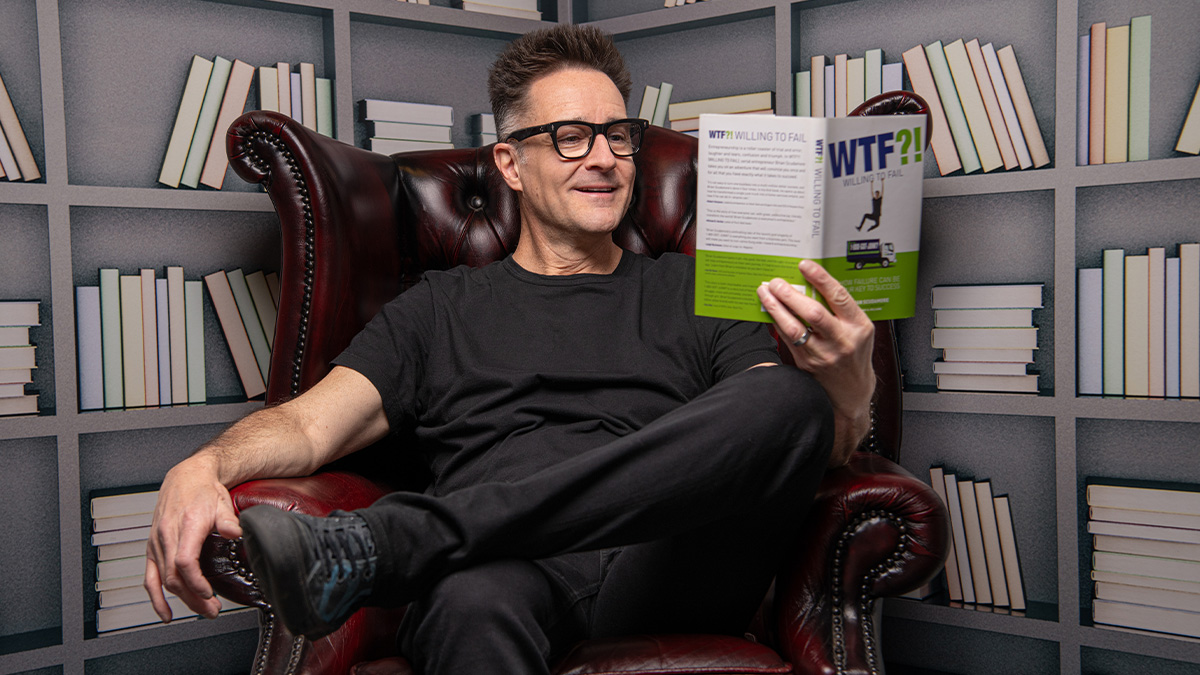
Brian Scudamore: [00:17:59:27 - 00:18:24:06] It is something I do repeatedly. I wrote a book called WTF: Willing to Fail. One of my favorite stories in that book would be this one. We have the "Can You Imagine" wall. There was this big empty wall in our office. We are all about visuals and putting up big whiteboards and lots of color and different imagery and quotes, and this wall didn't have anything.
Brian Scudamore: [00:18:24:10 - 00:18:46:09] I remember having a conversation with someone in the office who said, "I can't think like you can about vision, Brian." I said, "Of course, you can. Everybody can think about vision." This guy's name was Cameron Herold, our COO. So I said, "Let me take this wall." I put a big vinyl decal up on the wall that said, "Can you imagine?" question mark.
Brian Scudamore: [00:18:46:17 - 00:19:05:24] I put it up on this wall because I wanted people to start to think about vision. What could they imagine for themselves, themselves in the business? Let's think about big, bold ideas. I challenged Cameron to think big. He still said he couldn't. So one of the things I put up on the wall was, "Imagine being featured on The Oprah Winfrey Show."
Brian Scudamore: [00:19:06:01 - 00:19:28:20] That was the first so-called "Can you imagine?" I put this quote up on the wall, "Can you imagine being featured on The Oprah Winfrey Show," with my name below it, as my commitment that I was going to make that happen. People would walk by it, look at it, be confused by it, ask me questions. I started putting a bunch of pens and paper down near the wall for other people to write up their own big, bold, "Can you imagine?"
Brian Scudamore: [00:19:28:20 - 00:19:48:03] But the cool thing is, when you can see it and you put it up in a big vinyl decal on the wall, it’s something you start to think about, and others start to think about. We took Tyler, our first PR hire, who was in the business, and he would go sit beneath that wall and look up at it and go, "Can you imagine Oprah?
Brian Scudamore: [00:19:48:06 - 00:20:06:10] I can see it. I can see it." He used to tell me he could see it. So he made it his mission to get on the phone and send emails and do all those sorts of things to pitch Harpo Studios. We tried every which way we could to get in touch until 14 months later, we’ve got this open office environment.
Brian Scudamore: [00:20:06:11 - 00:20:23:05] Tyler is wearing this blue wig, which he used to do to get in the spirit when he would pitch. He stood up and he said, "I did it! I did it!" We were like, "What is going on?" He got us on The Oprah Winfrey Show. Harpo Studios called and said, "We need you down here. We have got a hoarder."
Brian Scudamore: [00:20:23:05 - 00:20:40:10] "We read about you guys. We heard about you, and you have pitched us. We need you." This was in Los Angeles. We didn't have any franchises there. So we had to get creative. We called our San Francisco Bay Area franchise owners and said, "We need you to drive down to help us in LA. We’re going to fly down and meet you."
Brian Scudamore: [00:20:40:13 - 00:20:53:26] We cleaned out a job for a hoarder, and sure enough, the next Monday I was in Oprah's green room, about to go up on stage for my 4.5 minutes of fame. Man, did the phones ever light up when that thing ran.
Shaan Puri: [00:20:53:28 - 00:21:10:16] Wow, a hell of a story. I love that story. That story is the reason I do this podcast, to hear stories like that, and it makes me want to do it even for my own self, not even just for my business. Is that something, I mean, is the "Can you imagine" wall?
Shaan Puri: [00:21:10:16 - 00:21:13:22] Is that still up, or has that sort of run its course now for you?
Brian Scudamore: [00:21:13:23 - 00:21:35:07] It is still up, and we have got to do a call out to get some. This is a good reminder. Thank you, Shaan. A call out to get people to submit even new, more fresh ideas. But we did cool things like, this is where I love that I can come up with an idea or someone else can come up with an idea, and a completely different person can execute on it and make it happen.
Brian Scudamore: [00:21:35:12 - 00:21:57:11] The whole "teamwork makes the dream work." If I think of my Oprah vision and Tyler single-handedly made it happen, there was a vision up there that a woman, Andrea, marketing manager in her office, said, "Can you imagine?" Hers was being featured on the side of a Starbucks cup. Starbucks, back in the day, used to have this campaign on the side of their lattes and cappuccinos.
Brian Scudamore: [00:21:57:11 - 00:22:22:08] It said, "The way I see it," with quotes from famous actors and musicians and poets and so on. She pitched them the idea of a quote from me. Starbucks had to help me write it. I am a high school dropout, so I clearly needed some help. I remember this quote ended up there, and it was really the fact that I didn't care that my name was on the cup, but it said, "Founder and CEO of 1-800-GOT-JUNK?."
Brian Scudamore: [00:22:22:11 - 00:22:46:25] The 1-800-GOT-JUNK? brand ended up on 10 million cups with Starbucks for free, because Andrea Baxter had the freedom to conceive something unusual and big that she wanted to make happen. And she did. The quote was, "You are what you can't let go of." It really fit with junk removal. If you can't let go of things, what are you holding on to?
Brian Scudamore: [00:22:47:00 - 00:22:57:21] It was an amazing, amazing experience. We had so many people who saw that, but that also inspired others in our company to dream big and come up with their own "Can you imagine’s."
Shaan Puri: [00:22:57:26 - 00:23:17:06] This is one where I have got to ask because once it happens, it is like, "Wow, that was a great idea. So glad we did that. Can't believe it happened. That's awesome. What a rally." But when you first put up this vinyl and you say, "Can you imagine?" I love how you are talking about Andrea and you are talking about Tyler, and you are talking about, I forgot the name of the first person who you were first challenging to think big…
Shaan Puri: [00:23:17:06 - 00:23:32:11] Cameron Herold. I do a lot of things like this in our office. When we were running our startup, we just sold the company. But when we were doing our startup, I had all these posters on the wall. I would challenge our team to do these funky exercises.
Shaan Puri: [00:23:32:14 - 00:23:51:20] Not everybody loves it, especially right off the bat. A lot of times, I feel like, I don't know if you watch the show The Office, but I feel like Michael Scott, who is this goofy boss who is on the edge of delusion and insanity, and then sometimes it turns out to be genius.
Shaan Puri: [00:23:51:20 - 00:24:07:28] What are some of the other things that you do that are like this? I am guessing if I have felt that way, there are probably other CEOs who are all making it up as we go, and you want to try some new things, but your staff may not always be comfortable with it, or it may not be standard. But it sounds like this was an example where you did it anyway, and it worked.
Shaan Puri: [00:24:07:29 - 00:24:15:18] Can you talk a little bit about that as advice for essentially me and anybody else out there who sometimes feels like Michael Scott when we do this sort of thing?
Brian Scudamore: [00:24:15:20 - 00:24:38:20] I have certainly felt like Michael Scott more than once or twice. But it’s one of those things where I see my role as the CEO to be this sort of chief visionary, chief possibility guy, where I can help people imagine big things and dream in such a way where you never know, if you come up with some big ideas, you might actually make some of them happen.
Brian Scudamore: [00:24:38:26 - 00:24:59:03] Putting these things up on the wall, the Oprah challenge to the company, to myself, was people saying, "How would you ever get on Oprah? Why would Oprah cover a junk removal company?" I don't know, but I can see it happening. I can see myself giving Oprah that big hug, which I did. I don't know how it is going to happen.
Brian Scudamore: [00:24:59:03 - 00:25:21:21] Then, sure enough, Tyler goes out and makes it his mission and makes it happen. I can give you so many stories of things we have come up with that have been so bold and audacious and crazy that shouldn't have happened, like the phone number, like the Starbucks cup. But they do happen, and it is only impossible until it happens and it comes true.
Brian Scudamore: [00:25:21:24 - 00:25:44:02] As a leader, you can help inspire possibility in others. It is only impossible if someone really wants to believe in their mind they can't do it. But what if you can help them think, "What if?" That’s the great challenge. So if you have got to be a little Michael Scott-ish to make that wonderful possibility and magic happen.
Brian Scudamore: [00:25:44:05 - 00:25:45:08] Hey, so be it.
Shaan Puri: [00:25:45:11 - 00:26:08:11] There is that old cliché, "Whether you think it is impossible or possible, you’re right," and this is an example of that. It sounds like when you talked about Tyler, you said something in passing, which is, you would put on his blue wig whenever he would get in the pitch mode or salesman. That sounds like you assembled this crew of people who fit your vibe and your style, but that wasn't always the case.
Shaan Puri: [00:26:08:11 - 00:26:26:04] One of the famous things of your story is that it wasn't just all roses and rainbows. Even as you were growing, you hit two major road bumps. I want to talk about those because this is not standard to hear about this and to hear the transparency that you’ve shared with this.
Shaan Puri: [00:26:26:04 - 00:26:44:07] But the first one comes, you are now 24 years old, you have got five trucks and you have got an 11-person team. The company's revenue is like $500,000 a year, I think. Something happened. You did not like the direction the company was going, even though at the surface it seemed fine. Talk about what you were feeling and then what happened with that at that stage when you had that 11-person team?
Brian Scudamore: [00:26:44:09 - 00:27:01:21] When you say it wasn't all roses and rainbows, you are 100% right. I have always believed in this "WTF Willing to Fail" attitude, where you make enough mistakes, you are going to win a few times. You are going to learn. So I have made way more mistakes than I have had successes, just to be clear.
Brian Scudamore: [00:27:01:25 - 00:27:23:25] Getting to a point where we are almost a half-billion-dollar company today across our brands came from a lot of sweat and tears and a lot of mistakes. So I think my biggest mistake, which at the time when it happened, was horrific. I was just devastated. But I am so grateful today for that mistake, for that failure and learning.
Brian Scudamore: [00:27:24:01 - 00:27:46:03] What happened was I had 11 employees, and they say one bad apple spoils the whole bunch. I had nine bad apples, and I just didn't know what to do. These were people who just weren't the clean-cut, professional, happy, smiley people I saw in the vision for my little company. There I was, just not knowing what to do, not enjoying coming to work any longer.
Brian Scudamore: [00:27:46:04 - 00:28:03:08] So I sat down with the entire team at once, and I brought them in for a morning meeting, and I said, "I’m sorry." I started with those two words, very important. "I’m sorry that as their leader, I let them down. I didn't make the right decision in who I brought on board, I didn't give them the love and respect they deserved."
Brian Scudamore: [00:28:03:15 - 00:28:27:15] I just wasn't having fun. I chose the wrong people, and I didn't see any path forward other than starting again. Again, going from five trucks and half a million in revenue down to just me trying to do it all. Clearly, I can't drive five trucks at a time, and it was a painful time in my business life where I was losing business and upsetting customers and had to rebuild again and overworking.
Brian Scudamore: [00:28:27:17 - 00:28:45:27] But I learned the valuable lesson that it’s all about people, finding the right people, and then treating them right. I made the big decision, after that period of time, where I said, "I am never going to compromise again on the quality of people I bring into my company." Did I make mistakes after that point in time?
Brian Scudamore: [00:28:45:29 - 00:29:02:22] Of course. But I got very cautious and careful and became very much a slow-to-hire, quick-to-fire type leader or company. We really tried to pick people based on their attitude and cultural fit with our business.
Shaan Puri: [00:29:02:24 - 00:29:21:13] When you had to make that decision, it is not an easy decision, obviously. Anytime you let people go from your business is very, very tough. But specifically to let essentially everybody go and hit the reset button while you are mid-flight, that is very, very tough. How did you actually make that decision? Did you have mentors that you talked to?
Shaan Puri: [00:29:21:15 - 00:29:29:15] Was it something you thought about for weeks? Did you just wake up and realize today is the day? Talk us through what you were, how you actually made such a big decision?
Brian Scudamore: [00:29:29:22 - 00:29:48:11] I don't totally remember how I got there. I clearly remember the moment of getting rid of everybody because it was so painful. But I don't think I had any mentors at that point. I don't think my business maturity was there where I knew to ask for help. I think I just got fed up and said, "Enough is enough. I am not having fun."
Brian Scudamore: [00:29:48:11 - 00:30:08:05] Most people would have said, "Let's get rid of the nine and keep the two and rebuild." I just knew that I couldn't do it again without completely starting from scratch. I didn't know who I could trust. I didn't know who was worth keeping. I just said, "I just got to clean house, and I am going to completely rebuild."
Brian Scudamore: [00:30:08:05 - 00:30:37:18] I remember my first hire after that. I was like, "Okay, I am going to groom this person to then run the second truck and recruit someone else that fits perfectly with them in that vehicle and just scale it up." We got the culture right. I am still friends with many of those people I brought on in those early days, like Dave Lodwick, who was one of my closest friends and was an employee in the truck, and was one of those ones in the early days helping me rebuild.
Brian Scudamore: [00:30:37:19 - 00:30:57:29] I think it is so important to focus on the people you bring into your organization because that is all the brand, at the end of the day, really is. I talked about storytelling, stories you talk about building your brand and then living up to it as the hard part. You can only live up to it if you have got the right people for you and for your business.
Shaan Puri: [00:30:58:03 - 00:31:13:17] When you had to reset and hire the next batch of people, you obviously were being very conscious of who you wanted to bring in. If they fit a certain mold that you were looking for, what was that mold? Did you write something down, like, "Here is what I am looking for, the must-haves," or, how did you think about it?
Shaan Puri: [00:31:13:17 - 00:31:17:04] What was it that you were looking for in people when you reset the culture?
Brian Scudamore: [00:31:17:08 - 00:31:39:19] If I think of what was wrong at that point in 1994 when I fired all 11, I just wasn't enjoying working with those people. They weren't the happy, smiley people I envisioned. So I said, "Okay, I am going to hire happy, smiley people that I want to spend time with." My litmus test was, "Spend a day in the trucks with them driving around."
Brian Scudamore: [00:31:39:20 - 00:32:16:21] "Did I have fun? Were they smiley and happy with customers? Do they love life versus complaining about everything that happens to them?" I just looked for cheery, optimistic people, and still to this day, that is a word we use constantly, "Just hire happy people." I think that HR professionals, that term for a second versus what we call our HR department, which is our People Department, I think in the HR world, people go out and they spend so much time trying to ask the right questions and doing all these tests, and they overcomplicate the interview process.
Brian Scudamore: [00:32:16:23 - 00:32:36:01] When I think, really, it’s just figure out what matters most: a positive attitude, someone you want to spend time with, and treat them more like you are finding a friend versus bringing a new employee on board. Yes, we have got to look for scale and make sure that the person fits with the job that needs to be done. But we really hire on culture first and foremost.
Shaan Puri: [00:32:36:08 - 00:32:55:20] Nice. That is something that right now I am in the middle of a process where we are creating a new team. I have half people who I have worked with before for many, many years, and I know them, trust them implicitly. We are trying to merge that with another. The other half of our team is a bunch of new people, some of whom are great right off the bat.
Shaan Puri: [00:32:55:20 - 00:33:11:23] The others, we are trying to figure out, do they fit the culture? It is not an easy one for sure. But it sounds like at some point you did get that to click, and the business starts growing. So you go from that half-a-million to $1 million in revenue, to $12 million in revenue, to $100 million in revenue.
Shaan Puri: [00:33:11:25 - 00:33:26:01] The business keeps growing. There was another people problem that came up at one point. At some point, you hire this superstar COO. I think this person was the president of Starbucks, is that right?
Brian Scudamore: [00:33:26:03 - 00:33:50:23] Yes. This person was the president of one of the divisions in Starbucks, the U.S. operations. I thought I hit the jackpot. We had hired a big recruiter, and we were spending a lot of money. They were out there headhunting like crazy. I was introduced to someone who was this ex-president of the Starbucks U.S. and wanted to relocate to Canada, where they were originally from.
Brian Scudamore: [00:33:50:25 - 00:34:16:06] I was like, "Man, I don't even know how I can afford this person, let alone have my little company attract this person." I was so impressed with the pedigree that I thought, "Wow, if I can land this, man, I won the lottery," and I made it happen. But what I didn't do was take my own advice and really spend time getting to know someone to see, was this person the right person for me?
Brian Scudamore: [00:34:16:07 - 00:34:37:09] Did they pass the beer and barbecue test? Would I see myself wanting to have a beer with them, hanging out with them, becoming friends? Did they fit in a company barbecue? Would they put on a blue wig and dance around? Whatever the case may be, this person wasn't the perfect fit. Very smart. Did a great job in past jobs and new jobs, but wasn't the right fit for my company.
Brian Scudamore: [00:34:37:09 - 00:34:54:00] It reminded me, if you have got 11 employees in your whole company and it is not working out, that can be a disaster. But you grow a business that is well over $100 million, and you have got one person who isn't quite the right fit, and they’re at the top, that can have the same devastating effects.
Shaan Puri: [00:34:54:01 - 00:35:11:28] This is a great example of the best lessons you often have to learn repeatedly. Those lessons that come up again and again, those are the most important ones. This time, you have 400 employees, and you have to make a similarly tough call. How did that go down? What was your feeling like at this time? Because you seem like an optimistic, positive person. I can tell you are an inspiring guy. But you are human, and everybody has bad days, dark days. Everybody gets down. Talk to us about what it was like when you had to make another tough call, and how you were feeling and how you came to that decision.
Brian Scudamore: [00:35:11:28 - 00:35:31:14] Yes. It was a sad day. I remember I had to make a change with that person. The president of my company. I had to get the CFO out of the business. To give you a bit of a backstory, together, this president and I had almost bankrupted 1-800-GOT-JUNK?. We were down $40 million in revenue in one year.
Brian Scudamore: [00:35:31:14 - 00:36:13:15] The financial meltdown of 2007 and 2008 didn't help, but that wasn't the real reason. We weren't joined at the hip. We weren't firing on all cylinders together and believing in the same vision. It wasn't that we weren't getting along. We just weren't really aligned with the same spirit and motivation of where the company could go and how to get it there. So I made that tough decision.
Brian Scudamore: [00:36:13:16 - 00:36:39:07] There are two key people out of the organization. This person's entire leadership team I had to get rid of. I had to elevate mid-level management up to be my leadership team and take over. There was no one in my business who thought I was sane, who thought I made a good decision. They didn't get it because people didn't really understand or see what I saw, that this wasn't working, and it wasn't going to work, and it was going to mean the end of the business for everybody.
Brian Scudamore: [00:36:39:07 - 00:37:02:03] If I didn't make this decision, they know today it was the right decision. But at the time, people were scared. The only word I can use to describe how I felt for months was sad. I was sad. I was lonely. I was depressed, but I was determined to rebuild my business and get it to a point again for the long term where we would be in a place we were proud of again.
Shaan Puri: [00:37:02:06 - 00:37:16:16] Why was the business down $40 million? That seems like a huge swing at that time. It's surprising, even some bad decisions could lead you down that path. So tell us what caused the business to take such a big swing in such a short amount of time?
Brian Scudamore: [00:37:16:18 - 00:37:40:12] I think we took our foot off the gas in PR and a lot of our strategy there. We were shifting franchise partners to do more commercial work. At the time, we weren't ready for that strategy. We just had them changing gears and changing their focus. The leadership wasn't there in the same consistent way that it had been in years prior.
Brian Scudamore: [00:37:40:14 - 00:38:02:01] It just didn't work. When you have got one person in your business, again, who is at the top, who doesn't agree with your strategy or your direction, even if you seem to get along, as every day passes, you get further and further apart, and you are trying to pull and push two different directions. Revenue will not grow. Your culture will not improve.
Brian Scudamore: [00:38:02:02 - 00:38:07:29] Things will just get worse to the point where it ultimately broke, and I had to make a change.
Shaan Puri: [00:38:08:01 - 00:38:22:22] So you make that change. How did you get the faith of the people back in you? How did you get people to feel like this is going to work, especially when you yourself were feeling down at the time, but you were determined? Was there something you did? Did you take people off-site?
Shaan Puri: [00:38:22:23 - 00:38:27:22] Did you have a big rally meeting? What did you do to get people back to believing?
Brian Scudamore: [00:38:27:24 - 00:38:45:05] I was transparent. I was open and honest. I remember going on a road show and meeting up with franchise partners, and I’d get 50 of them in a room, and we would sit down together, and I would say, "Here are some flip charts. I want you to write down every question that is on your mind right now. I’m going to leave the room."
Brian Scudamore: [00:38:45:07 - 00:39:10:09] "I won't know who has asked what, and I am going to come back, and I am going to answer every single question. If there is something legal that I can't answer, I will tell you I can't. But for the most part, I’m just going to be open and honest and say it like it is." So I told them what was going on and why this happened, and that I didn't necessarily have belief that I was the right person to take it from here, but that I was going to be the interim person to get it to a better place.
Brian Scudamore: [00:39:10:11 - 00:39:49:00] I started a search to find Erik Church, somebody who came in almost eight years ago. We call it a "two in the box" model, where two heads are better than one. I have got the vision and the culture side of the business. He’s got the strategy and execution. Of course, there is some overlap between us. But we spent time when I tried to find Erik. I said, "Okay, I have learned from the previous situation. I am going to find the right leader for me to help, someone who believes in entrepreneurs and believes in the wacky craziness of how we operate sometimes, but who can help guide me and take the direction that we are going
Brian Scudamore: [00:39:49:01 - 00:40:10:21] that this person believes in and make it happen." I got out there, and I described in a mini painted picture, a mini vision, of what I was looking for, and I described in a few paragraphs Erik Church, to the point that, I didn't know Erik yet, but when I sent out through LinkedIn and my networks, "Here is who I am looking for,"
Brian Scudamore: [00:40:10:23 - 00:40:28:17] I was so clear that I had three people, unrelated, in different parts of the country, reach out and say, "The person you describe is Erik Church." They didn't refer five names of execs that they thought would fit the bill. These people said, "You’re describing Erik Church. He is a guy I know. Here is his information. You should reach out and get in touch."
Brian Scudamore: [00:40:28:22 - 00:40:48:28] We spent time in that courtship period mutually getting to know each other to say, "Is this really the right fit?" One of the things I noticed about Erik that he didn't even notice about himself at the time is all he had ever worked for was an entrepreneur. He was always the executor, the implementer, to an entrepreneur, and that person's vision.
Brian Scudamore: [00:40:48:28 - 00:41:05:19] It was such a perfect fit because he years prior had actually said, and this makes it, shows how serendipity can play a role. He was telling his wife one day when she asked, "You know, what do you really want to do in life?" He said, "One day I want to run a company like my buddy does."
Brian Scudamore: [00:41:05:21 - 00:41:22:10] He happened to have been friends with Cameron Herold, who was our COO years ago, and he said, "I want to run a company like Cameron is 1-800-GOT-JUNK?." Sure enough, it all worked out. Here we are today. Since Erik has come in, we have quadrupled our revenue. We are on a path to a billion right now.
Brian Scudamore: [00:41:22:10 - 00:41:34:19] So close to half a billion in revenue with an opportunity to get to a billion in revenue over the next four or five years, because we are aligned, because we believe in each other, and we are working together as a team.
Shaan Puri: [00:41:34:23 - 00:41:56:05] Amazing. It really is amazing. Once you get clear on what you want and you put that out there into the world, it is amazing how it is like a magnet. It will pull the right people to you because the message you had was clear, and so it resonated with the right people, and they knew who to send to you. I wanted to wrap up with a couple of quick questions, rapid-fire style, but you can take them as you will.
Shaan Puri: [00:41:56:08 - 00:42:16:20] Things that I wanted to know when I was reading about you and before we met. These are the questions I wanted to ask you. The first one is, I think in every business there are the breakthrough moments where stuff starts to work or you hit some milestone, and they just feel euphoric. In fact, it probably felt better than even now when you are going to do half a billion in revenue.
Shaan Puri: [00:42:16:22 - 00:42:23:05] There was probably a moment in the early days that felt even better as you first started to see things click. What was that moment for you?
Brian Scudamore: [00:42:23:08 - 00:42:45:11] I have been asked that one before, and I don't believe there ever was a breakthrough moment. I can tell the stories of when we fired 11 people, when we hit our first million, when we first got $100 million, when we got on Oprah. It just wasn't one moment. It has been the cumulative result of every single decision, good and bad, that I and we as a team have ever made.
Brian Scudamore: [00:42:45:12 - 00:43:09:25] Because things like Oprah, I remember it took 14 months of hard work to make that moment happen. That sort of willingness to never give up, with the phone number, 60 phone calls to finally persuade someone to give me that phone number and to give it to me for free. What would have happened at call number 59 if I said, "Okay, this is clearly nuts, and I’m done"?
Brian Scudamore: [00:43:09:25 - 00:43:12:11] So I don't think it was one moment or even close to it.
Shaan Puri: [00:43:12:12 - 00:43:19:09] It is not a public company, correct? Do you do a profit share? How do you get liquidity in the business for yourself?
Brian Scudamore: [00:43:19:14 - 00:43:44:12] Yes, from profits. I have certainly taken my share of dividends out over time. We do a profit share called The Great Game of Business, inspired by Jack Stack's model of open-book management, where we share our profits. This year, we gave well over $1 million to people in the company where we want to share profits with the people who are behind helping us to build this special group of brands.
Brian Scudamore: [00:43:44:16 - 00:43:59:26] My financing strategy, because I didn't go public or raise money, was really franchising. People would pay us a franchise fee, and we would use that pool of money to help us build up more infrastructure and more growth. It’s been a great model for us.
Shaan Puri: [00:44:00:03 - 00:44:15:29] Of course, the podcast is called “My First Million”, which is really a catchy name. But the premise, I think what ends up happening a lot for entrepreneurs, is you either get excited by ideas, you get excited by solving problems, or you get excited by making money, or sometimes a combination.
Shaan Puri: [00:44:16:01 - 00:44:37:10] Everyone has a different combination of those three. Of course, money really doesn't go that far in the sense of changing the quality of your life. But I do believe, personally, that there are certain amounts of money that do a step change in the quality of your life. Either you have certain security because you have that money, or you have freedom of your time because you don't have to get a job and get a paycheck every month. For you,
Shaan Puri: [00:44:37:14 - 00:44:42:03] What amount of money made the biggest difference in the quality of your life, personally?
Brian Scudamore: [00:44:42:04 - 00:44:59:17] I don't know if it ever really did. It is easy to say that I’ve been doing this for 30 years. I have had a lot of opportunities where, waste management. I remember I was on a fishing trip with some of their execs. They took me out, and there I was, out on a boat with two very senior garbage executives.
Brian Scudamore: [00:44:59:17 - 00:45:20:06] They offered $75 to $100 million, is what they were talking, to buy my little business. I said, "I wouldn't sell it for a billion." The money wasn't ever a motivator. It was building something special, accomplishing the impossible. What amount of money has changed my life? It’s nice to not have to worry about money, but who knows what is around the corner?
Brian Scudamore: [00:45:20:07 - 00:45:47:09] Are we going to hit another recession at some point? Of course, we are. Do we make some bad decisions that really end up hurting the business? Things happen. So I think it is just I hold on to the fact that I love this business, and I love that we are changing lives. I just came out of a meeting, a regional meeting with our Shack Shine, our window washing, gutter cleaning franchise partners, and young, hungry, hands-on, hardworking guys that are building this great brand for us.
Brian Scudamore: [00:45:47:10 - 00:46:07:03] What excites me is the lives they’re building, the motivations that they have, and how we, through our franchise systems and our organization, are helping to change their lives. That is what motivates me. If I lost every penny tomorrow, I think I would still be a happy guy who would figure out how to take off again from that point.
Shaan Puri: [00:46:07:05 - 00:46:23:16] Well, that is my next question, which is, if I took away this business and you had to start over, you still have all the knowledge, but you weren't allowed to do the same business again, and you were starting from scratch. So let's pretend you are 21 years old, your bank account is empty, and you can't go do another business just like the one you have now.
Shaan Puri: [00:46:23:17 - 00:46:25:02] What do you think you would want to go do?
Brian Scudamore: [00:46:25:05 - 00:46:50:20] I am a service guy. If I look at O2E Brands, which our parent company stands for "Ordinary to Exceptional," we’re taking ordinary businesses like junk removal and making them exceptional through customer experience. All I’ve ever done my entire life is service. So whether it is junk removal or whether it is WOW 1 Day Painting, where we paint people's homes in a day, or Shack Shine, they’re all home service businesses.
Brian Scudamore: [00:46:50:22 - 00:47:15:02] I would pick something with low cost, low barrier to entry, a highly fragmented business like window washing. If I couldn't do any of these brands, I would find something different. Is it in-home irrigation or landscaping or lawn care or carpet cleaning? Who knows? But I would find something where I could buy or even borrow some equipment, and I would get out there, and I would start going door-to-door and selling myself.
Brian Scudamore: [00:47:15:07 - 00:47:20:24] I would build a happy brand, and I would start to grow something all over again, slowly but surely.
Shaan Puri: [00:47:21:00 - 00:47:38:14] Wonderful. The last thing is, for people who hear this and they are inspired, what often happens is people want to get in touch, either to just share, "Hey, that was amazing. I loved hearing your story. Thank you for sharing." Or they have something they want to send you an idea or get feedback on something.
Shaan Puri: [00:47:38:15 - 00:47:46:24] Are you open to that? Basically, for the people who are listening to this right now, how should they follow you? How should they get in touch with you? Who do you want actually reaching out to you?
Brian Scudamore: [00:47:46:27 - 00:48:13:21] Anyone can reach out to me. Go to any of the social platforms. I think one of my favorites is Instagram because there is not a lot for me to read. But if someone wants to go to @BrianScudamore and connect with me, send me a message. One of the ways I often encourage people to reach out is, I am such a believer in vision and creating a painted picture that I wrote some articles and put some material together that if anyone ever wants to learn more about that, send me a note on Instagram.
Brian Scudamore: [00:48:13:21 - 00:48:31:28] Just saying, "Could I see a copy of your painted picture?" We will share our vision for the company and an article about how to create one for yourself. There’s nothing in it for me other than just inspiring the world to know that you can dream big possibilities. Great things can happen, and you might just surprise yourself.
Shaan Puri: [00:48:32:00 - 00:48:41:05] Awesome. Brian, thanks so much for coming on the show. I really enjoyed this myself, and I think a lot of other people will too. So I appreciate your time and appreciate you coming on.
Brian Scudamore: [00:48:41:07 - 00:48:57:20] You know what? I learned so much about the things I have gone through and all the reflections. It is so fun to relive when I do these. So thank you for having me because it is just a great trip down memory lane and I love sharing wisdom with others. Awesome.
Shaan Puri: [00:48:57:22 - 00:49:45:02] Awesome.
Frequently asked questions
How was 1-800-GOT-JUNK? originally founded?
In 1989, 18-year-old Brian Scudamore bought a beat-up pickup truck for $700 after seeing a hauling truck in a McDonald's drive-thru. He initially named the business The Rubbish Boys to pay his way through college before committing to it full-time and growing the company into 1-800-GOT-JUNK?
How does 1-800-GOT-JUNK? deliver exceptional customer service?
1-800-GOT-JUNK? provides trusted relief by sending friendly, uniformed two-person teams in clean, shiny trucks. Our teams handle all the heavy lifting, offer upfront all-inclusive rates, and sweep up afterward to leave your space clean and spacious.
Why did Brian Scudamore fire his whole team early in the company's history?
Five years into running the business with five trucks and $500,000 in revenue, Brian Scudamore realized nine of his eleven team members lacked positivity and professionalism. He called a morning meeting, apologized for his leadership failure, fired all eleven employees at once, and reset the company back to a single truck. This hard reset taught him that 1-800-GOT-JUNK?. is fundamentally a people business, establishing his permanent rule to only hire clean-cut, friendly, and happy people.
How did 1-800-GOT-JUNK? get featured on The Oprah Winfrey Show?
After 14 months of persistent outreach from PR hire Tyler — who wore a blue wig while pitching for motivation — Harpo Studios called needing a hoarder cleanout. The team flew in San Francisco franchise partners to help, since Los Angeles had no local franchise at the time.
How did Brian Scudamore’s quote end up on a Starbucks cup?
A 1-800-GOT-JUNK? marketing manager, Andrea Baxter, pitched Starbucks’ “The Way I See It” campaign. The resulting quote — “You are what you can’t let go of” — appeared on an estimated 10 million cups across North America.
What is the “Can You Imagine?” wall at 1-800-GOT-JUNK?
A wall in the company’s office where employees write down bold, specific goals — like “get featured on Oprah” — as public commitments. Brian Scudamore says the practice has repeatedly turned ambitious ideas into reality.