What happens to the things we love–and leave behind



TL;DR
Nearly half of people would rather inherit nothing than deal with someone else's belongings — yet most families never talk about it. Here's what the data show, and what to do about it.
- 49% of people would rather inherit nothing than sort through a relative's collection of belongings
- 60% only hold onto inherited items out of loyalty to the person they came from, not because they actually want them
- Emotional labour outranks physical labour as the top concern when clearing out a home — 54% say it made it harder to fully grieve
- Most people prefer 1–5 meaningful items over inheriting everything a relative owned; photo albums, clothing, and cash top the list of what actually gets kept
- 60% don't want to leave a burden for their relatives — but 42% of people who don't want to inherit anything have never told their family

Lorien has three weeks.
She lives in Europe now, but is flying back to Canada to clear out her late mother’s home. Three generations of accumulated belongings, one house, 21 days. She's not sure where to start. Most people aren't.I've been in people's homes for 37 years. There's one fact that stopped me in my tracks.
Half of people would rather inherit nothing than deal with a loved one's belongings.
And when you put yourself in Lorien's shoes, it's easy to understand why. There's the physical work, but it's the decisions that wear you down. What stays. What goes. What you keep out of love and what you keep out of guilt.
In May 2022, Erin Anderssen published a piece in The Globe and Mail called "The Great Junk Transfer is Coming."
I read it and felt something click.
She wrote about the baby boomers leaving behind houses full of mahogany dining sets, silver platters, crystal figurines…and children who didn't want any of it. Storage lockers that never get emptied. Endless Saturdays of garage sales. This isn't rare anymore. This is happening millions of times across North America and Australia—an exhausting cycle that nobody is talking about.
She named something I'd been watching for years. After reading her piece, I kept thinking: someone needs to actually measure this!
What the Great Junk Transfer data shows
According to a survey of 2,200 people across the US, Canada, and Australia, conducted by Talker Research and commissioned by 1-800-GOT-JUNK?, some of what we found was what I expected. What I didn't expect is how alone people feel inside it.
- 46% of people feel they're running out of space at home. Australians feel it most at 55%. This is the physical reality of the Great Junk Transfer. People are inheriting more than they want, resulting in a generation of accumulated belongings with nowhere to go.
- 49% of people would rather inherit nothing than sort through a relative's collection of belongings. Some people find comfort in objects, others feel overwhelmed, and neither is wrong.
- The average person wants just 1–5 items that hold deep personal meaning. 54% prefer a few meaningful items over inheriting everything. Photo albums (26%), clothing (25%), and cash/investments (25%) are the top three globally. People actually want to hold onto small and meaningful items.
- 60% hold onto things only out of loyalty — not because they love them. 54% say dealing with a relative's belongings made it harder to grieve. The average estate cleanout takes an estimated 17 days. The emotional toll is the hardest part.
- 60% don't want to leave a burden for their family. But 26% never discuss inheritance plans, and 42% of people who don't want to inherit anything haven't told their family. While documenting the emotional process of clearing out his parents' home, Jose Ruiz found his dad’s wardrobe the hardest to tackle—the clothing was full of memories and woven deeply into his father's identity.
Families are carrying this quietly, assuming nobody else finds it this hard. There’s a generation trying to give things away, and a generation trying to figure out how to say no without saying it.
"What happens to it all?" — The question we hear every time
We know that people want to know where their items are going to end up. It’s something I’ve heard many times at 1-800-GOT-JUNK?.
So where does it actually go?
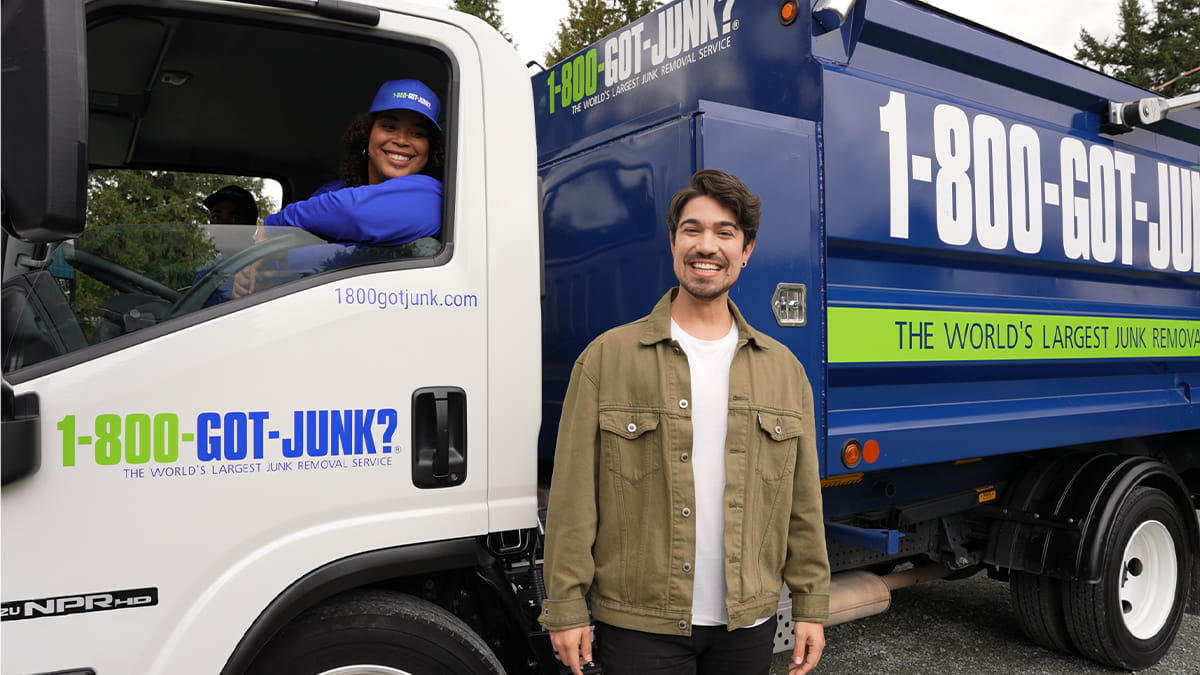
The main goal is to keep as much junk away from the landfill as possible by donating or recycling whenever possible. We have a 3-step process that helps dispose of your unwanted items responsibly:
- The local warehouse: This is the first step and where junk from our trucks is separated by load to identify recyclables. Our franchises work with donation centres and charity partners like Habitat for Humanity ReStore, Goodwill, and many local initiatives.
- The transfer station: Materials are then taken to a transfer station where they get sorted, cleaned, and prepared for their next adventure.
- The materials recovery facility: From there, many materials move on to the Materials Recovery Facility (MRF), which separates, processes, and consolidates recyclables so they can be shipped to places that use them to make new items.
We put in a lot of care to ensure that items are repurposed and avoid the landfill as much as possible. The junk removal industry varies, so choosing a company that focuses on sustainability and giving old items a new life is important.
What we've learned from a lifetime of stuff
I started hauling junk in 1989 to pay for business school. I bought a beat-up pickup truck and painted my phone number on the side. As the business grew, I dropped out of school to keep up with all the calls I was getting. I was learning more working on the business than I was in school.
In 37 years of building 1-800-GOT-JUNK?, I've been there for some of people’s big moments, like buying a first home or making space for a baby. I’ve been there for the hardest moments too, like cleaning out a loved one’s belongings.
Estate cleanouts carry a profound emotional weight that differs from standard junk removal. You aren't just clearing out unwanted clutter; you are sorting through the tangible footprint of someone’s life. Unlike a routine garage clear-out driven by a desire for extra space, an estate cleanout usually follows a major life transition, such as the death of a parent or moving a loved one into assisted living. Every closet, drawer, and storage box holds personal history, turning the physical labour into a series of emotional decisions.
Decisions about what to keep, donate, or discard can suddenly feel like judgments on the value of a loved one's memory, which often triggers grief, nostalgia, and family tension. What would take a few hours in a standard haul can stretch into days of emotional fatigue, as every item from old photo albums to everyday kitchenware demands both physical handling and psychological processing. For Meghan Yuri Young, who decided to start a new chapter in her late father’s home, merging two complete households carried a huge weight of responsibility, and seeing how much needed to go before she could even begin to see the house’s potential was stressful.
What I’ve learned through this is that the work is almost never about the stuff. It's about what the stuff means. The massive wood dining set that represented success to one generation is more than just a logistical problem for the next; it’s an emblem of The Great Junk Transfer. The world has changed, and what younger generations value has shifted along with it.
What to ask before you book
Clearing out a loved one’s estate or managing inherited items is emotional, sensitive, and often overwhelming. You aren’t just removing unwanted items; you’re handling memories. Over the last 30+ years, I’ve learned that peace of mind comes down to asking the right questions before anyone steps foot on your property.
Here’s my personal checklist of what to ask before booking:
- “Where do the items actually go?” You want a company that prioritizes donation and recycling over landfills, ensuring cherished belongings find a second life, especially if they have inherited sentimental value.
- “Are your crews fully licensed and insured?” Care is important when clearing out an estate, and you’ll want to work with a company that is protected. Asking for a Certificate of Insurance (COI) is recommended.
- “Do you offer upfront pricing?” You should be able to get an upfront quote based on space taken in the truck, with no surprise fees after the work is done.
The Great Junk Transfer asks us to separate what we feel from what we're holding on to, which isn’t easy. It asks us to trust that the memory survives without the object. To have the conversation we've been putting off. To make room not just in our homes, but for whatever comes next.
We're not just here to help with the physical side of clearing a home. We're here so families don't have to face that weight alone.
Erin Anderssen was right. The Great Junk Transfer isn't coming. It's already here. And it's more emotionally significant than anyone is talking about.
Frequently asked questions
What actually happens to the items after 1-800-GOT-JUNK? picks them up?
The honest answer is: it depends on what we find—and we work hard to make sure as little as possible ends up in a landfill. When our team arrives, they assess items on the spot for donation potential, setting aside furniture, appliances, and household goods for local charity partners like Habitat for Humanity ReStore. What genuinely can't be rehomed or recycled goes to the landfill—and we're upfront about that.
How long does an estate cleanout actually take?
Our survey found that the average person estimates it takes about 17 days to clear a relative's home—three days longer than clearing their own. That gap isn't about cubic footage; it's about what the process costs emotionally. A professional team can handle the lifting in a single visit, but the deciding—what to keep, what to let go— moves at its own pace, and that's completely normal.
How do I talk to my family about not wanting to inherit their things?
Our survey found that 42% of people who don't want to inherit anything have never said so out loud—so if you're avoiding this conversation, you're in good company. One approach that tends to work: frame it around meaning rather than rejection. Something like "I'd love to choose one or two things that really remind me of you" lands differently than a broader statement about not wanting their belongings.
Similar articles

Top 5 reasons storage units aren’t worth it
Think storage units are a lifesaver? They might actually be an expensive trap. While they seem like a quick fix for clutter, these temporary spaces often turn into long-term financial sinkholes for items you’ll never use again. From hidden monthly costs to the lingering mental load, discover five eye-opening reasons why renting a storage unit isn’t worth it.