
How to remove and replace damaged vinyl siding on your house



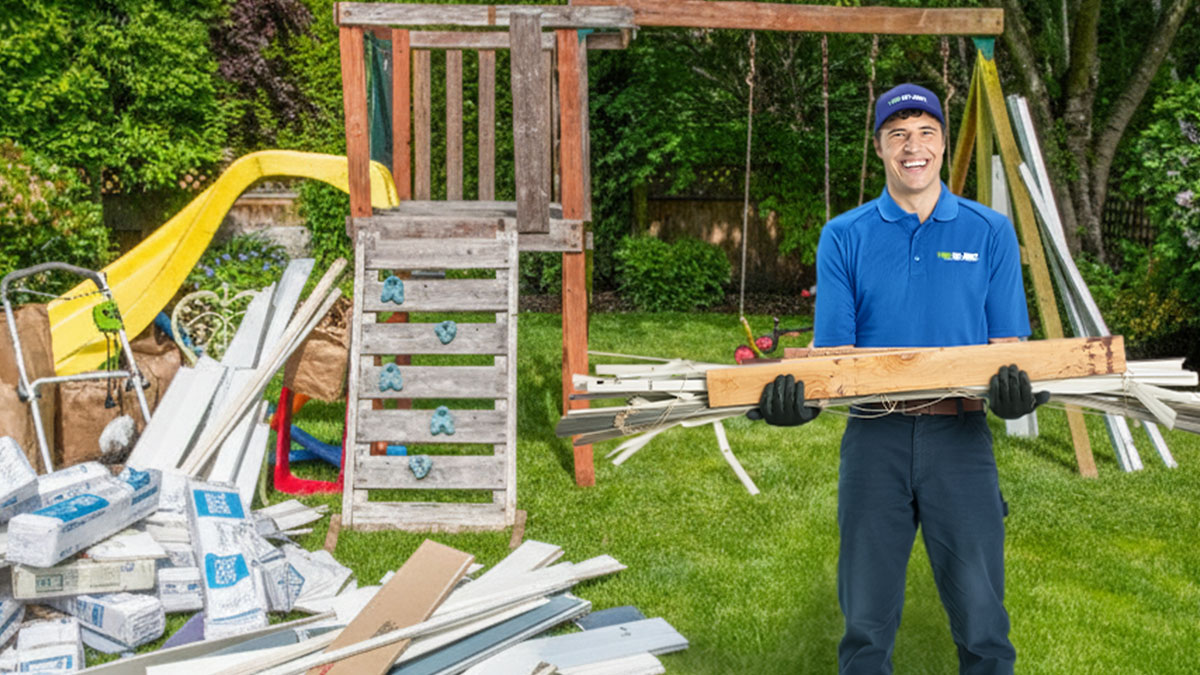
Whether you are dealing with a single broken siding panel or preparing for a full before-and-after vinyl siding remodel, removing and replacing vinyl siding is a manageable DIY project that can instantly boost your home’s curb appeal.
At 1-800-GOT-JUNK?, we know that home improvements are exciting, but the leftover debris can be a headache. If your project generates more waste than your local bin can handle, we offer same-day waste removal to keep your driveway clear while you work. Our step-by-step guide will show you how to remove vinyl siding safely and efficiently.
How to safely remove vinyl siding
Whether you are replacing house siding for the entire structure or just learning how to replace a piece of vinyl siding, the process is surprisingly straightforward. Vinyl siding is designed to "hang" on your house, meaning it isn't nailed tightly but rather hooked into the piece below it. Understanding this locking mechanism is the secret to siding removal without causing further vinyl siding damage. To remove vinyl siding, you must use a zip tool to unlock the bottom edge of a panel, unfasten the nails from the hem, and slide the piece out from the interlocking joint above
Tools needed
Before you begin removing siding, gather these essential tools. Having the right equipment ensures you can remove vinyl siding without breaking it.
Inspect your siding and identify the panel you need to remove
The first step in replacing siding is identifying the scope of the damaged vinyl siding. Look for cracks, melting, or holes. If you only see one broken siding piece, you may only need to replace a piece of vinyl siding rather than replacing the siding on the whole wall.

Unlock the bottom edge of the panel using a zip tool
This is the core of removing vinyl siding. Take your zip tool and slide it under the bottom edge of the panel you want to remove. Hook it onto the "buttlock" (the curved bottom edge). Pull down and out, then slide the tool along the length of the panel. This is also how to remove siding from the bottom if you are starting at the very base of the house.
Lift the panel above to expose and remove the nails
Once the bottom of the panel is free, you’ll notice it is still held at the top by a row of nails. To remove house siding, you must gently lift the panel above the one you are working on. This exposes the nailing hem. Use a pry bar or hammer to pull the nails out. This is the best way to remove vinyl siding without damaging it (the surrounding panels).

Slide the panel out of the lock above it
With the nails removed, the panel should be loose. Simply slide it downward to unhook it from the panel above. If you are removing siding from house walls that are older, the vinyl might be brittle, so move slowly to avoid vinyl siding damage.

Removing vinyl siding around a window
Windows are trimmed with J-channels. To remove vinyl siding around window frames, you may need to slightly flex the panel to pop it out of the J-channel groove. If the piece is nailed tightly inside the channel, use your utility knife to carefully score any old caulk before attempting siding removal.
Replacing only one section of vinyl siding
If you are replacing a section of vinyl siding rather than a full strip, you will need to cut a new piece to overlap the existing ones by at least an inch. This ensures a water-tight seal. Knowing how to replace a piece of siding saves time and money compared to replacing house siding entirely.

Prevent damage when removing panels
To remove vinyl siding without tool assistance is difficult and often leads to more broken siding. Always use a zip tool. To remove vinyl siding from the bottom without cracking the starter strip, ensure the zip tool is fully engaged before pulling.
Repairing or fixing broken or damaged vinyl siding
If the damage is a small hole, you might wonder how to fix broken vinyl siding without a full replacement. While some suggest caulk, the best way to repair damaged vinyl siding is usually to replace damaged vinyl siding panels entirely to maintain the home's structural integrity and aesthetics.

Reinstalling the panel and locking everything back together
To replace damaged siding, slide the new panel up into the lock of the piece above it. Nail it into the center of the slots—never nail it tight! Vinyl needs to expand and contract. Finally, use your zip tool to pull the bottom edge over the locking lip of the panel below.
Once you’ve finished replacing damaged siding, you’ll likely have a pile of old, brittle plastic. It is vital to focus on responsibly disposing of old vinyl siding to keep it out of landfills. If your renovation is more extensive and you also need to dispose of roof shingles or other heavy debris, we can help with the heavy lifting.
Let us help you with waste and debris removal
Completing a vinyl siding remodel feels great, but the leftover construction waste removal can be a chore. At 1-800-GOT-JUNK?, we specialize in making that part easy. Whether you have damaged vinyl siding scraps, old insulation, or even broken siding from a storm, all you have to do is point and our friendly team will haul it away.
We are committed to the environment, so we recycle the recyclables and donate the donatables whenever possible. We are happy to help homeowners across the globe regain their space. You can easily find pricing for junk removal on our website to help you budget for your project.
We offer junk removal services across the United States, Canada, and Australia. Ready to clear the clutter? Contact 1-800-GOT-JUNK? by calling our 24-hour customer service number at 1-800-468-5865 or scheduling a junk pickup online.
Frequently asked questions
How long does vinyl siding last?
It generally depends on the quality, but most standard vinyl siding lasts between 20 and 60 years.
When is it time to replace vinyl siding?
Look for significant fading, warping, frequent damaged siding, or moisture issues inside your home. Updating vinyl siding can also be a choice for aesthetics.
How much does it cost to replace vinyl siding?
It varies, but homeowners typically spend between $5,000 and $15,000, depending on the square footage of the home.
How long does it take to replace vinyl siding?
For a professional crew, a standard home takes 7 to 14 days. For a DIYer replacing house siding, it may take several weekends.
Can you remove vinyl siding without a tool?
While you can try with a screwdriver, it is not recommended. If you want to know how to remove vinyl siding without tool damage, the answer is to use the proper zip tool to avoid cracking the panels.
Can you reuse vinyl siding?
Yes. If you remove siding without damaging it, it can be reinstalled. This is common when replacing a piece of vinyl siding or repairing the flashing underneath.
Similar articles

Making space for the Vancouver Japanese Language School’s 120th anniversary
Ahead of its 120th anniversary, the historic Vancouver Japanese Language School is preparing for an exciting new chapter. Discover how our team stepped in to help tackle the junk, preserving history while making space for the future.